


Exigent Circumstances in the Bronx: When Police Claim “Emergency” Entry
When Police Say They Had to Go In Right Now
Few things feel more alarming than police entering a home without warning. In the Bronx, people are often told afterward that officers entered because of an “emergency” or “exigent circumstances.” Maybe there was shouting in the hallway. Maybe someone called 911. Maybe officers said they feared someone inside was in danger. Whatever the explanation, the result is the same. Your door was opened, your space was entered, and your privacy was disrupted.
At Horn Wright, LLP, our Bronx civil rights attorneys regularly speak with people who were left shaken after police entered their apartment without a warrant. Exigent circumstances are a real legal concept, but they are also one of the most commonly overused justifications for warrantless entry. Understanding when emergency entry is actually allowed, and when it crosses the line, is critical to protecting your rights.
What “Exigent Circumstances” Is Supposed to Mean
Exigent circumstances allow police to enter a home without a warrant when waiting would create an immediate risk. The classic examples involve situations where someone may be seriously injured, evidence is about to be destroyed, or a suspect is actively fleeing into a residence. The key idea is urgency. There must be a real, immediate need to act.
This doctrine is meant to be narrow. It is not a general permission slip to enter homes whenever officers feel uncomfortable waiting. Courts look closely at whether the emergency was real, whether it was truly immediate, and whether entry was the only reasonable option at the time.
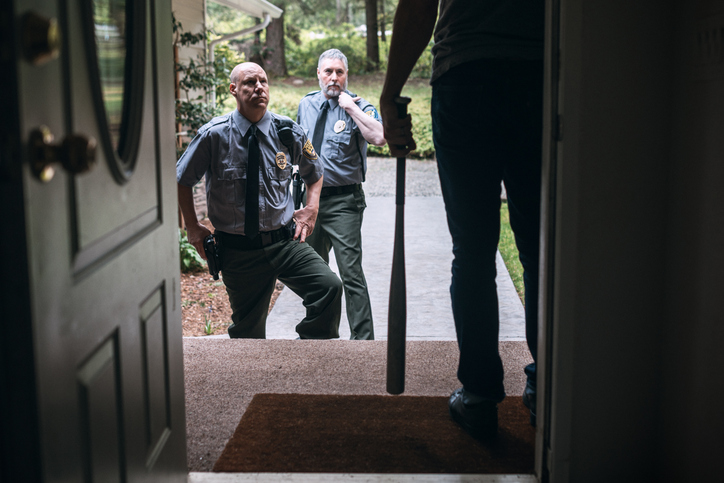
When Police Enter the Wrong Apartment
One of the most troubling exigent circumstance cases involves police entering the wrong apartment. This happens more often than people realize, especially in multi-unit Bronx buildings with confusing layouts, poor signage, or similar doors.
Police may claim they were responding to an emergency call and reasonably believed they were at the correct location. Courts examine these situations carefully. Mistakes do not automatically excuse unlawful entry. Officers are expected to take reasonable steps to confirm they are entering the correct apartment, especially when the intrusion involves someone’s home.
For residents, the impact is immediate and deeply personal. Even when no arrest occurs, the violation of privacy can feel lasting and profound.
Consent Searches When Roommates Are Involved
Consent becomes complicated when more than one person lives in a home. Police sometimes rely on a roommate’s permission to enter or search, even when another occupant would have refused.
Legally, a roommate may consent to a search of common areas, but not necessarily to private spaces like bedrooms that are clearly controlled by someone else. If one occupant is present and objects, that refusal can override another roommate’s consent in many situations.
Problems arise when police treat shared living arrangements as blanket permission. Consent must be valid, voluntary, and limited to areas the consenting person actually has authority over. When officers stretch roommate consent too far, the search may become unlawful.
When Landlords or Building Staff Let Police In
Another common Bronx scenario involves landlords, superintendents, or building staff letting police into an apartment. People are often shocked to learn that a landlord generally cannot consent to a police search of a tenant’s home.
Landlords may have keys, but they do not have authority to waive a tenant’s constitutional rights. Emergency maintenance issues are not the same as law enforcement emergencies. When police rely on landlord permission instead of a warrant or true exigent circumstances, the entry may be improper.
Housing conditions and safety concerns sometimes intersect with emergency responses. Agencies like the New York City Department of Housing Preservation and Development address building safety and habitability issues, but their authority does not extend to approving police searches of occupied apartments.
How Police Justify Emergency Entries
Officers often cite sounds, smells, or reports from others to justify emergency entry. Claims of screaming, fighting, or medical distress are common. While these situations can be legitimate, they are also subject to scrutiny.
Courts examine what officers actually observed, not just what they claim afterward. Vague concerns or generalized fears are usually not enough. The emergency must be specific and immediate, and the response must be proportionate to the perceived threat.
The Difference Between Helping and Searching
Emergency entry is supposed to be about addressing the emergency, not conducting a full search. Once inside, police are limited in what they can do. They may address the immediate issue, but they cannot automatically search drawers, containers, or unrelated rooms.
Problems arise when emergency entry becomes a pretext for investigation. Courts look closely at whether officers stayed focused on resolving the emergency or used it as an opportunity to search for evidence.
Why Emergency Entries Feel Especially Violating
Home is where people expect the highest level of privacy. When police enter without warning or permission, the emotional impact can be severe. People describe feeling unsafe in their own space long after the incident ends.
Those reactions are not exaggerated. The law recognizes the sanctity of the home, which is why warrantless entry is supposed to be the exception, not the rule.
How Emergency Claims Are Evaluated Later
When exigent circumstances are challenged, the analysis is detailed and fact-specific. Courts look at timing, officer observations, and whether less intrusive options were available.
Emergency response protocols often intersect with other public safety agencies. For example, the Fire Department of the City of New York responds to medical and safety emergencies, but their involvement does not automatically justify police searches beyond addressing immediate danger.
When Exigent Circumstances Lead to Civil Litigation
Improper emergency entries can form the basis for civil rights lawsuits. Civil litigation focuses on whether officers exceeded their authority and whether that conduct caused harm.
These cases often arise when police enter the wrong apartment, rely on invalid consent, or continue searching after any true emergency has passed. Civil claims are not about technicalities. They are about accountability and the protection of constitutional rights.
Why Many People Never Challenge Emergency Entries
Many residents assume that if police said it was an emergency, nothing can be done. Others are simply relieved the encounter is over and want to move on.
That reaction is understandable. Still, knowing that exigent circumstances have limits helps people reassess experiences they once accepted as unavoidable.
What to Do After a Claimed Emergency Entry
If police entered your home claiming an emergency and something didn’t feel right, write down what happened as soon as possible. Note who let police in, what they said justified entry, and what areas were searched.
These details help clarify whether the situation truly qualified as exigent or whether the entry exceeded legal boundaries.
Moving Forward After an Emergency Entry in the Bronx
Exigent circumstances allow police to act quickly, but they do not erase constitutional protections. Emergency entry is lawful only when strict conditions are met. At Horn Wright, LLP, our Bronx civil rights lawyers help people evaluate warrantless home entries and determine whether emergency claims were legitimate or unlawful. If police entered your Bronx apartment claiming exigent circumstances and you believe your rights were violated, call 855-465-4622 to speak with Bronx civil rights attorneys who will listen carefully and help you understand your options.

What Sets Us Apart From The Rest?
Horn Wright, LLP is here to help you get the results you need with a team you can trust.
-
Client-Focused ApproachWe’re a client-centered, results-oriented firm. When you work with us, you can have confidence we’ll put your best interests at the forefront of your case – it’s that simple.
-
Creative & Innovative Solutions
No two cases are the same, and neither are their solutions. Our attorneys provide creative points of view to yield exemplary results.
-
Experienced Attorneys
We have a team of trusted and respected attorneys to ensure your case is matched with the best attorney possible.
-
Driven By Justice
The core of our legal practice is our commitment to obtaining justice for those who have been wronged and need a powerful voice.