


Car Searches in the Bronx: What Police Can Search Without a Warrant
When a Routine Traffic Stop Turns Into a Search
A traffic stop in the Bronx often starts small. Flashing lights. A request for your license and registration. Maybe a question about where you’re headed. Then, without much warning, the situation shifts. An officer asks you to step out. Another circles the car. Suddenly, your vehicle or your person is being searched, and you’re left wondering how that happened without a warrant.
At Horn Wright, LLP, our Bronx civil rights attorneys hear from drivers and passengers who assumed police needed a warrant to search a car. That assumption makes sense, but vehicle searches follow different rules than home searches. Some searches are allowed without a warrant, while others clearly cross the line. Knowing the difference helps you understand what police can lawfully do during a Bronx car stop and where your rights still matter.
Why Cars Are Treated Differently Than Homes
The law treats cars differently from homes for practical reasons. Vehicles are mobile, and evidence can disappear quickly if officers are forced to wait for a warrant. Because of that, courts allow certain warrantless searches during traffic stops that would never be allowed inside an apartment.
That flexibility, however, is not unlimited. Police must still have a legal reason for what they search and how far they go. A stop for a broken taillight does not automatically open the door to a full search of the car or the people inside it.
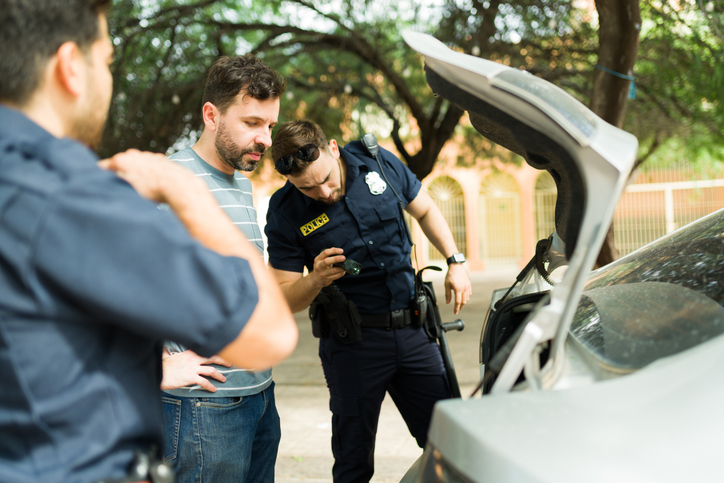
What Police Can Search Based on Probable Cause
If police have probable cause to believe a vehicle contains evidence of a crime, they may search areas of the car where that evidence could reasonably be found. This is often called the automobile exception.
For example, if an officer smells what they reasonably believe is illegal drugs, that may justify searching parts of the vehicle where drugs could be hidden. The search must stay tied to the suspected evidence. Probable cause to search the trunk does not automatically justify searching a passenger’s personal bag if there is no connection.
Searches Incident to Arrest During Car Stops
If a driver or passenger is lawfully arrested, police may search certain areas related to that arrest. This can include the person being arrested and, in some cases, areas of the vehicle within immediate reach at the time of arrest.
These searches are meant to protect officer safety and preserve evidence. They are not meant to become fishing expeditions. Once the safety concern or evidence risk is gone, the justification narrows significantly.
Searching Passengers During a Bronx Traffic Stop
Passengers often assume they are automatically subject to search during a traffic stop. That is not true. Being in a car does not eliminate your personal rights.
Police may order passengers out of the vehicle for safety reasons, but searching a passenger requires additional justification. Officers generally need:
- Probable cause specific to the passenger
- Consent from the passenger
- A lawful arrest
A frisk of a passenger is limited to checking for weapons and requires a reasonable belief that the person is armed and dangerous. Reaching into pockets or bags without that justification can cross legal boundaries.
When Consent Changes the Rules
Consent is one of the most common ways car searches happen without a warrant. If a driver voluntarily agrees to a search, police may search within the scope of that consent. Passengers can consent to searches of their own property, but not the driver’s, and vice versa.
Consent must be voluntary. If an officer implies that refusal is not an option, or pressures someone into agreeing, the validity of that consent may be questioned later. Saying no is allowed. Silence is not the same as consent.
K9 Sniffs During Traffic Stops
K9 sniffs are another area where drivers feel caught off guard. A dog walking around the exterior of a vehicle is generally not considered a search under the law. Because of that, police do not need a warrant or probable cause for a brief exterior sniff.
However, there are limits. Police cannot unnecessarily extend a traffic stop just to wait for a K9 unit. If the stop is prolonged without independent justification, the legality of everything that follows may be challenged.
Guidance on traffic stop procedures and safety considerations often intersects with research and standards supported by the National Highway Traffic Safety Administration, though that authority does not expand police search powers on its own.
What Police Cannot Search Without More Justification
Even during a lawful stop, there are clear limits. Police generally cannot search:
- Locked containers without probable cause
- A passenger’s phone or digital data
- Areas unrelated to the suspected offense
One of the most common misconceptions involves cell phones.
Searching Phones During Car Stops
Police cannot search the contents of your phone during a car stop without a warrant or very specific circumstances. Texts, photos, call logs, and apps are protected by strong privacy rules.
Even if your phone is in the car or on your person, officers cannot scroll through it just because you were stopped or arrested. Digital searches require higher legal thresholds than physical searches, reflecting how much personal information phones contain.
When a Car Search Goes Too Far
Many problematic car searches involve scope. Police start with a valid reason but expand beyond it. A search justified by suspected drugs may turn into rummaging through unrelated personal items. A safety frisk may turn into a full search of pockets.
Courts look closely at whether police stayed within the boundaries of their justification. Small oversteps can have big legal consequences.
Oversight and Standards in Vehicle Searches
Vehicle search practices are shaped by constitutional standards and state-level oversight. Offices like the New York State Attorney General play a role in reviewing and addressing patterns of unlawful policing practices, including improper searches.
This oversight exists because car stops are one of the most common points of contact between police and the public, especially in busy boroughs like the Bronx.
What to Do After a Car Search That Felt Wrong
If your car or person was searched during a Bronx traffic stop and something didn’t feel right, write down what happened as soon as possible. Note why you were stopped, what officers said justified the search, and what areas were searched.
Details matter. Whether a K9 sniff prolonged the stop, whether consent was requested, or whether a passenger was searched without explanation can all affect how the search is evaluated later.
Why These Searches Deserve Careful Review
Car searches happen quickly, often under stress. That makes it easy for boundaries to blur. The law allows certain flexibility, but it also draws firm lines to protect individual rights.
Understanding those lines helps drivers and passengers recognize when police acted within their authority and when they may have gone too far.
Moving Forward After a Bronx Car Search
Car searches without warrants are allowed only under specific conditions. Passenger rights, K9 sniffs, and phone privacy all shape what police can and cannot do during a Bronx traffic stop.
At Horn Wright, LLP, our Bronx civil rights lawyers help people evaluate vehicle searches and understand whether constitutional limits were respected. If your car was searched during a Bronx stop and you have questions about whether police crossed the line, call 855-465-4622 to speak with Bronx civil rights attorneys who will take the time to listen and explain your options.

What Sets Us Apart From The Rest?
Horn Wright, LLP is here to help you get the results you need with a team you can trust.
-
Client-Focused ApproachWe’re a client-centered, results-oriented firm. When you work with us, you can have confidence we’ll put your best interests at the forefront of your case – it’s that simple.
-
Creative & Innovative Solutions
No two cases are the same, and neither are their solutions. Our attorneys provide creative points of view to yield exemplary results.
-
Experienced Attorneys
We have a team of trusted and respected attorneys to ensure your case is matched with the best attorney possible.
-
Driven By Justice
The core of our legal practice is our commitment to obtaining justice for those who have been wronged and need a powerful voice.