


How a Section 1983 Excessive Force Claim Works in the Bronx
Your Legal Rights After Police Misconduct
After a violent encounter with law enforcement, it’s natural to feel powerless. You may be left with injuries, fear, and a sense that no one will be held responsible. But under a federal law known as Section 1983, you have a legal tool to fight back. This statute gives people in New York and across the country the right to sue government officials, including police officers, for violating their constitutional rights.
If you were harmed by police in the Bronx, this type of lawsuit may give you a path toward justice. Section 1983 isn’t about criminal charges. It’s about holding officers and their departments accountable in civil court for using excessive force. It’s also about recovering damages, money to help cover what you’ve lost.
If you’re unsure whether your situation qualifies, a Bronx civil rights attorney at Horn Wright, LLP, can review your experience and help you understand whether a 1983 claim makes sense.
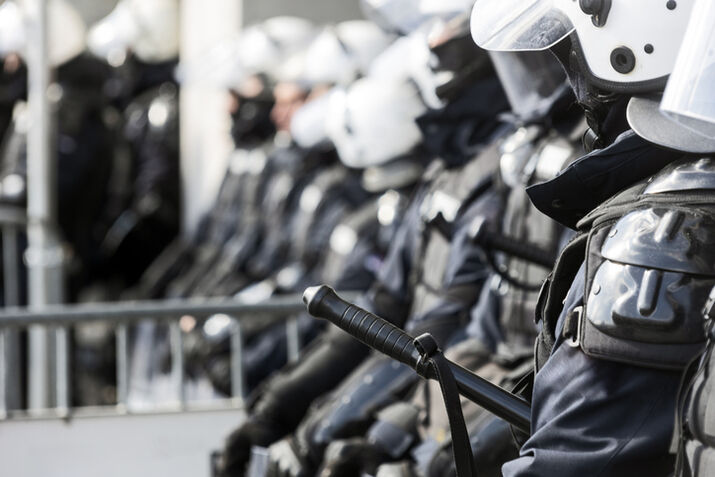
What a Section 1983 Claim Allows You to Do
Section 1983 of Title 42 of the U.S. Code allows people to file civil lawsuits when a government official, including a police officer, violates their constitutional rights. In excessive force cases, this usually involves the Fourth Amendment, which protects against unreasonable searches and seizures.
This federal law gives people in the Bronx and across New York the right to bring claims in federal court after an unjust police encounter. These lawsuits can hold individual officers and, in some cases, city agencies financially liable for the harm caused.
A Section 1983 claim does not require the officer to be criminally charged or convicted. It only requires proving that their conduct went too far and violated your rights. That legal standard is separate from the one used in criminal court, and it often opens the door to justice for people who might otherwise be ignored.
How Courts Define Excessive Force
Not every use of force by a police officer violates the law. Courts recognize that officers sometimes have to use physical restraint. But when force goes beyond what’s reasonable, especially during an arrest or investigation, it can become excessive. That’s when a Section 1983 claim may apply.
Courts look at the Fourth Amendment, which protects against unreasonable searches and seizures. They examine whether the force used was “objectively reasonable” based on what the officer knew at the time. The focus stays on the moment, not what was learned later.
Key factors include:
- The severity of the alleged crime
- Whether the person posed an immediate threat
- Whether the person resisted or tried to flee
For example, tackling someone during a suspected armed robbery may be considered reasonable. But striking a person repeatedly after they’ve already been restrained may cross the line. If you were handcuffed and still injured, or if you were never violent or resisting, your case may meet the legal threshold.
Every situation is unique. That’s why it helps to speak with an attorney who has handled excessive force cases in the Bronx before.
Evidence That Supports Your Claim
Building a Section 1983 claim takes more than your word. It requires evidence—real, clear documentation that shows what happened, how you were harmed, and who was involved. Acting quickly gives you the best chance to preserve what you’ll need.
The types of evidence that strengthen an excessive force claim include:
- Photos of your injuries taken as soon as possible
- Medical records from BronxCare, Lincoln Medical Center, or other local hospitals
- Body cam or dash cam footage from NYPD or MTA officers
- Surveillance video from nearby stores, apartment buildings, or transit stations
- Eyewitness statements from bystanders, workers, or family members
The more thorough your documentation, the more leverage your attorney has when negotiating or presenting your case in court. Keep copies of every record. Don’t edit photos or videos. Store files in secure cloud folders and avoid posting them on social media.
Memories fade and digital data can get erased quickly. If you need help collecting these materials, your lawyer can send letters to preserve video or request records from the right agencies.
How to Identify the Officers Involved
To sue someone under Section 1983, you need to know who they are. That means identifying the individual officers who used force against you. This can be difficult when names aren’t provided or if the event was chaotic. But there are still ways to gather what you need.
Start with any visible details you can recall:
- Badge numbers on the officer’s chest
- Names printed on uniforms or outerwear
- Vehicle numbers on NYPD cruisers or transit police units
- Shoulder patches identifying the department
In the Bronx, most excessive force cases involve officers from the NYPD, though some involve MTA Police or Port Authority officers. Each agency maintains internal records that can be requested under New York’s Freedom of Information Law (FOIL).
If you don’t have names, a FOIL request can help you access:
- Officer assignment logs
- Arrest reports
- Radio transcripts or dispatch records
Once you know who was present, your attorney can name them individually in the lawsuit. The city or agency may also be included as a defendant, depending on the circumstances.
Why You Must File a Notice of Claim First
If your excessive force claim involves an NYPD officer or other city employee, you may need to file a Notice of Claim before you can sue. This is a formal document that alerts the City of New York that you plan to file a lawsuit related to actions by one of its employees.
In most cases, you must file this notice within 90 days of the incident. Missing this deadline could jeopardize your entire case.
The Notice of Claim includes:
- Your name and address
- The date, time, and location of the incident
- A brief description of what happened
- The damages you suffered
You can file with the New York City Comptroller’s Office in person or through their official claim portal. After filing, you may be called for a hearing under oath before moving forward.
Section 1983 claims don’t always require a Notice of Claim. But if your lawsuit includes state law claims, such as assault or negligence, the notice becomes a required step.
Filing the Lawsuit in Federal Court
Section 1983 excessive force lawsuits are filed in federal court, not state court. For Bronx residents, this usually means filing in the U.S. District Court for the Southern District of New York, which handles cases involving constitutional violations by government officials.
A qualified attorney prepares the complaint, which outlines:
- Who the defendants are (officers, departments, city officials)
- What they did that violated your rights
- What injuries you suffered as a result
You can seek damages for:
- Physical pain and emotional trauma
- Medical bills, including ongoing therapy or care
- Lost wages or employment issues
- Attorney’s fees and legal costs
The process begins with the filing of the complaint, followed by formal service of documents on the defendants. After that, both sides exchange evidence and conduct depositions. Many cases settle before trial, but some move forward to a jury decision.
The Role of Qualified Immunity in These Cases
In many excessive force lawsuits, officers invoke a legal defense called qualified immunity. This protects them from personal liability unless it’s shown that they violated a clearly established constitutional right.
Courts apply a two-part test:
- Did the officer violate a constitutional right?
- Was that right clearly established at the time?
If the court finds the officer’s actions were in a legal gray area, they may dismiss the claim. But if the force used was obviously excessive—for example, beating someone already handcuffed—then immunity may not apply.
Experienced attorneys know how to challenge this defense. They cite prior case law and focus on facts that show the officer’s behavior was unreasonable and avoidable.
The stronger your evidence, the harder it becomes for an officer to rely on this shield.
Why Local Experience in the Bronx Matters
A Section 1983 claim involves federal law, but the setting and local systems still matter. That’s why having an attorney who knows how police operate in the Bronx, how local agencies handle FOIL requests, and how Bronx-based hospitals document injuries can make a difference.
Your lawyer should understand the city’s protocols and how to move cases forward without delay. They should be familiar with the Southern District’s procedures and judges. And they should know how to work with Bronx residents—people dealing with fear, trauma, and often a deep sense of distrust.
What you want is someone who:
- Understands New York’s civil rights laws and federal procedures
- Has worked with Bronx-based clients and local agencies
- Knows how to build a strong case from the ground up
The right legal partner handles the process, answers your questions, and helps you feel seen and supported.
You Can Use the Law to Be Heard
Section 1983 gives people in the Bronx a real, legal pathway to hold police officers accountable when things go wrong. These claims can’t undo the harm, but they can give you a voice, a chance to be compensated, and a step toward justice.
The Bronx civil rights attorneys at Horn Wright, LLP, know how painful these cases can be. We’ve helped clients build their cases, stand up in court, and regain some control after traumatic encounters. If you believe you’ve experienced excessive force, we’re ready to walk this path with you, from start to finish.

What Sets Us Apart From The Rest?
Horn Wright, LLP is here to help you get the results you need with a team you can trust.
-
Client-Focused ApproachWe’re a client-centered, results-oriented firm. When you work with us, you can have confidence we’ll put your best interests at the forefront of your case – it’s that simple.
-
Creative & Innovative Solutions
No two cases are the same, and neither are their solutions. Our attorneys provide creative points of view to yield exemplary results.
-
Experienced Attorneys
We have a team of trusted and respected attorneys to ensure your case is matched with the best attorney possible.
-
Driven By Justice
The core of our legal practice is our commitment to obtaining justice for those who have been wronged and need a powerful voice.