


How a Section 1983 Claim Works for a Wrongful Shooting in the Bronx
Understanding Section 1983 in Civil Rights Cases
Section 1983 of Title 42 of the United States Code allows individuals to file lawsuits when someone acting under state authority violates their constitutional rights.
In New York, this law often applies when law enforcement officers, including members of the NYPD, use force that crosses the line, such as in a wrongful police shooting. For victims and families, Section 1983 can serve as a direct path to accountability. Our Bronx civil rights attorneys at Horn Wright, LLP, work with people who are trying to understand how this law applies to what they lived through.
To bring a Section 1983 claim, a plaintiff must prove two key elements. First, the defendant must have acted under color of state law. Second, that conduct must have violated a federally protected right. In wrongful shooting cases, the right at issue is usually the Fourth Amendment, which protects against unreasonable seizures and excessive force.
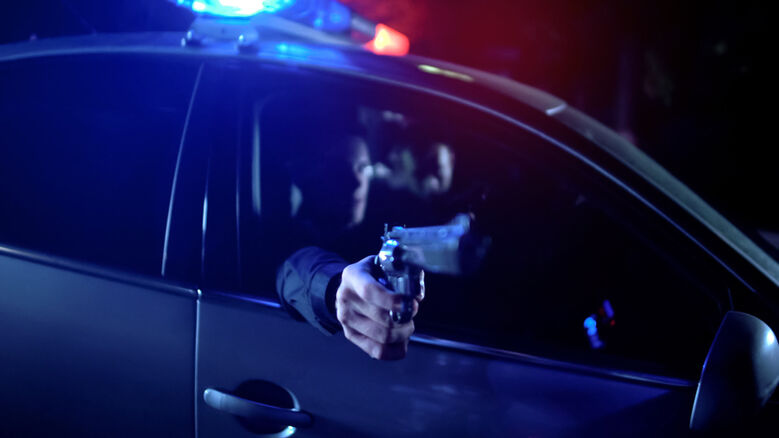
When a Police Shooting Becomes a Constitutional Violation
Not every use of force by police results in a civil rights violation.
Courts evaluate these incidents under the standard of "objective reasonableness," which considers whether the officer's actions were justified at the moment force was used. This standard is often applied without regard to the officer's intent.
In the Bronx, wrongful shootings often occur during chaotic encounters in densely populated areas, such as apartment complexes or near transit hubs.
An officer may claim to have perceived a threat, but the facts may later show the person was unarmed, not resisting, or even running away. When force is excessive relative to the threat presented, it can become a constitutional violation.
What Makes a Shooting 'Wrongful' Under the Law
A shooting is considered wrongful under Section 1983 when the officer's use of force exceeds what a reasonable officer would do in the same situation. Courts consider:
- Whether the individual was armed
- Whether they posed an immediate threat
- Whether they were fleeing or attempting to surrender
- Whether the officer failed to use less-lethal alternatives
- Whether proper warnings were given
For example, if a person was shot in the back while running away, or if they were shot while clearly attempting to surrender, the shooting may be deemed unlawful. Eyewitness accounts, body camera footage, and forensic evidence all help establish whether the officer’s actions met or violated constitutional standards.
Proving a Section 1983 Claim in the Bronx
Building a successful Section 1983 claim in New York requires evidence that the officer acted under color of law and violated a constitutional right. For police shootings, this generally means demonstrating that the force used was not reasonable under the circumstances.
Plaintiffs and their attorneys must collect and preserve key evidence, including:
- Police reports
- Eyewitness testimony
- Body-worn camera footage
- Autopsy or medical records
- Surveillance video from surrounding buildings
Given the fast-paced and sometimes disorganized nature of arrests in the Bronx, it is crucial to act quickly. Delays can mean lost footage or uncooperative witnesses. The sooner legal counsel is involved, the better the chances of documenting the facts accurately.
Key Evidence Used in Bronx Shooting Cases
In the Bronx, high-density living and widespread surveillance offer both opportunities and challenges in collecting evidence. Key sources include:
- Body camera footage: Offers a front-row view but may be obstructed or switched off
- Cellphone videos: Bystander recordings can capture different angles
- Security footage: Stores, apartment lobbies, and the MTA often record continuously
- 911 calls and dispatch audio: Reveal what officers knew before arriving
- Medical records: Help show the direction of bullets and proximity
It’s common in Bronx cases for different accounts of a shooting to emerge. Video often becomes the deciding factor. When that footage is missing, incomplete, or altered, courts may treat it as favorable to the plaintiff under spoliation principles.
Who Can Be Sued in a Section 1983 Shooting Case
A Section 1983 lawsuit allows plaintiffs to name more than one defendant. The primary focus is usually the officer who fired the weapon, but the law allows for broader liability in certain cases.
Potential defendants include:
- The officer who pulled the trigger
- Other officers who failed to intervene
- Supervisors who approved unlawful tactics
- The City of New York, under Monell liability, if the shooting resulted from official policy or a failure to train
Establishing Monell liability requires evidence of a pattern of misconduct or an established policy that directly caused the constitutional violation. In recent years, publicly available NYPD disciplinary records have helped attorneys build these claims.
What Compensation Covers in a 1983 Shooting Case
Victims of wrongful police shootings, or their families, may be entitled to damages for both tangible and intangible harms. Compensation may include:
- Medical expenses
- Ongoing rehabilitation or therapy
- Lost income and future earnings
- Emotional distress and psychological trauma
- Pain and suffering
- Funeral and burial costs, in fatal cases
- Punitive damages, when the conduct was especially egregious
Compensation is often determined by the severity of the injuries, the long-term impact on the victim’s life, and the clarity of the officer’s misconduct. In Bronx courts, emotional testimony from family members and community witnesses can influence how damages are assessed.
Deadlines and Notice Requirements in New York
Wrongful shooting claims must comply with strict filing deadlines. In New York, the statute of limitations for Section 1983 claims is generally three years. However, if a state law claim (such as assault or battery) is added to the case, a Notice of Claim may be required against the City, with a 90-day deadline.
Victims and families should consult legal counsel immediately to:
- File any necessary Notice of Claim
- Identify all liable parties
- Secure time-sensitive evidence
Failing to meet these procedural requirements can result in a case being dismissed, even when strong evidence exists. Bronx civil rights attorneys know how to navigate both state and federal rules to protect your claim.
How a Bronx Civil Rights Lawyer Builds These Cases
At Horn Wright, LLP, we take a structured approach to investigating wrongful shooting claims. Our process includes:
- Reviewing arrest reports, video footage, and internal NYPD records
- Interviewing witnesses and first responders
- Consulting independent forensic experts
- Evaluating officer disciplinary histories and past misconduct
- Filing preservation letters to secure critical evidence
We also work with families to document the full impact of the shooting, including loss of income, trauma, and long-term medical needs. When appropriate, we collaborate with community organizations to show broader patterns of harm in Bronx neighborhoods.
In federal court, we file tailored complaints that address each element of a Section 1983 claim. Our team understands the burden of proof and the importance of showing how the officer’s actions went beyond the bounds of lawful authority.
Speak With a Bronx Civil Rights Attorney
A wrongful police shooting causes deep harm that goes beyond the physical. In the Bronx, Section 1983 provides a legal tool to seek justice and force accountability. These claims demand timely action, clear evidence, and a focused legal strategy.
If you or a loved one was shot by a police officer, don’t wait. Speak with a Bronx civil rights attorney at Horn Wright, LLP. We help victims and families uncover the truth, stand up to systemic abuse, and pursue the full compensation allowed by law.

What Sets Us Apart From The Rest?
Horn Wright, LLP is here to help you get the results you need with a team you can trust.
-
Client-Focused ApproachWe’re a client-centered, results-oriented firm. When you work with us, you can have confidence we’ll put your best interests at the forefront of your case – it’s that simple.
-
Creative & Innovative Solutions
No two cases are the same, and neither are their solutions. Our attorneys provide creative points of view to yield exemplary results.
-
Experienced Attorneys
We have a team of trusted and respected attorneys to ensure your case is matched with the best attorney possible.
-
Driven By Justice
The core of our legal practice is our commitment to obtaining justice for those who have been wronged and need a powerful voice.