


How Ballistics and Trajectory Evidence Can Change a Bronx Shooting Case
What Ballistics and Trajectory Evidence Actually Reveal
In the Bronx, when someone faces a shooting charge, ballistics and trajectory evidence often become the most important part of the case. This physical evidence doesn’t forget, distort, or mislead. It records the angles, positions, and distances that shaped a split-second decision.
At Horn Wright, LLP, our Bronx NY wrongful shooting attorneys understand the weight this evidence carries. If you or someone close to you is dealing with a shooting charge in the Bronx, we know how to break down forensic findings and challenge what the prosecution presents. Our approach helps level the playing field in court, especially when pressure builds and the facts are unclear.
How Bronx Investigators Use Ballistics to Build a Timeline
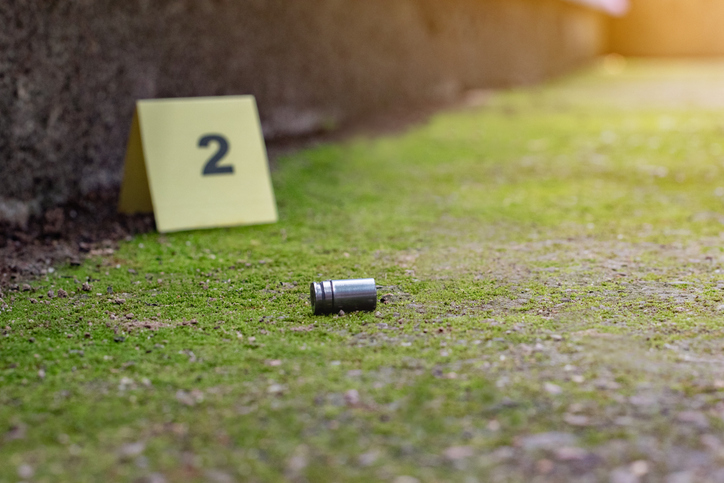
After a shooting in the Bronx, NYPD crime scene teams move quickly. They gather shell casings from sidewalks in Morrisania, parking lots near Yankee Stadium, or stairwells in apartment buildings throughout Fordham. Every casing carries a distinct signature. Forensic technicians use microscopes to match those markings to a specific firearm.
That connection builds more than a match. It shapes a timeline. Officers rely on ballistics to determine when a weapon was discharged and whether that fits the version of events given by witnesses or suspects.
If a casing shows up 100 feet away from where police say the shooter stood, timing and positioning start to fall apart. That’s the value of ballistics. It either strengthens a narrative or exposes gaps that need answers.
In many cases, these questions lead to deeper issues about the accuracy of the investigation itself. When timelines don’t add up, it’s worth reviewing whether police assumed more than the physical evidence supports.
Trajectory Evidence: Mapping Bullet Paths in Tight Bronx Environments
Trajectory analysis looks at where bullets travel and what surfaces they hit. This helps pinpoint the shooter’s location, the angle of the shot, and the positions of those involved.
In dense Bronx neighborhoods like Kingsbridge or Longwood, shootings don’t happen in open fields. They happen between parked cars, in cramped elevators, and near stairwells crowded with foot traffic. These conditions make it harder to rely on assumptions. Trajectory helps clarify what the scene really looked like.
Forensic teams may examine:
- Bullet holes in walls, doors, or vehicles
- Entry and exit wounds
- Ricochet marks on concrete or metal
- Vertical or downward angles through stairwells or balconies
These patterns tell a specific story. If a bullet entered at an upward angle, the shooter may have been below street level or crouching. If the angle came from above, it could contradict statements claiming the shooter was face-to-face.
In tight environments, the difference between self-defense and intent can come down to a few degrees of trajectory. That’s why expert analysis matters.
When Ballistics Disagree with Witness Testimony
Gunfire creates panic. People duck, scatter, and try to survive. In the confusion, even well-meaning witnesses misremember what they saw. That’s human. But courts need more than memory.
Ballistic and trajectory findings often show whether the events described can physically be true. If someone claims the shooter stood 15 feet away, but the bullet entered at a downward angle, the evidence may tell a different story.
In some Bronx cases, these contradictions have led to questions about whether witnesses misidentified someone who was nearby but uninvolved. The goal isn’t to attack witnesses but to understand the limits of what can be recalled under stress.
Courts now increasingly recognize that stress-induced errors happen. In high-pressure environments, even police memory may become unreliable. That’s one reason forensic analysis is essential. It verifies what people saw against what actually occurred.
Gunshot Residue (GSR) and Distance Testing in Bronx Cases
Gunshot residue (GSR) tests help determine whether someone fired a weapon or stood near it when it discharged. These particles, made up of substances like lead and antimony, cling to skin and fabric for hours after a shot.
In the Bronx, police may conduct GSR tests at the precinct following an arrest. Labs test for both the presence and the pattern of residue. A clean result doesn’t always mean someone didn’t fire a gun, but it raises important questions, especially if a person claims they weren’t holding a weapon.
Distance testing adds another layer. If a victim has soot or stippling around the wound, forensic teams can estimate how far the shooter was standing. This helps answer:
- Was the shot fired at close range or from a distance?
- Do physical patterns line up with where witnesses placed the shooter?
- Could the shooter have fired accidentally during a struggle?
In situations where officers say someone had a gun-like object or appeared to reach for something, distance testing may reveal whether a threat was actually present.
Bronx Case Studies: Real-Life Examples of Ballistics Changing Outcomes
Ballistics doesn’t always align with what police or witnesses say. In some Bronx cases, evidence has directly contradicted key parts of the state’s theory.
One well-known investigation revealed that multiple shell casings at the scene did not match the defendant’s firearm. This created doubt about whether they fired the fatal shot. In another incident, trajectory angles showed the bullet must have entered from the left side of a hallway, not the right side where the defendant stood.
These reflect recurring patterns in densely populated areas where bystanders, panic, and environmental obstacles complicate the narrative.
When the angle, location, and GSR don't align with the arrest report, it’s often a sign that more thorough review is needed. In some cases, it’s also a basis to ask whether excessive force or poor investigation practices were involved.
Why Bronx Defense Attorneys Depend on Independent Forensics
Public labs in New York serve many cases, and their caseloads are large. As a result, forensic reviews may be delayed or limited. Bronx defense attorneys often work with private experts to review the same data using more time and focus.
Independent analysts can:
- Reassess bullet trajectory using 3D laser mapping
- Reevaluate GSR results and contamination risks
- Cross-check casing analysis from state labs
- Provide expert testimony that explains findings in simple terms
This second layer of analysis is about making sure every angle has been reviewed. When someone's liberty is at stake, thoroughness is not optional.
Some of the most disputed shootings in the Bronx have involved claims that someone “reached” or “appeared to move aggressively” before being shot. These situations demand close forensic scrutiny.
Technology Advances in Bronx Ballistics Investigations
Bronx forensic teams now use advanced tools to analyze ballistics. One of the most impactful is the National Integrated Ballistic Information Network (NIBIN), which links shell casings to other shootings across the region.
This helps detectives identify patterns or match one gun to several crimes. It also allows defense teams to ask whether other shooters might be involved.
Other tools making a difference include:
- High-speed imaging for bullet analysis
- 3D mapping software to recreate shooting scenes
- Acoustic gunshot detection systems in some Bronx neighborhoods
When used properly, these tools benefit both prosecution and defense. They move investigations closer to truth, which is what every case deserves.
Final Considerations: Why Ballistics Can Make or Break a Bronx Shooting Case
In a Bronx shooting case, physical evidence often carries more weight than statements alone. Ballistics and trajectory data show where people stood, how bullets moved, and whether the story presented holds up.
If a gun was never fired or was too far away to cause the injury, the physical proof can protect someone from a wrongful conviction. If the evidence shows the opposite, it helps courts understand intent, timing, and threat level with clarity.
In both scenarios, facts carry the burden, not guesses or memory lapses. That’s why forensic analysis is essential.
If you're involved in a case like this, connect with a defense team that understands how to work with experts, challenge weak conclusions, and support your version of events with hard facts. Reach out to us directly to get the support you need right now.

What Sets Us Apart From The Rest?
Horn Wright, LLP is here to help you get the results you need with a team you can trust.
-
Client-Focused ApproachWe’re a client-centered, results-oriented firm. When you work with us, you can have confidence we’ll put your best interests at the forefront of your case – it’s that simple.
-
Creative & Innovative Solutions
No two cases are the same, and neither are their solutions. Our attorneys provide creative points of view to yield exemplary results.
-
Experienced Attorneys
We have a team of trusted and respected attorneys to ensure your case is matched with the best attorney possible.
-
Driven By Justice
The core of our legal practice is our commitment to obtaining justice for those who have been wronged and need a powerful voice.