


When a Shooting Becomes an Unlawful Seizure Under the Fourth Amendment
Legal Protections for Victims of Police Shootings in New York
When police use deadly force, the consequences ripple through families and entire communities.
People want to understand when a shooting by law enforcement crosses the line and becomes illegal. That confusion is real and justified. These cases often feel tilted from the start, especially when officers control the story early on. Families in New York deserve clarity about their rights under the Constitution.
At Horn Wright, LLP, we help New Yorkers uncover the truth behind police shootings. If you're searching for a Bronx civil rights attorney who will stand up for you, our team is ready to investigate, build your case, and help your family seek justice.
Every step we take is focused on lifting that legal burden off your shoulders.
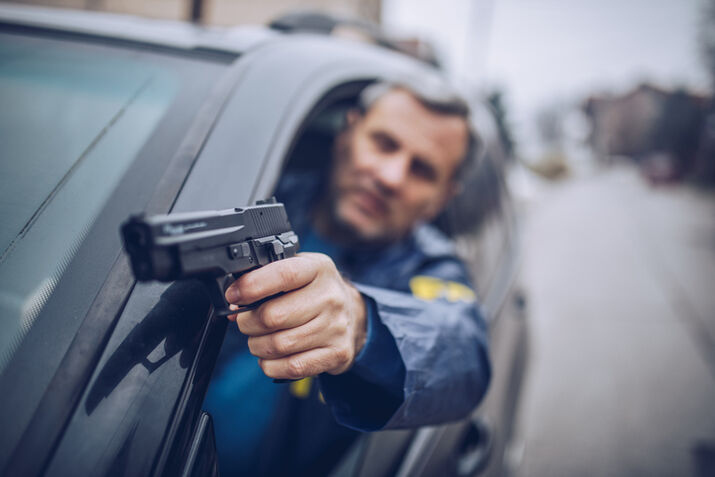
What Counts as a “Seizure” Under the Fourth Amendment
The U.S. Constitution protects people from unlawful government actions, and that includes how police interact with individuals. Under the Fourth Amendment, a "seizure" happens when an officer uses physical force or shows authority to stop someone’s movement.
When a shooting occurs, that bullet, if it hits, almost always counts as a seizure. Even if the officer didn’t arrest the person or use handcuffs, the act of stopping them through force still triggers constitutional protections. The focus stays on what the officer did.
This concept is central to many police shooting cases in New York. Whether the incident happened in Queens or Buffalo, if the person was shot and disabled, the Fourth Amendment likely applies. The question then shifts: was that seizure legally justified?
How the Courts Judge a Shooting Under the Constitution
Courts follow a very specific test when evaluating police use of deadly force. They ask one major question: was the officer’s decision to shoot objectively reasonable at the time?
This means:
- The court focuses on the officer’s viewpoint in that moment
- The situation is judged without using hindsight
- Split-second decisions are given legal weight
However, the law still sets boundaries. Officers cannot simply say they felt afraid. They must back that fear with facts: Was there a visible weapon? Was the person advancing in a threatening way? Were others at risk?
A case from Brooklyn involving an unarmed man shot in a stairwell brought these issues to light. Officers claimed they were startled, but courts still asked whether that fear justified pulling the trigger.
Why the Officer’s Intent Matters Legally
Intent plays a unique role in these cases. To qualify as a seizure under the Fourth Amendment, the officer must have meant to stop the person.
If the officer fired their weapon on purpose and hit the person, that use of force becomes a seizure, even if it wasn’t fatal.
Accidental discharges or missed shots do not always meet this standard. For example, if an officer's gun goes off unintentionally, and the bullet strikes a bystander, the situation might involve other legal claims, but it may not qualify as a Fourth Amendment seizure.
But once a person is hit, especially if they fall or become immobilized, the courts will almost always treat it as a seizure. In upstate New York cases, including ones near Albany, officers have faced this exact legal scrutiny.
The debate isn't about whether the bullet hit. It's about whether the force used to stop the person was reasonable.
When Force Becomes Unreasonable Under the Law
Reasonableness is the heart of any Fourth Amendment shooting case. Deadly force becomes unlawful when it outweighs the threat posed.
Situations that may indicate an unreasonable shooting:
- The person was unarmed and not acting aggressively
- The individual was fleeing or had already surrendered
- There was time to give a warning but none was issued
A shooting in Rochester involving a man running from police raised these concerns. Although officers claimed the man was reaching for something, bodycam footage showed no visible threat. That shifted how the court viewed the shooting.
Unreasonable force does not require proof of malice. It simply requires showing that no well-trained officer would have responded the same way under the circumstances.
What Victims or Families Must Prove
Proving a Fourth Amendment violation takes more than saying a shooting felt wrong. The legal test requires specific evidence that the officer’s actions weren’t reasonable.
Plaintiffs usually need to prove:
- The officer intentionally fired to stop the person
- The force used was greater than needed
- A reasonable officer in the same position wouldn’t have done the same
Video footage plays a huge role in building this kind of case. Witness statements, medical reports, and the officer’s history also support or weaken the claim.
Importantly, the victim does not have to show the officer acted out of anger or with evil intent. The focus stays on the mismatch between the force used and the actual threat.
The Impact of Qualified Immunity
One of the biggest challenges in these cases is something called qualified immunity. It protects police officers from lawsuits unless the person suing can prove the officer violated clearly established constitutional rights.
This means courts often dismiss cases unless there is:
- A nearly identical past case with the same facts
- A ruling showing that the conduct was already established as illegal
In New York, many lawsuits have failed not because the officer was right, but because the law wasn’t settled enough at the time. This makes even strong cases vulnerable to early dismissal.
Still, with the right legal support and thorough evidence, qualified immunity can be challenged. It takes precise legal arguments and case law comparisons, but families do succeed in breaking through this barrier.
How Local Use-of-Force Policies Affect Cases
While the Fourth Amendment sets the national standard, each department also creates its own rules. These use-of-force policies shape how officers are trained and disciplined. When an officer violates their department’s rules, that can support a civil claim.
Examples of policy issues that influence cases:
- Failing to activate a body camera
- Ignoring procedures about warnings or verbal commands
- Using deadly force when non-lethal options were available
NYPD’s guidelines, for example, require officers to avoid shooting at moving vehicles unless someone inside poses a deadly threat. If an officer ignores that, it can help prove the shooting was unreasonable.
Departments in smaller cities, such as Yonkers or Syracuse, may have their own standards, and violations can carry legal consequences beyond internal discipline.
When the Government Becomes Liable
In many cases, it isn’t just the officer who is legally responsible. Sometimes, the city or state can be held accountable. This happens under what’s called a "Monell claim," which argues that a government body contributed to the violation.
To prove this, the family must show:
- A pattern of similar incidents
- Failure to train officers properly
- A custom or policy that encourages unlawful force
In New York City, some civil rights claims have succeeded because plaintiffs proved that officers had long histories of misconduct that were ignored. That allowed lawsuits to go beyond individual fault and hold the city itself responsible.
These cases require deep investigation into training records, complaint databases, and internal memos. But they often result in broader reforms when successful.
Know Your Rights and Legal Options
A police shooting becomes an unlawful seizure when it uses deadly force without proper legal justification.
The Constitution protects every person in New York, whether they live in Manhattan or Watertown. When officers go too far, the law provides a path forward.
That path starts with understanding what rights were violated and what steps can be taken to hold those in power accountable.

What Sets Us Apart From The Rest?
Horn Wright, LLP is here to help you get the results you need with a team you can trust.
-
Client-Focused ApproachWe’re a client-centered, results-oriented firm. When you work with us, you can have confidence we’ll put your best interests at the forefront of your case – it’s that simple.
-
Creative & Innovative Solutions
No two cases are the same, and neither are their solutions. Our attorneys provide creative points of view to yield exemplary results.
-
Experienced Attorneys
We have a team of trusted and respected attorneys to ensure your case is matched with the best attorney possible.
-
Driven By Justice
The core of our legal practice is our commitment to obtaining justice for those who have been wronged and need a powerful voice.