


What “Excessive Force” Means Under the Fourth Amendment
Your Legal Protections Against Unreasonable Force
If a police officer physically harms you during an encounter, you may wonder whether it was legal. That’s where the Fourth Amendment comes in. It protects you from unreasonable searches and seizures, and that includes the use of force. When officers step beyond what’s considered reasonable, it’s called excessive force.
You don’t need to be a lawyer to understand that your rights matter. Whether the incident happened in a subway station in Brooklyn, on a Bronx street corner, or outside a Queens housing complex, the law applies the same way. Force used by law enforcement must stay within the bounds of the Constitution. If it doesn’t, you may be able to bring a civil rights claim.
If you’ve experienced police violence in the Bronx or anywhere in New York State, a Bronx civil rights attorney at Horn Wright, LLP, can help you determine if what happened qualifies as excessive force under the Fourth Amendment.
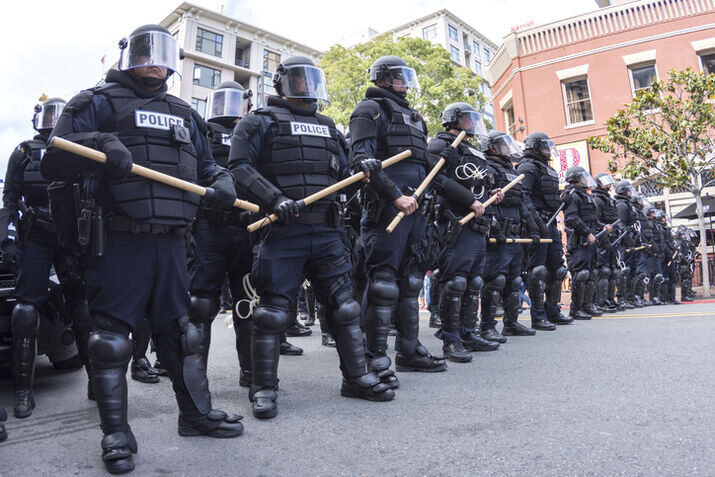
What the Fourth Amendment Actually Protects
The Fourth Amendment to the U.S. Constitution protects against “unreasonable searches and seizures.” While it’s often mentioned in the context of police searching your home or vehicle, it also applies to your physical body. Any time police officers detain you, stop you, or make an arrest, they’re required to act reasonably.
When force becomes part of that process, the force itself must also be reasonable. That means officers can’t hurt you unless the situation truly requires it. A shove during an arrest might be allowed if someone is actively resisting. But punching someone who is already face-down on the pavement is not.
This part of the Constitution limits government power. It holds law enforcement to a standard that protects your safety and dignity during even the most tense encounters. Whether you're stopped in a car on the Grand Concourse or held at a precinct in Staten Island, this right follows you.
What Makes Force “Excessive” in the Eyes of the Law
Excessive force means that the physical actions used by police officers go further than what a reasonable officer would have done in that situation. This standard is known as “objective reasonableness.” It doesn’t depend on your feelings, and it doesn’t rely on the officer’s personal opinion. Instead, it asks whether another officer in the same shoes, with the same information, would have reacted similarly.
This legal test comes from a Supreme Court case called Graham v. Connor. It’s now the basis for evaluating every excessive force claim under the Fourth Amendment. The key is that courts evaluate the force in the moment it happened. They don’t use hindsight. They look at what the officer knew, saw, or believed at that time—not after the fact.
That means your case will focus heavily on:
- What you were doing at the time
- What the officer knew or observed
- How the encounter unfolded second by second
Excessive force claims depend on those details. That’s why keeping a written record or collecting evidence as soon as possible can make a major difference.
What Courts Actually Consider in These Cases
When a court reviews an excessive force claim under the Fourth Amendment, it examines several key factors:
- Severity of the offense: Was this a serious violent crime or a minor violation?
- Immediate threat: Did the person pose a real threat to officers or others?
- Resistance or flight: Was the person trying to escape or actively resisting arrest?
For example, someone being arrested for armed robbery may be treated differently than someone stopped for a broken taillight. If you were calm, compliant, and not threatening anyone, the force used against you must be justified to hold up in court.
These factors are weighed in the context of the full situation. That means if you were injured during an NYPD stop in the Bronx and witnesses say you did not resist, those facts matter. And if the police report says you posed a threat but video shows otherwise, the court will look closely at that.
You Don’t Need a Serious Injury to Claim Excessive Force
Many people think you must be badly hurt to claim your rights were violated. That’s not true. The Fourth Amendment protects you from all unreasonable force—even if it doesn’t leave a broken bone or visible bruise.
Unjustified handcuffing, painful restraint, and even verbal intimidation combined with physical action can cross the line. For example:
- Being thrown to the ground during a routine stop
- Being held down long after you’ve stopped resisting
- Being aggressively grabbed without warning
All of these can support an excessive force claim if the actions weren’t necessary based on what was happening.
Emotional trauma matters too. If you were left with anxiety, nightmares, or fear of law enforcement after being assaulted or restrained by officers, that can be part of your case. New York courts have recognized that psychological harm has weight under civil rights law.
How to Spot the Line Between Lawful Force and Abuse
Officers have the right to defend themselves and others, but that right isn’t limitless. There’s a line between force used to control a situation and force used to punish, intimidate, or escalate. Abuse happens when that line is crossed.
Some examples that may indicate excessive force:
- A punch or baton strike to someone already handcuffed
- Kicking a person who is lying on the ground and not resisting
- Continuing to use tasers or chokeholds after compliance
New York officers are trained to de-escalate. If a person is already subdued, restrained, or no longer resisting, continuing to use force becomes harder to justify. Courts examine how long the force was used and whether it changed once the person complied.
Even yelling or cursing during an arrest does not give officers free rein to harm someone. The law requires proportionality. Police can’t respond to verbal frustration with physical violence.
Common Situations Where Force May Become Unreasonable
Many excessive force incidents in New York occur during ordinary encounters. Some of the most common include:
- Being struck or thrown down after surrendering
- Being tightly handcuffed for too long without adjustment
- Being pepper sprayed while standing still
- Having an officer sit or kneel on your back after you’ve stopped moving
- Being tackled from behind without warning
- Facing a drawn gun during a non-violent interaction
In each of these cases, the core question is whether the level of force used was necessary and reasonable. If not, it may violate the Fourth Amendment.
Why Context Always Shapes the Legal Outcome
Every force case lives in its details. Whether an officer acted legally often depends on location, time, crowd size, lighting, urgency, and perceived risk. What might be allowed in a chaotic street brawl may be considered excessive during a quiet traffic stop.
Think about these real-world examples:
- A confrontation on a crowded Bronx subway platform
- A nighttime traffic stop on the Cross Bronx Expressway
- A heated argument during a noise complaint at a housing complex
In each, courts will weigh what officers knew, how they responded, and whether less forceful options were available. Officers are trained to assess and respond based on threat level, not emotion.
When courts see that officers had time, options, or backup and still used harsh tactics, that raises red flags. Context always matters.
The Role of Video and Witness Testimony
Video and witness evidence can make or break an excessive force case. Body cam footage, security camera clips, and bystander videos often offer a clearer picture than police reports alone. In New York, body-worn cameras are widely used by NYPD officers.
If you were harmed and you think cameras were nearby, act quickly:
- Request body cam footage through a FOIL request
- Ask nearby businesses to preserve surveillance clips
- Collect names and contact info from witnesses
A short video showing you cooperating or already restrained can shift the outcome entirely. So can a written statement from a witness who saw the incident unfold.
Preserving these pieces of evidence early helps your attorney build a case that courts can’t ignore.
What You Can Do If Force Went Too Far
If you believe your Fourth Amendment rights were violated by police in New York, take action as soon as possible. Your steps in the days following the incident can directly impact your ability to seek justice.
Start by:
- Taking photos of all visible injuries
- Saving hospital or urgent care records
- Writing down everything you remember about the event
- Requesting police reports and officer identities
Then, speak with a civil rights attorney. A lawyer who handles excessive force cases knows how to protect your evidence, push for video release, and file a proper claim.
For people in New York City, including the Bronx, a Section 1983 claim may also apply. You may be eligible to sue under federal law for excessive force. Filing deadlines come quickly, so early legal support is important.
The Constitution Still Protects You
The Fourth Amendment wasn’t written for theory. It was written for people. It protects you on sidewalks, inside stores, in apartments, and anywhere you interact with law enforcement. If officers in New York use more force than the moment demands, they can and should be held accountable.
At Horn Wright, LLP, our Bronx-based civil rights attorneys work with individuals who have been harmed by police. If you feel overwhelmed, hurt, or unheard, we are here to help you take back control and stand up for your rights under the Constitution and in court.

What Sets Us Apart From The Rest?
Horn Wright, LLP is here to help you get the results you need with a team you can trust.
-
Client-Focused ApproachWe’re a client-centered, results-oriented firm. When you work with us, you can have confidence we’ll put your best interests at the forefront of your case – it’s that simple.
-
Creative & Innovative Solutions
No two cases are the same, and neither are their solutions. Our attorneys provide creative points of view to yield exemplary results.
-
Experienced Attorneys
We have a team of trusted and respected attorneys to ensure your case is matched with the best attorney possible.
-
Driven By Justice
The core of our legal practice is our commitment to obtaining justice for those who have been wronged and need a powerful voice.