


Failure-to-Intervene Claims in Bronx Police Shooting Cases
Legal Accountability for Officers Who Stand By
When officers use excessive force during a police shooting, most people focus on the one who pulled the trigger. But what about the officers who stood nearby and did nothing? That silence can cause just as much pain.
Families often ask why someone in uniform didn’t speak up or step in. If there was time to prevent a shooting or reduce the harm, the law may treat that inaction as a civil rights violation.
At Horn Wright, LLP, we help families across New York State pursue justice when police misconduct is ignored by fellow officers. If you're searching for Bronx civil rights attorneys to investigate a failure-to-intervene claim after a police shooting, our team is ready.
We understand the legal complexities, and we’re here to guide you through each step with focus and care.
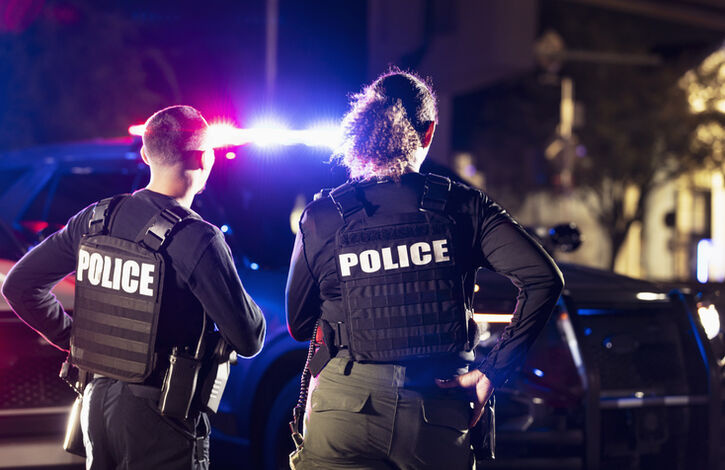
What “Failure to Intervene” Means in Police Misconduct Cases
Officers have a legal obligation to protect people from harm, even when the danger comes from someone wearing the same uniform. This includes stopping fellow officers from using clearly excessive force. When they don’t, and someone is seriously hurt or killed, the law may hold them responsible.
A failure-to-intervene claim is a type of civil rights lawsuit. It applies when an officer had a realistic chance to stop another officer’s unlawful conduct but failed to act. The force might involve a weapon, physical assault, or even prolonged restraint that was clearly unnecessary.
These claims do not require proof of a conspiracy or coordinated abuse. They focus only on what the bystanding officer knew, saw, and could have done. Courts expect officers to use their authority to prevent harm when they have time and opportunity.
In the Bronx, group police responses are common. When multiple officers are on scene during a shooting, it raises important legal questions. Who saw what? Who had the power to stop the violence? And who failed to act?
The Constitutional Basis for These Claims
Failure-to-intervene lawsuits come from federal civil rights law. Specifically, they fall under Section 1983 of the Civil Rights Act and are supported by the U.S. Constitution.
Two amendments apply: the Fourth Amendment, which protects against unreasonable seizures, and the Fourteenth Amendment, which requires due process and equal protection under the law.
When one officer uses unlawful force and another officer could have stopped it but chose not to, the inaction can violate the victim’s constitutional rights. Courts use a fact-based approach to decide whether the bystanding officer had enough awareness, time, and authority to prevent or reduce the harm.
In New York State, federal courts have upheld failure-to-intervene claims even when the misconduct lasted only a few seconds. The key questions are whether the non-acting officer saw what was happening, recognized it as excessive, and had a real chance to step in.
What Makes These Claims Common in the Bronx
The Bronx has long been a hotspot for high-profile police encounters. In some cases, multiple officers are present during shootings or arrests, and some of them clearly observe their colleague's actions. That’s where failure-to-intervene claims often begin.
In group responses, each officer is assigned a role, but no one is excused from accountability. When excessive force happens in front of multiple trained professionals, juries want to know why no one stepped in. This issue has surfaced in past NYPD-involved shootings in the Bronx where video showed officers surrounding a suspect while only one used a weapon.
The dense urban setting, the size of local patrol teams, and the history of strained community-police relationships all factor into these claims. Officers working in the Bronx often respond in teams or pairs. That proximity means others are usually close enough to observe what happens.
Because these cases rely on what nearby officers did or failed to do, Bronx incidents often create strong grounds for litigation. The facts on the ground matter, and so does the department’s own policy on intervention.
How Officers Are Trained to Recognize Excessive Force
Police departments don’t leave officers guessing about what to do when another officer steps out of line. Training programs in New York, including the NYPD Academy, include instruction on identifying and reporting excessive force.
Key elements of this training include:
- Recognizing when force is no longer necessary
- Knowing how to physically intervene without escalating the situation
- Reporting misconduct through internal channels
The NYPD Patrol Guide also instructs officers to act if they witness another officer violating department policies or using unjustified force. When officers fail to follow that guidance, their training records and policy manuals often become evidence in a civil lawsuit.
If an officer claims they didn’t know what was happening or didn’t realize the force was excessive, the plaintiff’s legal team may point to training materials, in-service reviews, or performance evaluations to challenge that defense.
In one recent Bronx case, investigators reviewed training logs to confirm the officer had attended multiple sessions focused on peer intervention. That helped prove the officer’s inaction wasn’t from lack of knowledge. It was a choice.
What Victims or Families Must Prove to Succeed
Failure-to-intervene cases require specific, fact-based evidence. Plaintiffs must show that the officer was close enough, alert enough, and empowered enough to stop the harm from happening.
In general, families or victims must prove:
- The original officer used clearly excessive or illegal force
- The second officer saw what happened or had access to the same information
- There was enough time to stop or limit the harm
- The second officer failed to act, and that failure made the harm worse
These claims often depend on timing. If the shooting or use of force happened in just one or two seconds, it may be hard to argue that another officer could have acted. But if the scene unfolded over several moments, with time for verbal commands, positioning, or other intervention, the legal path becomes stronger.
It’s not enough to show that an officer was present. The law requires evidence that they had a meaningful chance to stop what was happening. Video, statements, and forensic reports all help piece together that timeline.
Role of Body Cameras, Witnesses, and Timing Evidence
Success in these cases often comes down to what the evidence shows second by second. That’s where modern tools like body-worn cameras and time-stamped dispatch logs come in.
Body camera footage helps establish:
- Where each officer was positioned
- Who had a clear line of sight
- How much time passed between warning signs and the use of force
Radio traffic, dispatch logs, and surveillance videos can fill in additional details. If officers remained still or silent while a colleague used force that seemed excessive, that becomes critical.
Witness testimony also matters. Bystanders, medics, or other officers may describe what the bystanding officer did. Were they watching without reacting? Did they issue a warning? Did they try and fail to step in? These details shape how courts view the officer’s role.
In one Bronx case, a witness testified that an officer shouted, “Stop,” just before a colleague fired. That attempt to intervene helped shield the shouting officer from liability while adding weight to the claim against the shooter.
How Qualified Immunity May Affect the Case
Qualified immunity is a legal defense that protects officers unless their conduct violated a clearly established right. In failure-to-intervene claims, this can be a major obstacle.
To overcome it, plaintiffs must show:
- Courts had already ruled that officers must intervene in similar circumstances
- The officer had enough time and situational awareness to know force was excessive
- No reasonable officer in that position would have stood by without acting
This often requires comparing the case to earlier rulings in New York or nearby jurisdictions. If the facts align, courts may reject the qualified immunity defense and allow the case to proceed.
Legal teams use officer training, policy language, and expert opinions to support their argument that intervention was clearly required. If that argument holds, the officer may be personally liable for damages.
When the City Can Be Held Accountable for Inaction
Failure-to-intervene claims don’t always stop with the officers involved. Sometimes, the City of New York can also be held responsible. This happens under a type of lawsuit called a Monell claim, which targets government policies or practices that contribute to civil rights violations.
A Monell claim might argue that:
- The NYPD failed to train officers on how to stop each other from using excessive force
- Supervisors ignored earlier warnings or complaints
- A pattern of similar inaction shows deliberate disregard for public safety
If courts find that the city’s training was inadequate or that leadership tolerated misconduct, the city may have to pay damages. These lawsuits aim to hold institutions, not just individuals, accountable.
In the Bronx, where public concern about police accountability runs deep, Monell claims serve as a tool for broader reform. They force a closer look at how policies, discipline, and culture affect officer behavior in the field.
We Help Families Seek Accountability in New York Police Shooting Cases
At Horn Wright, LLP, we represent families across New York who believe an officer stood by and did nothing while their loved one was harmed. If you're facing that situation, you don’t have to carry the weight alone. Our civil rights attorneys know how to build these cases, challenge silence, and hold the right people accountable. If you need help, we’re ready to stand with you.

What Sets Us Apart From The Rest?
Horn Wright, LLP is here to help you get the results you need with a team you can trust.
-
Client-Focused ApproachWe’re a client-centered, results-oriented firm. When you work with us, you can have confidence we’ll put your best interests at the forefront of your case – it’s that simple.
-
Creative & Innovative Solutions
No two cases are the same, and neither are their solutions. Our attorneys provide creative points of view to yield exemplary results.
-
Experienced Attorneys
We have a team of trusted and respected attorneys to ensure your case is matched with the best attorney possible.
-
Driven By Justice
The core of our legal practice is our commitment to obtaining justice for those who have been wronged and need a powerful voice.