


Gunshot Residue Evidence in Wrongful Shooting Cases: Limits and Misuse
What Is Gunshot Residue Evidence and Why It Matters
Gunshot residue, often called GSR, shows up in many shooting investigations. These tiny particles come from the discharge of a firearm. Police often use GSR to claim someone fired a weapon, or was close when one went off. In the Bronx, that kind of evidence can carry serious weight. It often becomes a key part of a prosecutor's case, especially when other facts are shaky.
But GSR isn’t ironclad proof. And when someone's future hangs in the balance, flawed science can turn a life upside down. At Horn Wright, LLP, our Bronx wrongful shooting attorneys understand how quickly a Bronx resident can get caught up in a wrongful accusation. Our attorneys step in fast, fight hard, and bring in the right experts to challenge weak or misleading GSR evidence.
How Gunshot Residue Tests Work
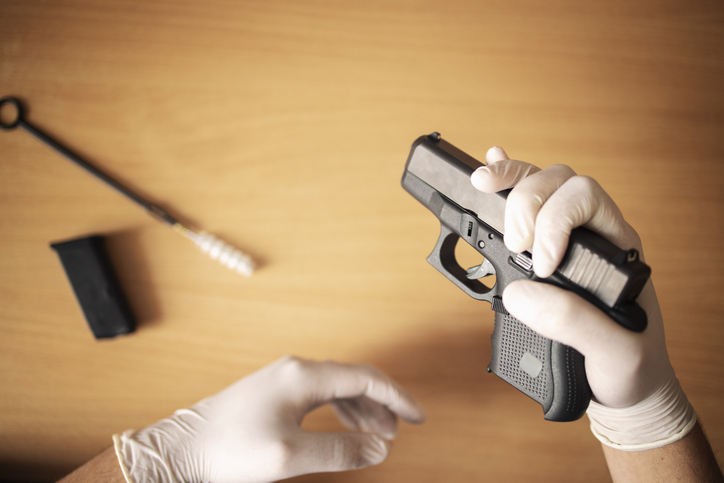
Gunshot residue forms when a gun fires. A cloud of microscopic particles spreads quickly. These particles, usually a mix of barium, lead, and antimony, can land on hands, clothing, or nearby surfaces. If someone stands close when a weapon fires, they might pick up some of this residue, even if they never touched the gun.
Police officers in the Bronx often collect GSR samples soon after an arrest. They swab a person’s hands or clothes and send the samples to a crime lab. NYPD’s local crime units, including those near the 44th and 47th Precincts, handle these samples. The test’s timing matters a lot. If hours pass before swabbing, the residue might already be gone. Washing hands, wiping on clothing, or even normal movements can remove the particles.
The Bronx’s dense, fast-moving environment also makes collection more complicated. Someone who simply rode in the same car or stood near a shooter might test positive. Crime labs try to interpret these samples, but the results often leave room for doubt.
Where Gunshot Residue Evidence Falls Short
GSR sounds scientific. But it’s far from precise. A test might detect residue on someone who was never involved. At the same time, someone who actually fired a gun might test negative, depending on the timing or how the sample was collected.
Residue particles behave unpredictably. They stick to skin and fabric, but they also drift through the air and move with contact. Police cars, holding cells, and handcuffs can all carry traces. In places like the Bronx, where law enforcement handles high volumes of arrests, cross-contamination becomes a real concern.
Some key limitations include:
- GSR doesn’t prove intent or action
- The test can’t confirm who fired the gun
- Positive results often come from environmental exposure
- GSR can disappear within minutes
- People who handle items touched by shooters may test positive
Even with all these issues, prosecutors sometimes lean hard on GSR findings. That makes it essential to question how samples were taken, stored, and analyzed.
The Bronx Factor: Environmental and Contextual Challenges
In the Bronx, everyday environments introduce layers of complexity. A shooting might happen on a crowded sidewalk near East 149th Street or outside a housing complex in Mott Haven. Moments later, dozens of people could carry traces of GSR, simply from being nearby.
Public housing areas, subway stations, and corner stores often pull in large crowds. The chances of cross-contamination rise. These are not sterile lab conditions, they’re living, breathing, chaotic spaces.
Someone pulled into custody at the 40th Precinct after a shooting might already have unknowingly come into contact with GSR. If officers don’t test immediately, or if the suspect interacts with shared holding areas, the results lose reliability.
The Bronx’s density actively affects how GSR behaves, spreads, and lands. That’s why defense attorneys must always consider the location and movement of people before and after a shooting.
Police Misuse of GSR in Wrongful Shooting Cases
When the evidence is thin, some law enforcement agencies rely on GSR to fill the gaps. That creates real problems in places like the Bronx, where high-pressure arrests and community tension often collide.
Police sometimes treat trace GSR results as direct proof of guilt. That misstep has led to wrongful accusations. Cases have surfaced where someone was standing near the shooter, or just happened to be nearby, and ended up facing charges because of a positive test.
In several Bronx investigations, especially in the South Bronx, officers failed to consider alternate explanations for the residue. They didn’t explore how the particles arrived or how long they stayed. Instead, they used the test to build a case that lacked video evidence or witness credibility.
This kind of overreliance drives injustice.
Legal Challenges to GSR Evidence in the Bronx
Defense attorneys across the Bronx have developed effective ways to push back against shaky GSR claims. The law recognizes that GSR alone can’t stand as proof. Skilled legal teams know how to question every step, from how officers collected the sample to how the lab analyzed it.
In the Bronx Supreme Court, some judges have already thrown out cases where GSR evidence lacked reliability. Those rulings often come after defense attorneys show inconsistencies in test results or flaws in how the evidence was preserved.
Strong challenges typically involve:
- Pointing out collection delays
- Highlighting potential contamination from shared surfaces
- Disputing lab protocols
- Questioning whether proper chain of custody was followed
Bronx juries respond to clear, honest explanations of GSR’s limits. When attorneys focus on facts, they can often dismantle the prosecution’s case.
How Defense Teams Build Strong Counter-Evidence
Defense teams build powerful alternative narratives. In GSR-related cases, attorneys often bring in their own experts to reanalyze samples or inspect lab records. That level of scrutiny helps reveal errors that may not show up in police reports.
In the Bronx, some legal teams have exposed how local labs mishandled storage or skipped key protocols. Others have found records of outdated equipment or improper technician training. These facts matter, especially in high-stakes shooting cases.
Steps a defense team may take:
- Hire forensic scientists to conduct independent analysis
- Subpoena lab communications or testing logs
- Recreate arrest timelines to show possible contamination
- Compare clothing samples to known environmental exposures
These strategies often uncover the truth.
When GSR Evidence Becomes the Only Evidence
Some of the most troubling cases involve GSR standing alone. No witness. No weapon. No motive. Just a few particles on someone’s hands or clothing.
In the Bronx, those cases happen more often than most realize. Police face pressure to close cases quickly. Prosecutors sometimes move forward on what they have, hoping that juries won’t question the science.
But GSR can’t speak for itself. Without context, it’s just residue. A skilled attorney will always fight to ensure that no one faces charges based only on GSR, especially in a borough where false positives can come from a simple walk down the block.
The courts need full stories.
Real-World Impact: Bronx Residents Wrongly Accused
The damage doesn’t stop in the courtroom. Wrongful accusations based on GSR can tear lives apart. People lose jobs. Families break under the pressure. Months or years pass before charges get dropped, or someone gets cleared at trial.
In the Bronx, young adults have lost college opportunities because of a GSR charge that didn’t stick. Parents have missed out on time with their kids while fighting charges rooted in bad science.
The impact spreads beyond the accused. Their families, neighbors, and entire communities carry the weight of these mistakes. Trust in law enforcement erodes. People hesitate to speak up when they see wrongdoing. The cycle continues unless someone steps in to fight it.
GSR cases often intersect with broader questions of false imprisonment and flawed police tactics.
Know the Limits of GSR in Bronx Shooting Cases
Gunshot residue isn’t a perfect science. It’s fragile, subject to contamination, and often misunderstood. In Bronx shooting cases, it can lead to devastating errors when taken out of context. If GSR evidence plays a role in your case, don’t take it at face value. Talk to a defense team that knows how to challenge every step of the process.
At Horn Wright, LLP, we help Bronx residents push back against weak evidence and wrongful accusations. Our attorneys work closely with forensic experts to bring facts, not assumptions, to court. Contact us today to protect your rights and build your defense.

What Sets Us Apart From The Rest?
Horn Wright, LLP is here to help you get the results you need with a team you can trust.
-
Client-Focused ApproachWe’re a client-centered, results-oriented firm. When you work with us, you can have confidence we’ll put your best interests at the forefront of your case – it’s that simple.
-
Creative & Innovative Solutions
No two cases are the same, and neither are their solutions. Our attorneys provide creative points of view to yield exemplary results.
-
Experienced Attorneys
We have a team of trusted and respected attorneys to ensure your case is matched with the best attorney possible.
-
Driven By Justice
The core of our legal practice is our commitment to obtaining justice for those who have been wronged and need a powerful voice.