


How Reconstruction Experts Prove Speed and Braking in Bronx Truck Crashes
Understanding the Science of Crash Analysis
Truck crashes in the Bronx leave more than just twisted metal behind. If you've been injured, you're left trying to explain what happened while facing mounting medical bills and time off work.
But memory only goes so far, and witnesses don’t always stick around. When your future depends on proving how fast that truck was going or whether the driver tried to stop, accident reconstruction experts step in to fill the gap.
At Horn Wright, LLP, our Bronx truck accident lawyers work closely with qualified reconstruction experts to help build strong claims. Whether your crash happened on the Cross Bronx Expressway or a residential road near Grand Concourse, we know how to preserve and present the technical evidence that backs up your experience.
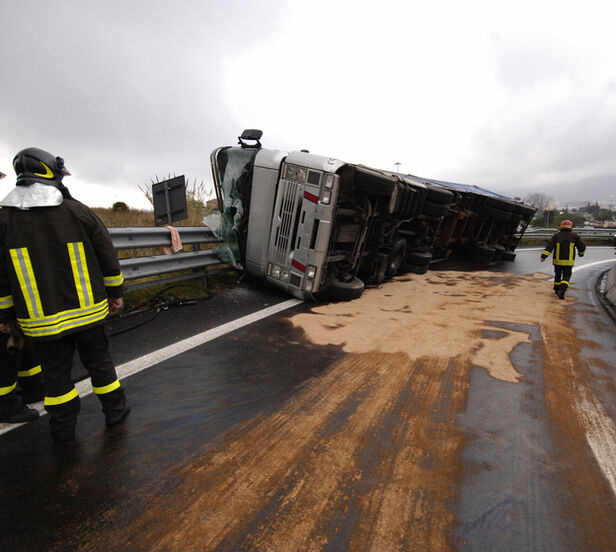
What Do Accident Reconstruction Experts Do?
Reconstruction experts are trained to investigate vehicle collisions. Their job is to determine how the crash happened based on facts, measurements, and science.
In Bronx truck accidents, these professionals often play a key role in showing the speed the truck was traveling, how long the driver had to react, and whether the braking matched up with the events that took place.
They usually have backgrounds in physics, engineering, or law enforcement. What makes their work powerful is how they combine data from the crash with their technical knowledge.
They start with what's left at the scene: vehicle positions, damaged guardrails, skid marks, and crush damage. Then they work backwards to figure out the chain of events.
This type of analysis becomes especially important when liability is unclear. If the truck driver claims they were driving safely, the reconstruction expert can analyze physical and digital evidence to either support or challenge that claim.
Local Road Conditions Shape Analysis in the Bronx
The Bronx is one of the most densely packed areas in New York City. The roads aren’t always wide enough for heavy trucks, especially in places like Jerome Avenue or Southern Boulevard. Reconstruction experts have to consider these road conditions when evaluating a crash.
Speed alone doesn’t tell the full story. On narrow roads, a truck going the posted limit may still be traveling too fast for the environment. Bronx streets often have sudden turns, limited visibility, and heavy pedestrian traffic.
Experts analyze things like lane width, crosswalk positions, and curb locations to understand whether the truck driver had enough room to stop safely.
They also account for traffic flow and congestion. Crashes on the Bruckner Expressway, for instance, may involve stop-and-go conditions that affect how long it takes a truck to come to a complete stop.
These local elements shape the expert’s understanding of what happened and help clarify what actions the driver could or should have taken.
Physical Evidence from the Scene Tells the Story
Physical evidence tells part of the story that witnesses often miss. Skid marks, for instance, can show where the truck started braking. The length and depth of those marks tell experts how much force the driver used and how quickly the vehicle stopped.
Damage patterns on the vehicles help pinpoint the direction and angle of the collision. A twisted bumper or side panel can reveal whether the truck swerved, clipped a smaller vehicle, or failed to stay in its lane. Debris fields also matter. Pieces of shattered glass or displaced cargo can confirm how the crash unfolded.
Experts also look at road surface conditions. Wet pavement or oil patches near the Bronx River Parkway might extend stopping distance. Every detail helps them understand the speed, direction, and force behind the impact.
Because cleanup crews often remove this evidence quickly, it's important for attorneys to document the scene as soon as possible.
Truck Data Systems Provide Digital Proof
Most modern commercial trucks are equipped with electronic control modules (ECMs), often called black boxes.
These devices record vital data such as speed, brake timing, throttle use, and engine hours. Reconstruction experts use this data to match up with physical evidence from the scene.
In many Bronx truck accidents, the ECM will show how fast the truck was going in the final seconds before impact. It can also reveal when the driver applied the brakes and whether they attempted to swerve. This information can be especially helpful when there are no witnesses or clear surveillance footage available.
Some trucks also use telematics systems that transmit data in real time. Experts can compare this with dashcam video, if available, to piece together a moment-by-moment timeline.
For crashes near industrial zones like Hunts Point or along I-95, this tech-based evidence is often the strongest link in proving fault.
Digital Modeling Creates a Full Picture
When eyewitness accounts conflict or visual evidence is limited, reconstruction experts may turn to digital modeling.
These 3D simulations use physics-based software to recreate the crash. The models calculate the vehicle’s speed, angle, and path based on the available data and physical evidence.
This process involves inputting measurements like skid length, vehicle weight, and road friction into specialized programs. The result is a visual reconstruction that shows how the truck approached the crash point, when braking occurred, and where each vehicle ended up. These animations can be especially powerful during mediation or trial.
In Bronx courtrooms, where jurors may not be familiar with vehicle dynamics, a clear digital model can make the evidence easier to understand.
It creates a visual timeline that supports the victim’s version of events. When the trucking company offers a conflicting story, the expert’s animation can refute it with clear, science-based visuals.
Human Factors Help Explain Driver Decisions
Accident reconstruction doesn’t stop at physics. Experts also analyze the human side of the crash. They consider whether the truck driver had enough time and visibility to react. In the Bronx, this is especially relevant on streets with parked cars, double-parked delivery trucks, or blind corners near schools.
Experts assess the driver’s field of vision and how long it should have taken to recognize a hazard. They also look at the truck’s blind spots. In areas like Westchester Avenue or White Plains Road, pedestrians and cyclists often move unpredictably. Failing to check mirrors or slow down in those zones may indicate driver error.
Reaction time matters too. Was the driver distracted? Did they brake too late or hesitate? By studying the truck’s speed and the timing of brake application, experts can identify gaps in decision-making that contributed to the crash.
Speed Must Match Road Conditions
Posted speed limits are one factor. But in a congested urban setting like the Bronx, driving the speed limit isn’t always safe. Experts consider whether the truck driver should have slowed down based on traffic, weather, or road conditions.
They compare actual speed, recorded by the truck’s black box, to what a reasonable driver would have done in the same situation. This comparison may show that the driver was technically within the limit but still driving too fast for the area.
Near the Bronx Terminal Market or along Fordham Road, traffic slows often and unpredictably. A large truck traveling at full speed in those zones can become a real hazard.
Experts also evaluate company policies and federal safety standards. If the driver violated those internal rules or federal guidelines, it strengthens the case for negligence.
Clear Testimony Makes the Case Stronger
Once the analysis is complete, the expert puts together a formal report. This includes measurements, photos, data readouts, and conclusions about speed and braking. They may also prepare illustrations or animations to help explain their findings.
During a Bronx truck accident case, these experts often testify in court. They walk the judge or jury through their process and help them understand how the crash happened. Their job is to present the facts in a clear, unbiased way.
Attorneys rely on this testimony to challenge defense claims or to support demands for fair compensation. When presented effectively, reconstruction findings can convince insurers to settle or sway jurors toward awarding damages.
These experts make the technical side of the case accessible, which can have a big impact on the outcome.
Get Legal Guidance with Technical Backing
At Horn Wright, LLP, we build every Bronx truck accident case on facts, not guesswork. Our legal team works with skilled reconstruction experts who help us prove exactly what happened and why.
If you were hit by a truck and need to show how fast it was going or whether the driver braked at all, we can help make your case as strong as possible from the start. Let us take the pressure off your shoulders while you focus on getting better.

What Sets Us Apart From The Rest?
Horn Wright, LLP is here to help you get the results you need with a team you can trust.
-
Client-Focused ApproachWe’re a client-centered, results-oriented firm. When you work with us, you can have confidence we’ll put your best interests at the forefront of your case – it’s that simple.
-
Creative & Innovative Solutions
No two cases are the same, and neither are their solutions. Our attorneys provide creative points of view to yield exemplary results.
-
Experienced Attorneys
We have a team of trusted and respected attorneys to ensure your case is matched with the best attorney possible.
-
Driven By Justice
The core of our legal practice is our commitment to obtaining justice for those who have been wronged and need a powerful voice.