


Institutional Liability in Nursing Home Sexual Abuse Cases
When the Place Meant to Care for Your Loved One Becomes a Source of Harm
Families who contact Horn Wright, LLP, our sexual abuse attorneys often begin with the same kind of memory: visiting a parent or grandparent in a nursing home and feeling reassured by the clean hallways, the friendly aides, the calm routines. They believed their loved one was safe. Many even felt guilty placing them there, but convinced themselves the facility could provide the level of care they couldn’t manage alone.
For survivors of nursing home sexual abuse, that trust becomes painful to revisit. Once the truth surfaces, whether through a sudden change in behavior, a medical exam, or a brave disclosure, families describe feeling shock mixed with disbelief. They replay earlier visits, small remarks their loved one made, staff who avoided eye contact, or moments when something felt “off” but too vague to name. Only later do these pieces fall into place, revealing a pattern they wish they had recognized immediately.
Nursing Homes Have a Legal Duty to Prevent Abuse, Not Just React to It
Nursing homes are heavily regulated for a reason. Residents often have limited mobility, cognitive decline, communication challenges, or medical needs that make them particularly vulnerable to misconduct. Every staff member, nurses, aides, administrators, contractors, has direct access to people who cannot defend themselves or speak up easily.
The U.S. Centers for Medicare & Medicaid Services (CMS) requires nursing homes to maintain environments free from abuse, exploitation, and neglect. Yet families often describe facilities that were understaffed, poorly supervised, or unwilling to confront problematic employees. Some survivors lived in units where call bells went unanswered, where staff rushed from room to room, or where night shifts ran thin with only a handful of people watching dozens of residents.
Institutional liability stems from these systemic failures. Abuse in a nursing home rarely occurs in isolation. It grows in environments where oversight is weak, culture is complacent, and leadership prioritizes reputation over safety.
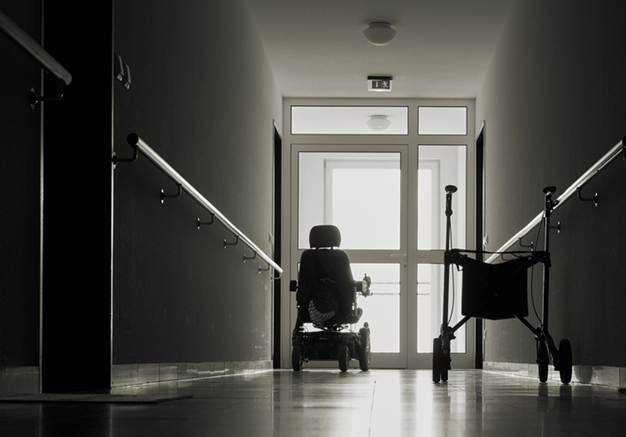
The Subtle Signs of Institutional Failure Inside Nursing Homes
Families rarely see the institutional negligence right away. When they reflect later, they recall hints that now feel unmistakable, like changes in staff assignments, unexplained bruises dismissed as “falls,” odd behavior from aides that didn’t raise concern at the time, or a resident’s growing withdrawal that no one investigated.
Institutional liability may exist when:
- Staffing levels were too low to safely supervise vulnerable residents.
- Background checks were inadequate or staff with prior misconduct were hired anyway.
- Complaints were minimized, ignored, or treated as misunderstandings.
- Facility leadership discouraged families from asking questions or pursuing formal reports.
Survivors often describe facilities that operated on “routines,” where rushed employees created gaps that predators could exploit. In many of these cases, warning signs were present long before anyone recognized them as danger.
When Reporting Becomes Impossible for the Resident
Unlike children, who may speak up in fragments, many nursing home residents cannot articulate what happened. Survivors with dementia may express distress through behavior rather than words. Non-verbal residents may rely entirely on staff to interpret signs of fear or pain.
The New York State Department of Health (NYSDOH) emphasizes that facilities must train staff to recognize behavioral indicators of abuse, not just physical ones. Yet survivors’ families often describe the opposite: staff attributing fearfulness to “sundowning,” dismissing panic as confusion, or writing off sudden aggression as a symptom of cognitive decline.
These misinterpretations are not harmless—they actively conceal abuse. When staff fail to investigate unusual behavior, the burden falls unfairly on the resident, who may have no means to communicate the truth.
The Moment Families Learn the Facility Knew More Than They Said
One of the hardest parts for survivors’ families is discovering that the facility had prior warning signs. Sometimes they learn another resident complained months earlier. Other times, staff members had expressed concerns about a coworker, but leadership brushed it aside. In some cases, the accused had been quietly transferred between units or shifts.
This realization ignites a new kind of grief: the knowledge that the harm was preventable. Families often describe the moment they realize the facility didn’t just fail to protect their loved one, it failed every resident by allowing the danger to continue.
What Evidence Reveals Institutional Responsibility
Investigations into nursing home abuse often uncover patterns hidden beneath the surface. Cases rarely hinge on a single document. Instead, they unfold through the small details facilities hope no one notices.
Evidence may include:
- Incident reports that were never shared with families or state authorities.
- Staffing logs showing chronic understaffing.
- Prior disciplinary actions against the accused that leadership downplayed.
- Medical records documenting injuries inconsistent with staff explanations.
These details form a larger story: not just that abuse happened, but that the institution created the environment where it could occur.
What Justice Means for Families of Nursing Home Abuse Survivors
Families often come forward not only seeking accountability but also out of fear for other residents. Many say they want answers, real answers, not scripted apologies or closed-door investigations that never lead to change. Justice can involve compensation for medical care, relocation, trauma, and long-term support. But survivors’ families often emphasize something else: the need to expose what happened, to ensure that the facility cannot hide behind its policies or public reputation.
When institutions fail to protect people who cannot protect themselves, accountability becomes an act of dignity, for the survivor, for the family, and for all residents who depend on the facility for safety.
You Don’t Have to Fight a Nursing Home Alone
Nursing homes often have lawyers, administrators, and corporate structures designed to shield them from scrutiny. Families deserve someone who sees through that and keeps the survivor’s experience at the center.
At Horn Wright, LLP, our sexual abuse attorneys help families uncover what the institution knew, how they responded, and why they failed to act. If you believe a nursing home failed to protect your loved one, contact us so we can help you pursue answers and accountability with care and unwavering focus.

What Sets Us Apart From The Rest?
Horn Wright, LLP is here to help you get the results you need with a team you can trust.
-
Client-Focused ApproachWe’re a client-centered, results-oriented firm. When you work with us, you can have confidence we’ll put your best interests at the forefront of your case – it’s that simple.
-
Creative & Innovative Solutions
No two cases are the same, and neither are their solutions. Our attorneys provide creative points of view to yield exemplary results.
-
Experienced Attorneys
We have a team of trusted and respected attorneys to ensure your case is matched with the best attorney possible.
-
Driven By Justice
The core of our legal practice is our commitment to obtaining justice for those who have been wronged and need a powerful voice.