


Firearm Accidents Due to Improper Training
Poor Training Can Turn a Gun Into a Hazard
Every firearm carries responsibility, and when that responsibility isn’t taught correctly, danger follows. A gun isn’t inherently unsafe, but a poorly trained person holding one can turn it into a deadly weapon in seconds. Too often, we see people handed a firearm after only a brief demonstration or a few minutes of instruction. The result? Lives forever changed.
At Horn Wright, LLP, our personal injury attorneys have worked with victims injured by mishandled weapons, botched safety courses, and negligent instruction. A training class is supposed to build confidence, not fear. But when instructors fail to teach proper handling or range safety, the outcome can be devastating. The problem isn’t the firearm, it’s the system that allowed someone to hold one without real preparation.
Common Errors Caused by Inadequate Firearm Instruction
Accidents caused by poor firearm training follow patterns that lawyers and investigators recognize instantly. Most involve basic safety steps that should have been second nature, if only they’d been properly taught.
Some of the most common training-related mistakes include:
- Assuming a gun is unloaded without verifying it.
- Failing to keep the muzzle pointed in a safe direction.
- Neglecting trigger discipline, resting a finger where it doesn’t belong.
- Incorrect loading and unloading procedures.
- Unsafe positioning during live-fire drills.
- Improper use of safety mechanisms or holsters.
These errors often start with rushed or unqualified instructors. Some training schools prioritize volume over quality, pushing dozens of people through “certification” classes in a single weekend. Others skip vital range supervision or pair novices with outdated or poorly maintained weapons.
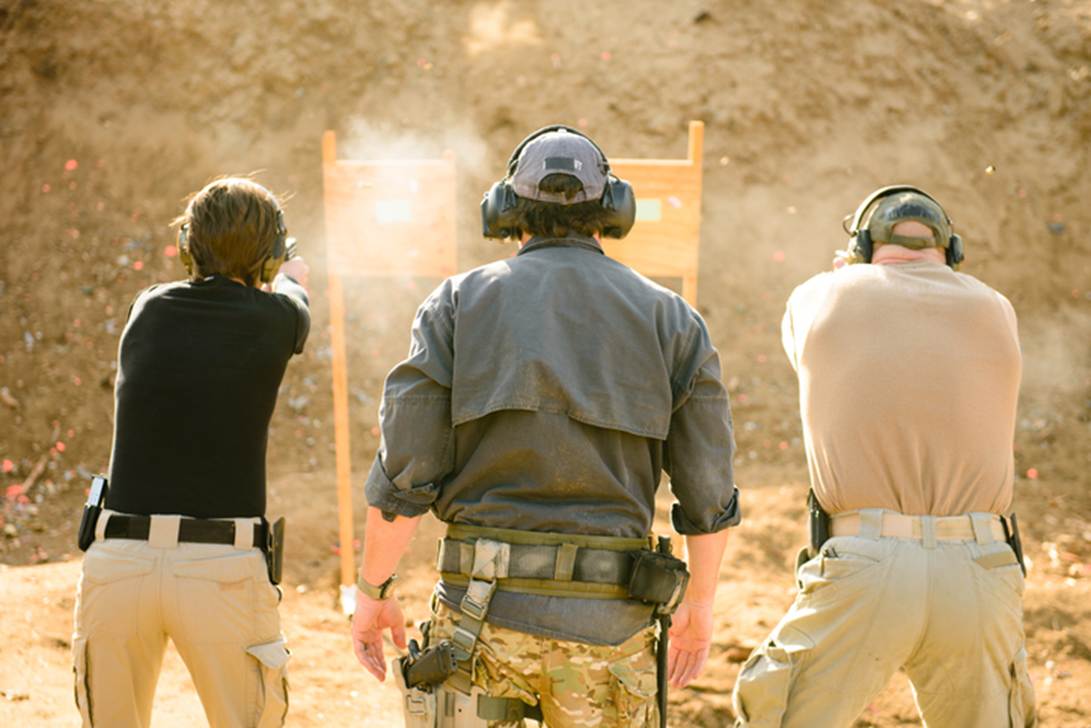
In New York, the consequences can be catastrophic. A single mistake in a crowded indoor range can cause multiple injuries. A misfire during a concealed-carry course can leave a lifelong mark. Every one of these events starts with something that should have been prevented during training.
How Training Facilities and Instructors Can Be Held Liable
Under New York law, training facilities and instructors owe a clear duty of care to their students. That means they must follow all recognized safety standards, provide adequate supervision, and use properly maintained equipment. When they don’t, and someone gets hurt, they can be held liable for negligence.
A facility or instructor may be legally responsible if they:
- Failed to verify that all firearms were unloaded during demonstrations.
- Allowed unsupervised handling of live weapons.
- Used unsafe ammunition or malfunctioning firearms.
- Ignored state or federal training requirements.
- Employed unqualified or uncertified trainers.
Negligence cases against training facilities often rely on premises liability, negligent supervision, or failure to warn theories. Each centers on one truth: the instructor or business had control over safety and failed to maintain it.
These cases aren’t about punishing small mistakes, they’re about holding professionals accountable for failing to protect people who trusted them to teach safety.
Evidence That Proves Training Negligence in Court
Proving that improper training caused a firearm accident takes careful investigation and credible evidence. Lawyers focus on how instruction was given, what materials were used, and whether the facility followed recognized safety practices.
The strongest evidence includes:
- Written course materials or safety manuals that omit essential instruction.
- Video footage from the range or classroom.
- Witness statements from other students who noticed unsafe behavior.
- Maintenance records for firearms used during training.
- Instructor certifications showing gaps or expired credentials.
- Expert testimony on accepted firearm safety standards.
Many gun training accidents are recorded on surveillance cameras, especially at indoor ranges. Those videos often reveal the truth, an instructor distracted, a safety check skipped, or a student left unsupervised. Once that evidence comes to light, it becomes very difficult for a negligent instructor to deny responsibility.
In one New York case, a trainee was shot in the leg during a safety demonstration because an instructor failed to confirm the weapon was empty. The investigation showed that live ammunition had been mixed with dummy rounds. The court found the instructor negligent and awarded full compensation for medical care, therapy, and long-term mobility loss.
Vermont Does Not Require Firearm Safety Training as Broadly as New York
New York’s firearm regulations are strict, emphasizing education and accountability. Vermont’s are far less comprehensive, a contrast that often surprises people living near the border.
Here’s how they differ:
- New York requires safety training for pistol permits and many hunting licenses.
- Vermont has no statewide firearm safety training mandate for ownership or open carry.
- Instructor oversight in Vermont is minimal compared to New York’s licensing process.
- Liability standards for training negligence are narrower, relying mostly on general negligence law rather than specific statutory duties.
That means victims of improper training in Vermont often have fewer legal tools than those in New York. In New York, clear safety regulations and documented instructor obligations make it easier to prove wrongdoing and secure recovery.
Strong laws don’t just prevent harm, they create a system where accountability is built into every step of firearm education.
Compensation for Victims of Training-Related Gun Accidents
Victims of negligent firearm instruction often face steep medical costs and long recoveries. Beyond the physical damage, many also suffer psychological trauma — fear of loud noises, anxiety in crowds, or distrust of even basic safety environments.
Under New York’s civil laws, victims can recover compensation for:
- Medical expenses including surgery, hospitalization, and therapy.
- Lost wages or reduced earning capacity.
- Pain and suffering, for both physical and emotional distress.
- Long-term care costs, including rehabilitation or mobility support.
- Psychological counseling, addressing anxiety or post-traumatic stress.
- Punitive damages, if the conduct showed reckless disregard for safety.
These damages aren’t about punishment, they’re about restoring balance. A single moment of negligence can lead to years of recovery. Financial compensation gives victims the chance to rebuild their health and stability while holding responsible parties accountable.
How to Hold Negligent Instructors Responsible
Holding a negligent instructor or facility accountable begins with documentation. Every injury has a trail, photos, text messages, class rosters, and safety waivers all play a role. A qualified attorney can piece these together into a clear timeline of what went wrong.
The process often involves:
- Preserving all evidence, including the weapon, ammunition, and range records.
- Obtaining instructor certifications to verify training qualifications.
- Interviewing witnesses from the same course or facility.
- Consulting firearms experts to evaluate whether the instruction met accepted standards.
- Filing a claim or lawsuit under negligence or premises liability law.
In some cases, insurance coverage applies under a facility’s business policy. Other times, individual instructors are personally liable. The key is moving quickly, evidence at ranges and training centers can be erased or replaced in days.
A well-prepared legal team ensures that doesn’t happen.
Horn Wright, LLP, Represents Victims of Improper Firearm Training
Firearm training should build safety and confidence, not create victims. When poor instruction or negligence causes harm, those responsible must answer for it.
At Horn Wright, LLP, our personal injury attorneys represent New Yorkers injured during unsafe firearm training or instruction. We work with experts in range safety, training certification, and firearms engineering to uncover every detail of how and why an accident occurred.
We handle these cases with respect and determination. Our goal isn’t just compensation, it’s change. Every time a negligent instructor is held accountable, another preventable tragedy is stopped before it starts.
Because safety isn’t optional, and training should never end with someone in an ambulance.

What Sets Us Apart From The Rest?
Horn Wright, LLP is here to help you get the results you need with a team you can trust.
-
Client-Focused ApproachWe’re a client-centered, results-oriented firm. When you work with us, you can have confidence we’ll put your best interests at the forefront of your case – it’s that simple.
-
Creative & Innovative Solutions
No two cases are the same, and neither are their solutions. Our attorneys provide creative points of view to yield exemplary results.
-
Experienced Attorneys
We have a team of trusted and respected attorneys to ensure your case is matched with the best attorney possible.
-
Driven By Justice
The core of our legal practice is our commitment to obtaining justice for those who have been wronged and need a powerful voice.