


Who Is Liable When a Car Changes Lanes Into a Motorcycle in Burlington, VT?
A Driver's Split-Second Decision Can Change a Rider's Life
Motorcycle riders depend on surrounding drivers to pay attention when moving through traffic. Unfortunately, a careless lane change can place a rider directly in harm's way with little warning. When a vehicle suddenly enters a motorcycle's lane, the rider may have only a fraction of a second to react.
These accidents often happen during routine driving situations. A driver may believe a lane is clear and begin moving over without noticing a nearby motorcycle. Because motorcycles are smaller and less protected than passenger vehicles, even a relatively minor collision can result in serious injuries.
Determining liability after a lane-change accident often requires a close look at the driver's actions before the crash occurred. The investigation typically focuses on whether the driver exercised reasonable care before moving into another lane. Understanding how these accidents happen can help injured riders better understand their legal options.
Working with experienced Vermont motorcycle accident attorneys can help riders evaluate who may be responsible for a lane-change collision. At Horn Wright, LLP, our attorneys help injured riders investigate motorcycle accidents, preserve evidence, and pursue compensation from negligent drivers. Every crash deserves a careful review of the facts.
Mirror Checks Alone May Not Be Enough
Many drivers believe a quick glance in the side mirror is sufficient before changing lanes. In reality, safe lane changes often require continuous observation of surrounding traffic. Conditions can change rapidly, especially when motorcycles are involved.
A motorcycle may not appear in a mirror one moment and become visible the next. Traffic speeds, lane positioning, and vehicle spacing can change within seconds. Drivers who rely on outdated observations may unknowingly move into an occupied lane.
Investigators often examine whether the driver maintained awareness throughout the lane-change maneuver. The question is not simply whether the driver looked once. The question is whether the driver exercised reasonable caution before entering the rider's lane.
Why Motorcycles Are Frequently Overlooked in Traffic
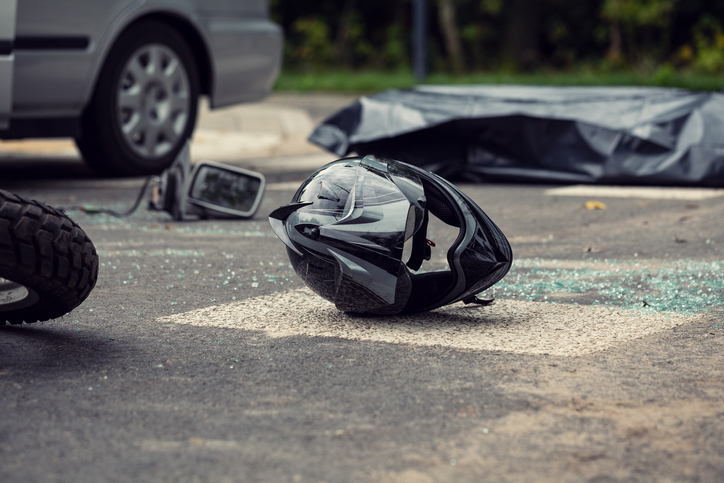
Motorcycles present unique visibility challenges for drivers. Their smaller size makes them easier to miss compared to passenger vehicles, SUVs, and commercial trucks. However, smaller visibility does not relieve drivers of their responsibility to watch for nearby traffic.
Human perception can also play a role. Drivers sometimes focus on larger vehicles and fail to notice motorcycles approaching in adjacent lanes. This phenomenon can lead motorists to incorrectly believe a lane is open when a rider is actually nearby.
Research into traffic safety has repeatedly shown that motorcycles are often overlooked despite being visible. These perception failures contribute to many lane-change collisions each year. Understanding this issue is often important when evaluating liability.
Heavy Traffic Creates Additional Risks for Riders
Lane-change motorcycle accidents often occur during periods of congestion. Drivers may become impatient while attempting to move through traffic or position themselves for upcoming exits and intersections. These situations can increase the likelihood of sudden lane movements.
Areas near downtown Burlington, commercial corridors, and busy commuter routes frequently experience changing traffic patterns. Drivers may focus heavily on surrounding cars while overlooking motorcycles sharing the roadway. Split-second decisions can have serious consequences.
Motorcyclists often have fewer options when traffic is dense. Limited escape routes can make it difficult to avoid a vehicle that unexpectedly enters their lane. This reality often contributes to the severity of these crashes.
Last-Minute Lane Changes Can Be Especially Dangerous
Some lane-change accidents occur when drivers realize they are about to miss a turn, exit, or roadway connection. Rather than continuing safely and rerouting later, they may make abrupt movements across one or more lanes of traffic. These sudden maneuvers can create substantial risks.
Motorcycles are particularly vulnerable in these situations because riders have less time to recognize and respond to the developing hazard. A sudden lane change may leave no safe path for avoidance. Even highly experienced riders may struggle to react quickly enough.
Investigators often examine whether the driver's actions were predictable and reasonable under the circumstances. Unexpected movements frequently become an important factor when determining liability. Safe driving generally requires advance planning rather than last-second decisions.
Commercial Vehicles Can Create Larger Blind Zones
When a lane-change collision involves a commercial vehicle, additional concerns often arise. Delivery trucks, utility vehicles, and tractor-trailers typically have significantly larger blind spots than ordinary passenger vehicles. These blind zones can create challenges for both drivers and riders.
Commercial drivers are generally expected to understand the limitations of their vehicles. Proper mirror use, lane positioning, and awareness of surrounding traffic are important parts of safe operation. Failing to account for nearby motorcycles can lead to devastating results.
These cases sometimes involve issues beyond the individual driver. Company policies, driver training practices, and vehicle safety procedures may also become relevant. A thorough investigation often examines all contributing factors.
Technology Is Changing How These Accidents Are Investigated
Modern vehicles increasingly contain technology that may help explain what happened before a crash. Dash cameras, lane-monitoring systems, onboard sensors, and vehicle data systems can sometimes provide valuable information. These technological tools have become increasingly important in accident investigations.
Video recordings may show exactly when the driver initiated the lane change. Electronic systems may reveal vehicle speed, steering inputs, and braking activity. These details can help investigators better understand how the collision occurred.
Technology does not replace traditional evidence. However, it often provides an objective perspective that supplements witness accounts and physical evidence. This additional information can be extremely valuable when fault is disputed.
Certain Driving Behaviors Frequently Contribute to Lane-Change Crashes
Although every accident is unique, several behaviors repeatedly appear in lane-change motorcycle cases. These actions often reduce driver awareness and increase collision risks. Understanding these patterns may help explain how the crash occurred.
Common contributing factors include:
- Distracted driving
- Aggressive driving
- Fatigued driving
- Failure to check blind spots
- Sudden merging maneuvers
Each of these behaviors can interfere with a driver's ability to recognize nearby motorcycles. Even a brief lapse in attention may have serious consequences. Investigators often examine whether one or more of these factors played a role.
The Rider's Position on the Roadway Often Becomes an Issue
After a lane-change accident, insurance companies sometimes scrutinize the rider's location within the lane. Questions may arise regarding visibility, spacing, and positioning before the collision occurred. These issues frequently become part of liability discussions.
Motorcyclists are entitled to use an entire traffic lane under normal circumstances. Riders often adjust their lane position to improve visibility, avoid hazards, or create additional safety margins. These adjustments are generally part of normal motorcycle operation.
The focus should remain on whether the driver safely checked the lane before moving into it. Attempts to blame the rider's position are not always supported by evidence. Careful investigation often helps clarify what actually occurred.
Recovery Can Be Long After a Side-Impact Collision
Many lane-change accidents involve side impacts that throw riders from their motorcycles. Even when speeds are relatively moderate, the resulting injuries can be substantial. Recovery often requires extensive medical treatment and rehabilitation.
Broken bones, shoulder injuries, head trauma, and spinal injuries are not uncommon. Some riders face months of physical therapy before returning to work or daily activities. Others may continue experiencing limitations long after the crash.
The financial consequences can be significant as well. Medical bills, lost income, and ongoing treatment costs often place considerable stress on injured riders and their families. These damages frequently become central issues in injury claims.
Building a Strong Claim Often Starts With Understanding How the Crash Happened
Lane-change motorcycle accidents are often preventable. Many occur because a driver failed to properly observe surrounding traffic before moving into another lane. Determining liability usually begins with understanding the decisions made in the moments leading up to the collision.
A thorough investigation may reveal whether the driver checked mirrors, monitored blind spots, and maintained awareness of nearby traffic. It may also help identify additional factors that contributed to the crash. The clearer the facts become, the easier it may be to determine responsibility.
Because these accidents often happen quickly, it is important not to rely solely on assumptions. Careful analysis of the evidence frequently provides the strongest foundation for evaluating liability and pursuing compensation.
Federal Agencies Continue Studying Lane-Change and Motorcycle Safety Risks
Lane-change collisions remain a significant concern for motorcycle riders throughout the United States. Several federal agencies conduct ongoing research regarding motorcycle visibility, driver awareness, traffic operations, and crash prevention. While these organizations do not determine fault in individual injury claims, their findings help explain why lane-change accidents often result in serious injuries for riders.
The National Highway Traffic Safety Administration (NHTSA) publishes research concerning motorcycle safety, driver awareness, crash causation, and roadway risk factors. Its studies examine many of the visibility and perception issues that contribute to collisions between passenger vehicles and motorcycles. These resources help illustrate why drivers sometimes fail to detect riders before changing lanes.
The Federal Highway Administration (FHWA) conducts extensive research regarding traffic operations, roadway design, lane management, and transportation safety. Its work helps transportation professionals understand how traffic patterns, roadway configurations, and driver behavior influence crash risks. The agency's findings provide valuable insight into the factors that often contribute to unsafe lane-change collisions.
Speak With Horn Wright, LLP, About Your Burlington Motorcycle Accident Claim
If a driver changed lanes into your motorcycle in Burlington or elsewhere in Vermont, you may have the right to pursue compensation for your injuries, lost wages, medical expenses, and other losses.
Horn Wright, LLP, helps injured riders investigate lane-change collisions, identify responsible parties, and pursue claims against negligent drivers and insurance companies. To discuss your situation during a confidential consultation, contact our Burlington motorcycle accident lawyers today at 802-328-9098.

What Sets Us Apart From The Rest?
Horn Wright, LLP is here to help you get the results you need with a team you can trust.
-
Client-Focused ApproachWe’re a client-centered, results-oriented firm. When you work with us, you can have confidence we’ll put your best interests at the forefront of your case – it’s that simple.
-
Creative & Innovative Solutions
No two cases are the same, and neither are their solutions. Our attorneys provide creative points of view to yield exemplary results.
-
Experienced Attorneys
We have a team of trusted and respected attorneys to ensure your case is matched with the best attorney possible.
-
Driven By Justice
The core of our legal practice is our commitment to obtaining justice for those who have been wronged and need a powerful voice.