


Truck Driver Negligence: Know Your Rights
Negligence Behind the Wheel Can Destroy Lives
When an 18-wheeler barrels down I-95 or cuts through the Bronx River Parkway, every driver around it trusts the trucker to follow the rules of the road. If that trust is broken, lives change in an instant. A careless lane change, a missed stop, or a phone glance can turn a work commute into a tragedy.
At Horn Wright, LLP, our truck crash injury attorneys see the aftermath up close: crushed vehicles, families facing enormous medical bills, and victims wondering how they’ll rebuild. The law gives you rights when negligence plays a role in these crashes, rights to hold drivers and their employers accountable and to demand compensation for what was lost.
Common Examples of Truck Driver Negligence in New York
Truckers in New York don’t just follow state traffic laws; they’re also bound by strict Federal Motor Carrier Safety Administration safety rules. When those rules are ignored, accidents follow. Negligence comes in many forms:
- Drowsy Driving Truck Accidents. Federal hours-of-service rules cap how long drivers can be on the road. Yet pressure from employers or tight deadlines often push drivers past safe limits, leading to fatigue-related crashes on highways like the Thruway.
- Rear-End Truck Accidents. Tractor-trailers need hundreds of feet to stop. When a driver follows too closely through Midtown traffic or rush-hour bottlenecks, a rear-end collision can leave passengers in smaller cars with devastating injuries.
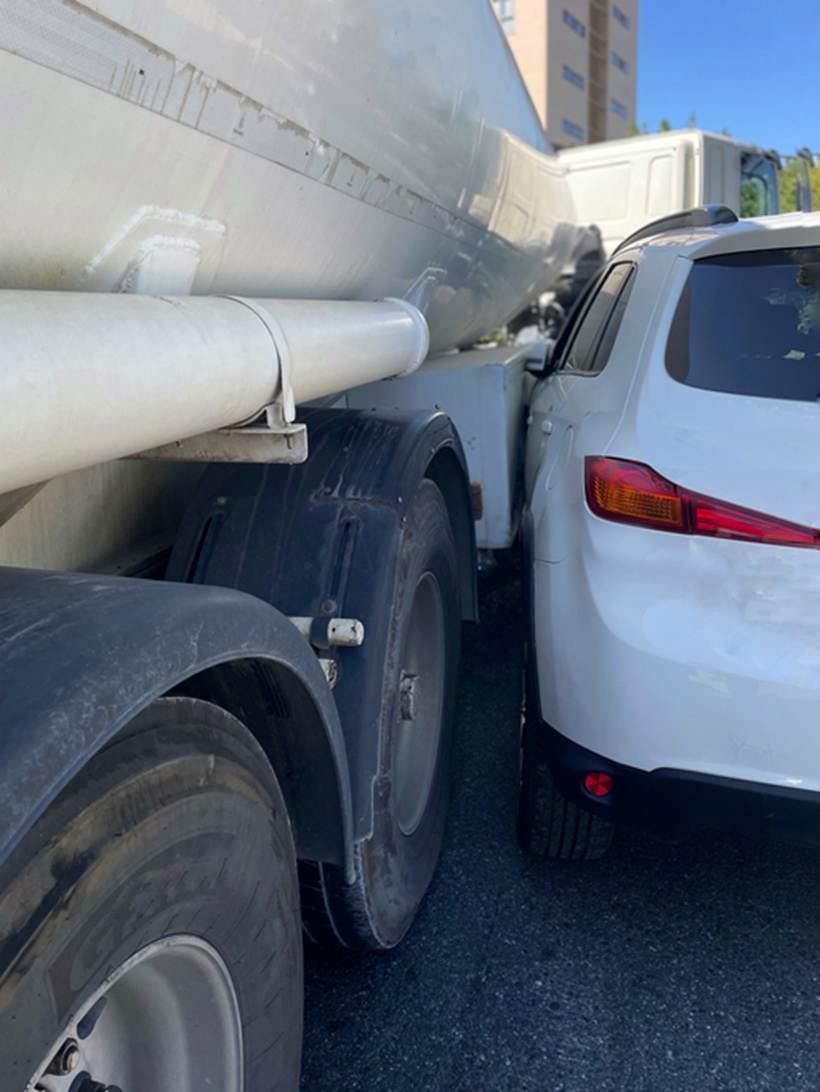
- Blind Spot Truck Accidents. Trucks have “no-zones” on both sides and directly behind. A driver who merges without checking those blind spots can sideswipe or crush vehicles caught in their path.
Each of these failures violates the duty of care New York law requires. Victims don’t have to carry the financial weight alone if negligence is proven.
How Distracted and Reckless Driving Leads to Crashes
Phones, radios, and even fast food, distraction comes in many shapes. Under New York Vehicle and Traffic Law § 1225-d, it’s illegal to use handheld devices while driving. For truck drivers, who manage 40-ton machines, even two seconds of inattention can destroy everything in their path.
Consider these situations:
- Distracted Driving Truck Accidents. A driver who glances at a GPS screen may drift out of their lane and slam into a car on the Cross Bronx Expressway.
- Head-On Truck Accidents. Reckless passing or drifting across a center line on a rural road often ends in catastrophic head-on collisions, especially when a truck’s sheer size amplifies the impact.
- Brake Failure Truck Accidents. Poor maintenance, sometimes disguised as reckless driving, can cause mechanical failures. Federal law requires pre-trip inspections, yet too many companies cut corners, putting everyone at risk.
Every one of these examples shows how distraction and recklessness intersect. For victims, the challenge is proving that link in court, something evidence can make crystal clear.
Proving Negligence With Witnesses and Evidence
Negligence cases hinge on proof. Without it, trucking companies will argue that the crash was unavoidable. That’s why evidence, and how it’s gathered, makes or breaks these claims.
- T-Bone Truck Accidents. At intersections, witnesses often see who ran the red light. Camera footage and traffic light records back up their accounts.
- Runaway Truck Accidents. If a truck loses control on a downhill stretch, inspection logs may reveal skipped brake checks, a violation of FMCSA regulations.
- Lost Load Truck Accidents. Cargo records, bills of lading, and loading dock reports can show that freight wasn’t secured properly before the truck pulled onto I-278.
In New York, comparative negligence rules mean even if a victim bears partial fault, recovery is still possible. The stronger the evidence against the trucker, the better the outcome.
In Maine, Negligence Standards for Truck Drivers Are Narrower Than in New York
Negligence isn’t defined the same way everywhere. In Maine, victims often face higher hurdles proving a trucker’s liability. New York courts, by contrast, have been more willing to impose responsibility on drivers operating vehicles that pose extraordinary risks.
Take jackknife truck accidents as an example. In New York, courts may presume driver error unless weather or sudden hazards provide a strong defense. Maine courts, however, tend to treat jackknife incidents as less conclusive, forcing victims to gather more direct evidence of negligence. This difference can mean the gap between securing damages and walking away empty-handed.
Remedies Available for Victims of Negligent Driving
The law doesn’t undo the accident, but it does provide ways to make victims whole again. In New York, damages may cover both the financial toll and the personal suffering that follows.
- Medical bills. From ambulance rides to years of physical therapy, compensation accounts for the full scope of treatment. Victims of wide turn truck accidents often need reconstructive surgeries or mobility aids.
- Lost income. If injuries prevent a return to work, courts allow claims for wages already lost and for diminished earning capacity in the future.
- Pain and suffering. Beyond the bills, victims can recover for chronic pain, mental trauma, and reduced quality of life.
These remedies exist to give victims a fighting chance at rebuilding their lives, not to hand out windfalls.
Why Holding Negligent Truckers Accountable Prevents Future Harm
Truck crashes don’t just harm individuals. They send shockwaves through families and communities. Accountability has a ripple effect too. When negligent drivers and companies face real consequences, safety practices improve across the industry.
Take override truck accidents, when a tractor-trailer rolls over a smaller vehicle. These horrific collisions often trace back to speeding or tailgating. By securing justice in cases like these, victims highlight the dangers and push trucking companies to enforce stricter training and monitoring. Accountability doesn’t just help one family; it helps prevent the next tragedy.
Horn Wright, LLP, Protects Victims of Truck Driver Negligence
At Horn Wright, LLP, our personal injury attorneys know how overwhelming these cases feel. We step in to handle the evidence, the negotiations, and the courtroom battles, so victims can focus on healing. We also push for broader change, because every case is a chance to make New York’s roads safer.
No victim of truck driver negligence should feel powerless. With Horn Wright, LLP by your side, you’ll have advocates who fight for both justice and accountability, ensuring your story is heard and your rights are protected.

What Sets Us Apart From The Rest?
Horn Wright, LLP is here to help you get the results you need with a team you can trust.
-
Client-Focused ApproachWe’re a client-centered, results-oriented firm. When you work with us, you can have confidence we’ll put your best interests at the forefront of your case – it’s that simple.
-
Creative & Innovative Solutions
No two cases are the same, and neither are their solutions. Our attorneys provide creative points of view to yield exemplary results.
-
Experienced Attorneys
We have a team of trusted and respected attorneys to ensure your case is matched with the best attorney possible.
-
Driven By Justice
The core of our legal practice is our commitment to obtaining justice for those who have been wronged and need a powerful voice.