


Racial Profiling in Public Transportation
Commuting Should Not Mean Facing Discrimination
For most New Yorkers, public transportation isn’t optional, it’s part of daily life. Millions ride the subway, buses, and commuter trains every single day. It’s how people get to work, to school, to doctor’s appointments, to visit family. But for too many riders, that routine comes with something it never should: racial profiling.
Imagine being stopped at a subway turnstile while others pass through without question. Picture being pulled aside on a crowded LIRR platform and treated like a suspect while commuters glance away. These are not hypotheticals. They’re real stories, repeated across the city.
No one should have to calculate whether their skin color makes them more likely to be questioned on their way home. At Horn Wright, LLP, we fight for those who’ve been singled out, because public transit should mean freedom of movement, not a stage for discrimination.
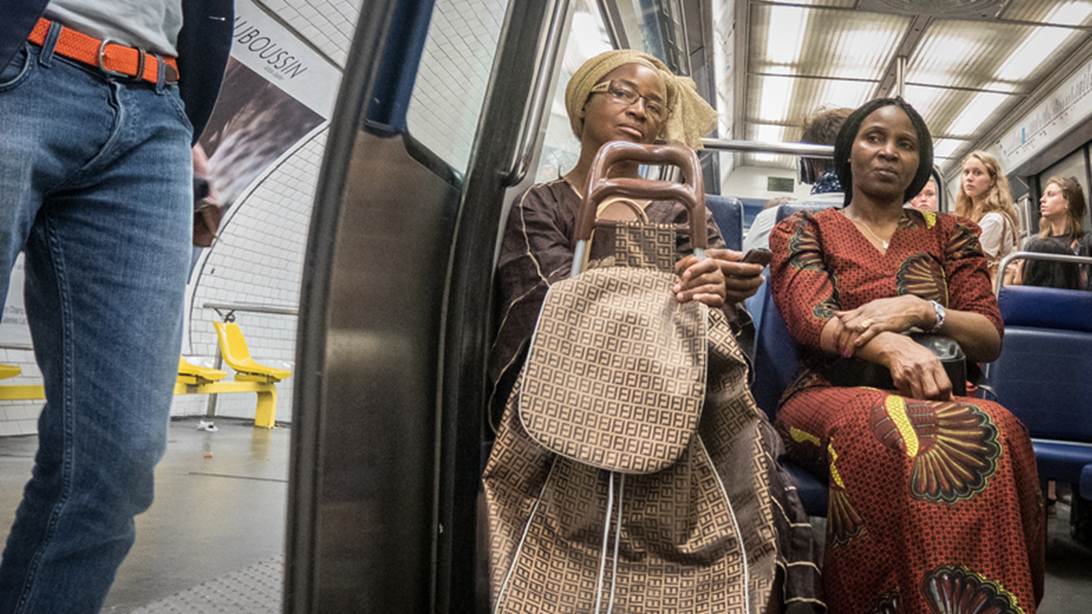
Common Racial Profiling Scenarios on Subways, Buses, and Trains
Racial profiling on public transit can take many forms. Some are overt, others subtle, but all create humiliation and fear.
- Selective fare evasion stops. Fare evasion checks often focus disproportionately on riders of color. A group of friends enters together, but only the Black or Latino rider is stopped and questioned.
- Suspicion without cause. Transit police claim someone “fit the description” of a suspect, even though no clear match exists. The stop becomes a fishing expedition.
- Harassment during bag checks. At stations where random bag checks are conducted, “random” doesn’t feel random at all. Patterns show that minority riders are chosen far more often.
Studies of the MTA and NYPD enforcement patterns have backed this up. Communities of color are more likely to face citations or arrests in transit spaces, even when overall ridership demographics don’t justify the disparity.
For those stopped, the humiliation doesn’t end with the encounter. Fellow commuters witness the event, assumptions are made, and the stigma lingers long after the train pulls away.
How New York Law Protects Riders From Profiling
New York riders are not without legal recourse. The New York State Constitution, Article I, §11 prohibits discrimination by public agencies. That means transit police, as state actors, cannot use race as a factor in deciding who to stop or search.
On the federal side, the Fourth Amendment protects against unreasonable searches and seizures. An unjustified stop or bag search on the subway can violate that protection, especially when based on race rather than conduct. Victims can bring claims under 42 U.S.C. §1983 for constitutional violations.
New York also has statutory safeguards. The New York State Human Rights Law (Executive Law §296) extends anti-discrimination protections to public accommodations, which courts have interpreted to include public transit. That means racial profiling on a bus or train isn’t just unfair, it’s a statutory violation.
Together, these layers of law create a strong shield for riders, though they only matter if victims come forward and pursue claims.
Evidence That Proves Profiling in Public Transit Systems
Proving racial profiling in transit settings takes persistence. Officers rarely admit bias. Instead, lawyers build cases with evidence that reveals patterns and contradictions.
- Surveillance footage. Many stations and buses have cameras that show who was stopped and how the encounter unfolded.
- Transit enforcement data. Stop records, citations, and arrest logs often reveal disproportionate targeting of minority riders. Attorneys can obtain this data under New York’s Freedom of Information Law (FOIL).
- Witness testimony. Fellow commuters or friends traveling with the victim can testify about what really happened.
- Officer reports. Written justifications often use vague language like “suspicious behavior,” which collapses under scrutiny when paired with video.
In court, this evidence turns vague claims of unfairness into concrete proof of unconstitutional profiling. It shows not just one incident, but the broader reality of how racial bias operates in transit policing.
New Hampshire Offers Fewer Transit-Specific Protections Than New York
Not every state treats transit profiling the same way. New Hampshire, for example, lacks statutes that directly address discrimination in public transportation. While victims there can bring general civil rights claims, the remedies are narrower, and courts have been less willing to recognize profiling in everyday commuting contexts.
New York’s framework is broader. Between the state constitution, human rights statutes, and federal protections, riders here have multiple avenues to pursue justice. The state has acknowledged, through both law and litigation, that discrimination in transit is not a minor inconvenience, it’s a civil rights violation.
This difference highlights the importance of location. The same incident might face uphill battles in New Hampshire but be actionable in New York.
Remedies for Victims Targeted in Public Transportation
Victims of transit-based profiling have several remedies available in New York courts.
- Suppression of evidence. If an unlawful stop led to a search or arrest, the exclusionary rule may bar prosecutors from using that evidence.
- Civil damages. Victims can seek compensation for humiliation, lost wages, and emotional distress. Under state and federal law, these damages can be significant.
- Punitive damages. In cases where profiling is systemic or egregious, courts may award damages meant to punish and deter.
- Policy reform. Some lawsuits result in agreements requiring the MTA or NYPD to change enforcement practices, publish data, or adopt anti-bias training.
Remedies aren’t just about money. They’re about forcing institutions to take responsibility and to change the way riders are treated.
How to Protect Yourself if Targeted During Transit
If you experience profiling in a transit setting, the steps you take afterward can make a big difference.
First, document everything you can. Write down the time, location, and badge numbers if available. If others were present, try to get their contact information. File a complaint with the MTA or Civilian Complaint Review Board, even if it feels futile, those records create a paper trail.
Under CPLR Article 31, discovery in a lawsuit can later pull in surveillance footage or officer notes, but early preservation requests help ensure evidence isn’t erased.
Most importantly, reach out to an attorney quickly. Transit systems often overwrite video within weeks, and delays can mean losing key evidence. Acting fast is the best protection.
Horn Wright, LLP, Defends Victims of Transit-Based Profiling
No one should have to worry about being stopped on their way to work simply because of race. Yet for too many New Yorkers, that’s the reality of public transportation. At Horn Wright, LLP, our civil rights attorneys make sure those cases don’t get ignored. We demand records, secure surveillance, and build claims that show how profiling on buses, subways, and trains violates both dignity and law. If you’ve been targeted, we’ll stand with you and hold transit authorities accountable.

What Sets Us Apart From The Rest?
Horn Wright, LLP is here to help you get the results you need with a team you can trust.
-
Client-Focused ApproachWe’re a client-centered, results-oriented firm. When you work with us, you can have confidence we’ll put your best interests at the forefront of your case – it’s that simple.
-
Creative & Innovative Solutions
No two cases are the same, and neither are their solutions. Our attorneys provide creative points of view to yield exemplary results.
-
Experienced Attorneys
We have a team of trusted and respected attorneys to ensure your case is matched with the best attorney possible.
-
Driven By Justice
The core of our legal practice is our commitment to obtaining justice for those who have been wronged and need a powerful voice.