


How Do You Prove a Truck Driver Caused a Crash in Vermont?
Building a Strong Truck Accident Case Starts With Evidence
Truck accidents often leave injured victims facing painful recovery, financial stress, and difficult questions about fault. After a serious crash in Vermont, insurance companies usually begin investigating immediately to protect the trucking company’s interests. Injured people may still be receiving medical treatment while adjusters and defense teams start collecting evidence. Proving the truck driver caused the collision often becomes one of the most important parts of the legal claim.
Commercial truck accident cases involve more than simple traffic disputes. Truck drivers must follow federal safety regulations, inspection requirements, driving limits, and company safety rules every day they operate large commercial vehicles. Violations of those rules sometimes contribute directly to serious collisions across Burlington and nearby Vermont highways. Investigators often review technical records, electronic data, and witness statements to determine exactly what happened before impact.
At Horn Wright, LLP, our Vermont truck accident lawyers help injured people gather the evidence needed to prove fault after serious truck accidents. We understand how trucking companies and insurers often challenge liability aggressively when severe injuries are involved. If your case also includes reckless conduct or broader legal concerns, our civil rights attorneys may help evaluate additional legal claims connected to the collision.
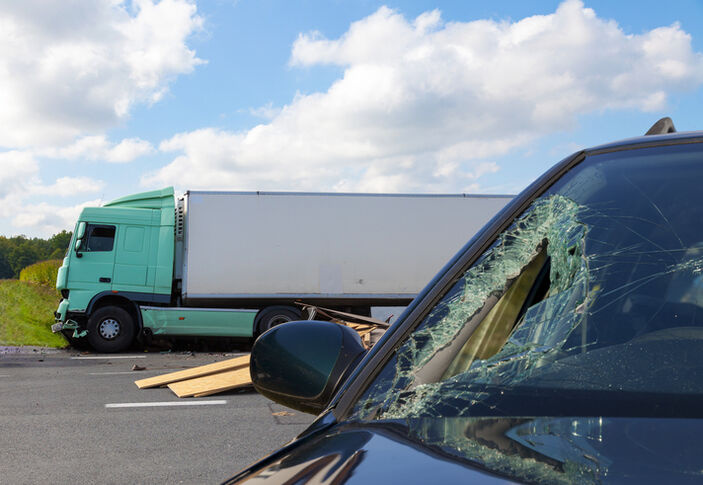
Police Reports Often Provide Early Evidence of Fault
Police reports frequently become one of the first important pieces of evidence after a truck accident. Officers responding to the crash scene may document roadway conditions, witness statements, vehicle damage, and driver behavior while events remain fresh. Their observations often help shape how insurance companies evaluate fault during the early stages of the claim. Serious truck crashes in Burlington usually involve detailed police investigations because of the severity of injuries and damage involved.
Police officers may issue citations if they believe the truck driver violated traffic laws before the crash occurred. Speeding, distracted driving, unsafe lane changes, following too closely, or failure to yield may all appear in the official report. Those violations can strengthen negligence claims against the truck driver and trucking company later. Officers may also note signs of fatigue, impairment, or aggressive driving behavior at the scene.
Weather conditions across Vermont sometimes complicate truck accident investigations significantly. Snow, ice, freezing rain, and low visibility can affect how officers evaluate roadway safety and driver conduct after collisions. Even when weather contributes to the crash, truck drivers still have a duty to operate safely under dangerous conditions. Police reports often provide valuable context that helps explain how the collision occurred.
Witness Statements May Support Your Version of Events
Independent witness testimony often plays a major role in proving truck driver negligence after a crash. Neutral witnesses may describe dangerous driving behavior that injured victims never saw before impact occurred. They may observe speeding, swerving, distracted driving, or unsafe lane changes moments before the collision. These observations often become powerful evidence during insurance negotiations or litigation.
Truck accidents happen quickly, and injured victims may not remember every detail clearly after the collision. Witnesses sometimes provide information that fills important gaps in the timeline. Someone traveling nearby may notice the truck drifting between lanes, braking suddenly, or failing to react to traffic conditions safely. Early witness statements usually carry more weight because memories remain fresher immediately after the crash.
Witnesses may also help dispute inaccurate claims raised later by trucking companies or insurers. Insurance carriers sometimes argue that another driver caused the collision or that road conditions alone created the accident. Reliable witness accounts may contradict those defenses directly. Collecting witness names and contact information early often becomes critical because people may become difficult to locate later.
Black Box Data Can Reveal Driver Behavior
Most commercial trucks contain electronic data recorders commonly called black boxes. These systems collect technical driving information before and during collisions. Black box data may reveal vehicle speed, braking activity, steering input, throttle use, and engine performance leading up to impact. This evidence often becomes central to proving truck driver fault after serious Vermont crashes.
Electronic data sometimes contradicts statements made by truck drivers or insurance companies. A driver may claim they attempted to brake safely before the collision while black box records show no braking activity at all. Speed data may also reveal the truck traveled too fast for road conditions at the time of the accident. These technical details often help accident reconstruction experts explain exactly how the crash occurred.
Several types of electronic evidence may support a truck accident claim:
- Black box data
- GPS tracking records
- Dash camera footage
- Electronic driver logs
- Dispatch communications
Preserving this information quickly becomes important because some systems overwrite data automatically after continued truck operation. Early legal action often helps protect valuable electronic evidence before it disappears permanently.
Driver Logbooks May Reveal Fatigue Violations
Truck driver fatigue remains one of the leading causes of serious commercial vehicle accidents nationwide. Federal regulations limit how many hours truck drivers may operate without rest because exhaustion affects reaction time and judgment significantly. Drivers who ignore these safety rules place everyone on Vermont roads at greater risk. Reviewing driver logs often helps investigators determine whether fatigue contributed to the crash.
Electronic logging devices track driving hours, rest breaks, and work schedules for many commercial trucking operations. Investigators may compare these records against fuel receipts, dispatch records, toll data, and GPS information to identify inconsistencies. Some drivers or trucking companies attempt to manipulate logs to hide hours-of-service violations. Discovering those violations can strengthen negligence claims substantially.
Fatigued truck drivers may drift between lanes, brake too slowly, or fail to react to changing traffic conditions safely. Interstate routes near Burlington often involve long-distance freight traffic where fatigue risks become more serious. The Federal Motor Carrier Safety Administration explains commercial driver hour restrictions. Violations of these safety rules often become important evidence during truck accident litigation.
Truck Maintenance Records Can Expose Safety Problems
Mechanical failures sometimes contribute directly to truck accidents across Vermont. Commercial trucks require regular inspections, brake maintenance, tire replacement, and safety checks to remain roadworthy. Trucking companies that ignore maintenance responsibilities may place unsafe vehicles on the road. Maintenance records often reveal whether preventable mechanical issues played a role in the collision.
Brake failures, tire blowouts, steering problems, and lighting defects can all increase accident risks significantly. Investigators often review inspection reports, repair invoices, and maintenance histories after serious truck crashes. Poor maintenance practices sometimes reveal broader safety failures within the trucking company itself. Those records may support claims against both the driver and the company responsible for maintaining the vehicle.
Truck drivers also have responsibilities to inspect their vehicles before driving. Failing to report obvious mechanical issues may contribute to negligence claims after an accident. Some trucking companies pressure drivers to continue operating unsafe vehicles despite known problems. Maintenance records often help uncover those dangerous practices during investigations.
Medical Records Help Connect Injuries to the Collision
Medical documentation helps prove both the seriousness of injuries and their connection to the truck accident. Emergency treatment records, imaging scans, surgical reports, and rehabilitation notes create a timeline showing how the crash affected the victim physically. Insurance companies closely review these records while evaluating settlement demands. Thorough medical evidence often strengthens the overall claim substantially.
Prompt medical treatment also reduces opportunities for insurers to challenge the source of the injuries. Delays in care sometimes allow defense teams to argue that another event caused the medical condition instead of the truck accident itself. Truck accident injuries often worsen over time, especially spinal injuries, brain trauma, and internal damage. Consistent treatment records help establish a stronger connection between the crash and the injuries.
Doctors may also document long-term limitations affecting mobility, employment, and daily activities after the collision. The Centers for Disease Control and Prevention explains the lasting effects traumatic injuries. Medical evidence often becomes critical when proving damages tied to pain, disability, and future treatment needs after serious Vermont truck accidents.
Accident Reconstruction Experts May Clarify Fault
Truck accident reconstruction experts often help explain how serious collisions occurred. These professionals analyze physical evidence, electronic data, vehicle damage, roadway conditions, and witness statements while recreating the events leading up to the crash. Their findings may help clarify disputed facts during settlement negotiations or trial. Reconstruction analysis becomes especially important in complex commercial truck accidents involving catastrophic injuries.
Experts may calculate speed, stopping distance, visibility, and driver reaction times based on evidence gathered from the scene. They often use black box data, skid mark analysis, and crash physics to determine how the truck driver responded before impact. Reconstruction findings sometimes expose dangerous driving behavior or safety violations not immediately obvious after the collision. These technical opinions can strengthen liability arguments significantly.
Weather conditions around Burlington may also affect reconstruction analysis. Snow-covered roads, icy intersections, and poor visibility often influence braking distances and driver decision-making during Vermont winters. Even under dangerous weather conditions, truck drivers still have a duty to operate safely and adjust speed appropriately. Expert analysis may help establish whether the driver failed to meet that responsibility before the crash occurred.
Strong Legal Guidance Can Help Preserve Critical Evidence
Truck accident evidence can disappear quickly after serious collisions. Trucking companies and insurers often begin protecting their interests immediately while injured victims focus on medical treatment and recovery. Missing electronic records, delayed investigations, or lost witness statements may weaken even strong claims over time. Early legal action often helps preserve the evidence needed to prove truck driver negligence effectively.
At Horn Wright, LLP, our Vermont truck accident lawyers help truck accident victims across Vermont investigate collisions thoroughly and build strong cases supported by reliable evidence. We understand how insurance companies challenge liability aggressively when severe injuries and large financial claims become involved.
Our team works to gather trucking records, preserve electronic data, review medical documentation, and identify safety violations tied to the crash. Having experienced legal guidance can help protect your rights while you focus on healing after a serious truck accident.

What Sets Us Apart From The Rest?
Horn Wright, LLP is here to help you get the results you need with a team you can trust.
-
Client-Focused ApproachWe’re a client-centered, results-oriented firm. When you work with us, you can have confidence we’ll put your best interests at the forefront of your case – it’s that simple.
-
Creative & Innovative Solutions
No two cases are the same, and neither are their solutions. Our attorneys provide creative points of view to yield exemplary results.
-
Experienced Attorneys
We have a team of trusted and respected attorneys to ensure your case is matched with the best attorney possible.
-
Driven By Justice
The core of our legal practice is our commitment to obtaining justice for those who have been wronged and need a powerful voice.