


Who Is Liable for a Fall on a Wet Floor in Burlington, VT?
Determining Responsibility After a Wet Floor Accident
A fall on a wet floor can happen almost anywhere. Grocery stores, restaurants, apartment buildings, office complexes, hotels, and retail stores throughout Burlington may all contain conditions that create slipping hazards. What appears to be a simple accident can quickly result in serious injuries, mounting medical bills, and time away from work.
Many people assume the property owner is automatically responsible whenever a wet floor causes an injury. In reality, determining liability often requires a closer look at how the hazard developed, how long it existed, and whether reasonable steps were taken to address it. The answers to these questions frequently determine whether a premises liability claim exists.
Working with experienced Burlington premises liability attorneys can help identify who may be responsible for a wet floor accident. At Horn Wright, LLP, our attorneys investigate hazardous conditions, review maintenance practices, and gather evidence regarding property owner negligence. A thorough investigation often provides the clearest picture of liability.
Property Owners Have a Duty to Maintain Reasonably Safe Conditions
Property owners are generally expected to maintain reasonably safe premises for visitors, customers, tenants, and other lawful guests. This duty includes identifying dangerous conditions and taking reasonable steps to correct them. Wet floors can create significant slipping hazards that increase the risk of injury.
The law does not require property owners to prevent every accident. However, it does expect them to act reasonably when dangerous conditions arise. Failing to inspect, clean, repair, or warn about hazards may create liability when injuries occur.
Whether liability exists often depends on the specific facts of the accident. The nature of the property, the source of the water, and the owner's actions may all become important factors. Each case requires an individualized evaluation.
Wet Floors Can Develop in Many Different Ways
Wet floor accidents are not limited to spills. Water can accumulate because of leaking refrigeration units, broken plumbing, recently mopped surfaces, tracked-in rainwater, melting snow, or defective drainage systems. The source of the hazard often becomes an important part of the investigation.
For example, a grocery store may experience a leak from a refrigerated display case that creates recurring puddles. A restaurant may have a recently mopped floor without adequate warning signs. A commercial building entrance may become slippery because water is tracked inside during a storm.
Different causes can lead to different liability issues. Understanding how the condition developed often helps determine who may be responsible. Evidence regarding maintenance and inspections frequently becomes important.
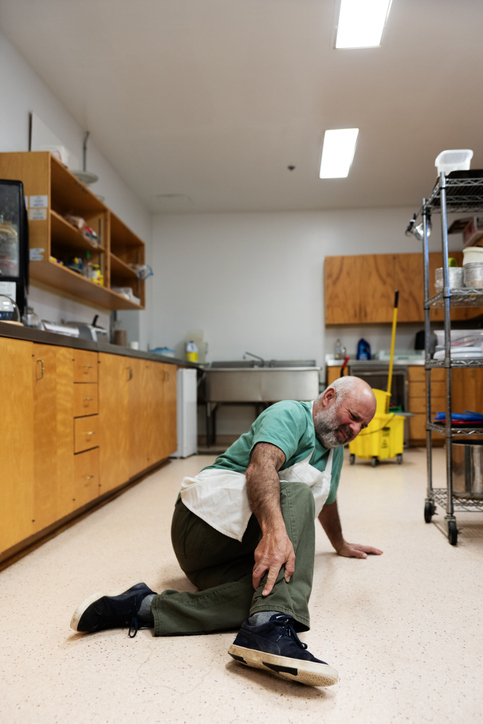
Liability Often Depends on Notice
One of the most significant issues in many wet floor cases is notice. Notice refers to whether the property owner knew or should have known about the hazardous condition before the accident occurred. Establishing notice is often necessary to prove negligence.
Actual notice exists when an owner or employee was directly aware of the hazard. This may occur when an employee observes a spill, receives a complaint, or creates the condition through cleaning activities. Documentation and witness testimony may help establish actual notice.
Constructive notice may exist even when direct knowledge cannot be proven. If the condition remained present long enough that reasonable inspections would have discovered it, liability may still arise. Courts often examine how long the hazard existed and whether appropriate inspections were conducted.
Employees and Businesses May Share Responsibility
In commercial settings, liability often extends beyond a single individual. Businesses act through managers, employees, maintenance personnel, and contractors. The actions of these individuals may affect whether the business itself is held responsible for a wet floor accident.
For example, an employee who notices a spill but fails to clean it or place warning signs may contribute to a dangerous situation. Similarly, inadequate inspection procedures may allow hazards to remain unaddressed for extended periods. These circumstances often become part of the negligence analysis.
The focus is generally on whether reasonable steps were taken to identify and correct the danger. Businesses that fail to implement appropriate safety practices may face liability. A detailed investigation often reveals how the hazard was handled.
Warning Signs Can Affect the Analysis
Property owners sometimes attempt to reduce the risk of accidents by using warning signs. Signs alert visitors to slippery surfaces and encourage caution while hazards are being addressed. Whether warning signs were present often becomes an important issue after a wet floor accident.
The existence of a warning sign does not automatically eliminate liability. Questions may arise regarding the placement, visibility, and effectiveness of the warning. A sign hidden behind a display or located far from the hazard may provide limited protection.
At the same time, the absence of warning signs may strengthen an injured person's claim. When owners know about a hazard but fail to provide notice, the risk of injury may increase. The circumstances surrounding the warning often require careful evaluation.
Wet Floor Falls Can Cause Serious Injuries
Some people assume a slip on a wet floor will result only in minor bruising. Unfortunately, these accidents can cause significant injuries that affect a person's health, finances, and daily life. The sudden nature of a fall often leaves little opportunity to protect oneself during impact.
Common injuries include fractures, wrist injuries, shoulder injuries, knee injuries, spinal injuries, and traumatic brain injuries. Recovery may involve surgery, physical therapy, rehabilitation, and extended medical treatment. The financial consequences can be substantial.
Older adults often face additional risks because falls may lead to complications affecting mobility and independence. However, serious injuries can occur at any age. Thorough medical documentation frequently becomes an important part of the claim.
Evidence Is Often the Key to Proving Liability
Evidence frequently determines whether a wet floor claim succeeds. Conditions can change quickly after an accident occurs. Spills are cleaned, warning signs are added, and maintenance records may become more difficult to obtain as time passes.
Photographs taken immediately after the accident can preserve valuable information regarding the condition of the floor. Images showing the hazard, surrounding area, and absence of warning signs may become important evidence later. These photographs often help establish what existed when the accident occurred.
Witnesses can also provide useful information. Individuals who observed the spill or saw employees near the area beforehand may help establish notice. Surveillance footage may further clarify how the accident happened and how long the hazard was present.
Evidence Commonly Used in Wet Floor Claims
Successful wet floor cases often rely on several different forms of evidence. Each source helps explain a different aspect of the accident. Together, these materials may help establish negligence and damages.
Important evidence may include:
- Photographs of the wet floor
- Surveillance video footage
- Witness statements
- Incident reports
- Maintenance and inspection records
No single piece of evidence automatically proves liability. Courts and insurance companies generally evaluate all available information together. A comprehensive investigation often produces the strongest results.
Government Resources Help Explain Slip Hazards and Safety Practices
Several government agencies provide information regarding slip hazards, fall prevention, and property safety. While these organizations do not determine liability in individual premises liability cases, their resources help explain how dangerous walking surfaces contribute to injuries. These materials provide useful context regarding safety expectations.
The Occupational Safety and Health Administration publishes guidance concerning slip hazards, walking surfaces, maintenance procedures, and accident prevention. Although OSHA primarily focuses on workplace safety, many of its principles are relevant to commercial properties open to the public. These resources highlight the importance of identifying and correcting dangerous conditions.
The National Institute for Occupational Safety and Health conducts research regarding falls, injury prevention, and environmental hazards. Its educational materials discuss conditions that commonly contribute to slip and fall accidents. These resources help explain why prompt hazard correction is important.
Insurance Companies Often Dispute Wet Floor Claims
Insurance companies frequently challenge premises liability claims involving wet floors. They may argue that the property owner lacked notice of the condition or that the hazard appeared only moments before the accident. These defenses often focus on limiting liability.
Insurers may also claim that the injured person was distracted or failed to exercise reasonable care. Vermont's comparative negligence principles may become part of these discussions. The allocation of fault often becomes a major issue during settlement negotiations.
Strong evidence can help address these defenses. Photographs, witness testimony, surveillance footage, and maintenance records frequently provide valuable support. A thorough investigation often helps clarify disputed facts.
Every Wet Floor Accident Requires a Careful Review
No two wet floor accidents are exactly alike. The source of the water, the property's maintenance practices, the available evidence, and the severity of the injuries all affect how liability is evaluated. General assumptions rarely provide reliable answers.
Some accidents involve hazards that existed for extended periods without attention. Others involve conditions that developed only shortly before the incident occurred. Determining responsibility requires a careful review of the facts.
Understanding who may be liable often begins with a detailed investigation. The more information available, the easier it becomes to evaluate negligence and damages. Every case deserves an individualized analysis.
Speak With Horn Wright, LLP, About a Burlington Wet Floor Accident
If you were injured after slipping on a wet floor, you may have the right to pursue compensation if a property owner's negligence contributed to the accident. Horn Wright, LLP, helps injured individuals investigate hazardous property conditions, preserve evidence, and pursue premises liability claims against responsible parties. To discuss your situation during a confidential consultation, contact our Burlington premises liability lawyers today at 802-328-9098.

What Sets Us Apart From The Rest?
Horn Wright, LLP is here to help you get the results you need with a team you can trust.
-
Client-Focused ApproachWe’re a client-centered, results-oriented firm. When you work with us, you can have confidence we’ll put your best interests at the forefront of your case – it’s that simple.
-
Creative & Innovative Solutions
No two cases are the same, and neither are their solutions. Our attorneys provide creative points of view to yield exemplary results.
-
Experienced Attorneys
We have a team of trusted and respected attorneys to ensure your case is matched with the best attorney possible.
-
Driven By Justice
The core of our legal practice is our commitment to obtaining justice for those who have been wronged and need a powerful voice.