


What Evidence Helps Prove a Car Accident Claim in Burlington, VT?
Key Evidence That Can Strengthen Your Burlington Car Accident Case
A car accident can turn an ordinary day into a stressful one within seconds. You may face medical appointments, vehicle repairs, missed work, and calls from insurance adjusters while still trying to recover. During that process, evidence becomes one of the most important parts of a Burlington car accident claim. Evidence helps show how the crash happened, who caused it, and how the collision affected your life. Without strong documentation, even a legitimate claim can face challenges.
At Horn Wright, LLP, our Burlington car accident attorneys assist individuals who need information about protecting their legal rights after a collision. Building a strong claim starts with understanding which forms of evidence matter most, how they support a case, and why preserving them as early as possible can make a meaningful difference during the claims process.
Police Reports Often Provide the Starting Point
After a collision, law enforcement officers may respond to investigate the scene and prepare an accident report. This document often serves as one of the first pieces of evidence reviewed by insurance companies, attorneys, and claims professionals. Although a police report does not automatically establish legal fault, it frequently contains important observations recorded shortly after the crash occurred.
A police report may include driver statements, witness accounts, roadway conditions, weather conditions, descriptions of vehicle damage, and information regarding traffic control devices. Officers may also document whether citations were issued or whether any apparent traffic violations contributed to the collision. These details often help support other evidence gathered during the investigation process.
Accident reports can be especially valuable when multiple drivers provide conflicting accounts of what happened. Because officers typically arrive shortly after the collision, they may observe physical evidence before vehicles are moved and before conditions change. Their documentation can help establish an initial timeline and preserve facts that might otherwise become difficult to verify later.
Photos and Videos Preserve Critical Details
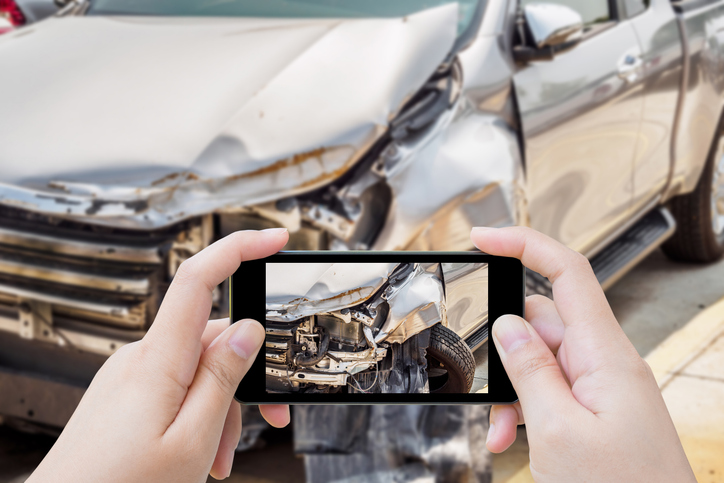
Crash scenes rarely remain unchanged for long. Vehicles are removed, debris is cleared, weather conditions shift, and traffic patterns return to normal. Photographs and videos help preserve details that may disappear within hours. Because visual evidence captures conditions as they existed immediately after a collision, it often becomes an important part of proving a car accident claim.
Images taken shortly after a crash can document vehicle positions, roadway markings, traffic signals, visible injuries, property damage, and environmental conditions. These details may help investigators understand how the collision occurred and whether physical evidence supports witness statements or driver accounts. Visual documentation often provides context that written descriptions alone cannot fully convey.
Visual evidence may capture:
- Vehicle damage from multiple angles
- Skid marks and roadway debris
- Traffic lights and road signs
- Weather and visibility conditions
- Construction zones or roadway hazards
Photographs can also help preserve temporary conditions that may later become relevant. Snow accumulation, standing water, poor visibility, damaged signage, or roadway obstructions may contribute to a collision and become difficult to document after cleanup efforts occur. Insurance companies and accident reconstruction professionals frequently review photographs when evaluating disputed claims.
Witness Statements Can Strengthen Credibility
Independent witnesses often provide valuable information that supports a car accident claim. Unlike the drivers involved in the collision, neutral observers generally do not have a direct financial interest in the outcome of the case. Their observations may help confirm important facts and provide additional context regarding how the collision occurred.
Witnesses sometimes observe details that drivers do not notice during a stressful event. Traffic conditions, vehicle movements, signal changes, and driver behavior may all be visible to individuals who are not directly involved in the collision. These observations can help investigators compare multiple accounts and identify areas where facts remain consistent.
Potential witnesses may include pedestrians, nearby residents, business employees, cyclists, public transportation riders, and other motorists. Their statements can help establish the sequence of events before impact and may support physical evidence collected from the scene. Independent accounts often become particularly important when liability is disputed.
Medical Records Connect Injuries to the Collision
Medical evidence serves a critical role in proving the damages portion of a car accident claim. While crash scene evidence helps establish how a collision occurred, medical records help demonstrate the physical consequences of the incident. Together, these forms of evidence create a more complete picture of both liability and injury-related losses.
Emergency medical records often provide the first documentation of injuries following a collision. Ambulance reports, emergency room evaluations, physician notes, and diagnostic testing results may identify symptoms, injuries, and treatment recommendations. These records help establish a timeline connecting the accident to the medical condition being treated.
Ongoing treatment generates additional documentation that may strengthen a claim. Follow-up appointments, specialist evaluations, physical therapy records, imaging studies, and treatment plans help demonstrate the severity and duration of injuries. Consistent medical documentation often provides important evidence regarding recovery progress and the continuing effects of the collision.
Electronic Evidence Can Reveal What Happened Before Impact
Modern vehicles and electronic devices generate substantial amounts of information that may become relevant after a collision. Electronic evidence often provides objective data that helps investigators understand vehicle movements, driver actions, and conditions immediately before impact. As technology continues to evolve, these sources of information play an increasingly important role in accident investigations.
Vehicle event data recorders, commonly referred to as black boxes, may capture information such as speed, braking activity, steering input, throttle position, and impact timing. This data can assist accident reconstruction professionals in evaluating how a collision occurred and whether drivers attempted evasive actions before impact.
Cell phone records may also become relevant when distracted driving is suspected. Call logs, text message activity, application usage records, and other electronic data may help establish whether a driver was actively using a device during a critical period before the collision. Accessing these records often requires compliance with applicable legal procedures and privacy requirements.
Financial Records Help Prove Economic Losses
Proving fault represents only one part of a successful car accident claim. Injured individuals must also demonstrate the financial impact of the collision. Economic damages often include medical expenses, lost income, rehabilitation costs, and other measurable losses. Financial records help establish these damages with greater accuracy and credibility.
Financial records may include:
- Pay stubs and wage statements
- Employer verification letters
- Tax returns
- Medical bills and receipts
- Transportation expenses related to treatment
- Rehabilitation and therapy costs
Detailed financial documentation helps support calculations regarding both current and future losses. Insurance companies often request records that verify claimed expenses and income reductions. Organized documentation can help streamline the evaluation process and reduce disputes regarding the amount of damages being claimed.
Economic losses may continue long after the initial collision. Ongoing treatment expenses, reduced earning capacity, and future rehabilitation costs can significantly affect an individual's financial situation. Maintaining accurate records throughout recovery helps ensure that these losses are properly documented and considered during settlement discussions or litigation.
Evidence of Negligence Often Determines Liability
Liability in a car accident claim generally depends on whether a driver acted negligently under the circumstances. Evidence helps establish whether a driver failed to exercise reasonable care and whether that conduct contributed to the collision. Determining negligence often requires examining multiple forms of evidence rather than relying on a single source of information.
Traffic violations frequently play an important role in liability investigations. Citations for speeding, distracted driving, failure to yield, improper lane changes, or traffic signal violations may support allegations that a driver acted negligently. However, citations alone do not necessarily resolve every question regarding fault.
Physical evidence often provides additional context. Vehicle damage patterns, skid marks, roadway debris, surveillance footage, witness statements, and electronic data may all contribute to a more complete understanding of how the collision occurred. Investigators frequently compare these sources to identify consistencies and evaluate competing accounts.
Vermont's Comparative Negligence Rules Make Evidence Even More Important
Vermont follows a modified comparative negligence system that allows fault to be divided among multiple parties. Under this framework, the percentage of fault assigned to each party can directly affect the amount of compensation available in a claim. As a result, evidence becomes especially important when determining responsibility for a collision.
Insurance companies frequently examine available evidence to assess whether multiple parties contributed to an accident. Even relatively small adjustments in fault percentages may influence settlement values and damage calculations. Because fault allocation can significantly affect financial recovery, accurate evidence remains critical throughout the claims process.
Independent witness statements, surveillance footage, photographs, electronic records, and accident reconstruction findings may all help establish a more accurate understanding of how a collision occurred. These forms of evidence can assist in addressing allegations that an injured party shares responsibility for the incident.
Common Mistakes That Can Hurt a Car Accident Claim
Many claims become more difficult because important evidence is lost, overlooked, or never collected. The period immediately following a collision can be stressful, and individuals often focus on medical treatment, transportation concerns, and vehicle repairs. During that time, critical evidence may disappear if steps are not taken to preserve it.
Several avoidable errors can create problems:
- Failing to photograph the accident scene
- Delaying medical treatment
- Losing contact information for witnesses
- Discarding receipts and expense records
- Posting accident details on social media
Social media activity can also affect a claim. Insurance companies may review publicly available posts, photographs, videos, and comments during an investigation. Information shared online may be interpreted in ways that do not accurately reflect an individual's condition or circumstances. Exercising caution when discussing an accident publicly can help avoid unnecessary complications.
Know What Evidence Can Protect Your Claim
Strong evidence often serves as the foundation of a successful car accident claim. Police reports, photographs, witness statements, medical records, electronic data, and financial documentation each contribute important information regarding liability and damages. Together, these forms of evidence help create a more complete and accurate understanding of how a collision occurred and how it affected the individuals involved.
If you have questions about protecting your rights after a crash, speaking with experienced attorneys can help you better understand your legal options and the steps available under Vermont law. Understanding what evidence matters and how it may be used can place you in a stronger position as your claim moves forward.

What Sets Us Apart From The Rest?
Horn Wright, LLP is here to help you get the results you need with a team you can trust.
-
Client-Focused ApproachWe’re a client-centered, results-oriented firm. When you work with us, you can have confidence we’ll put your best interests at the forefront of your case – it’s that simple.
-
Creative & Innovative Solutions
No two cases are the same, and neither are their solutions. Our attorneys provide creative points of view to yield exemplary results.
-
Experienced Attorneys
We have a team of trusted and respected attorneys to ensure your case is matched with the best attorney possible.
-
Driven By Justice
The core of our legal practice is our commitment to obtaining justice for those who have been wronged and need a powerful voice.