


What Happens When Officers Dispute Identity in Bronx Civil Rights Cases
When No One Admits Who Did What
One of the most frustrating defense tactics in a Bronx civil rights case is simple: officers claim they were not the one who used force, made the arrest, or committed the violation. Suddenly, responsibility becomes blurred. Reports are vague. Body camera footage may not clearly show faces. Officers may say they cannot recall specific actions.
For someone who lived through the incident, this feels unreal. You know what happened. You remember who was on top of you, who tightened the cuffs, who refused medical care. Yet in litigation, identification becomes contested.
As Bronx civil rights attorneys, we prepare for identity disputes from the beginning. At Horn Wright, LLP, we structure investigations to identify every officer present and reconstruct each person’s role. When identity is challenged, evidence—not memory alone—carries the case.
Why Identity Disputes Happen
In chaotic scenes involving multiple officers, confusion can occur. Reports may refer to “other officers” without naming them. Badge numbers may not be visible on camera. Helmets, protective gear, or crowd-control settings can obscure faces.
Sometimes, identity disputes arise because officers hope uncertainty will weaken the case. If no individual can be clearly tied to specific conduct, the defense may argue that liability cannot be proven.
Civil rights law, however, does not require guesswork. It requires proof. The investigation becomes focused on linking actions to individuals through objective evidence.
The goal is clarity.
The First Step: Reconstructing the Scene
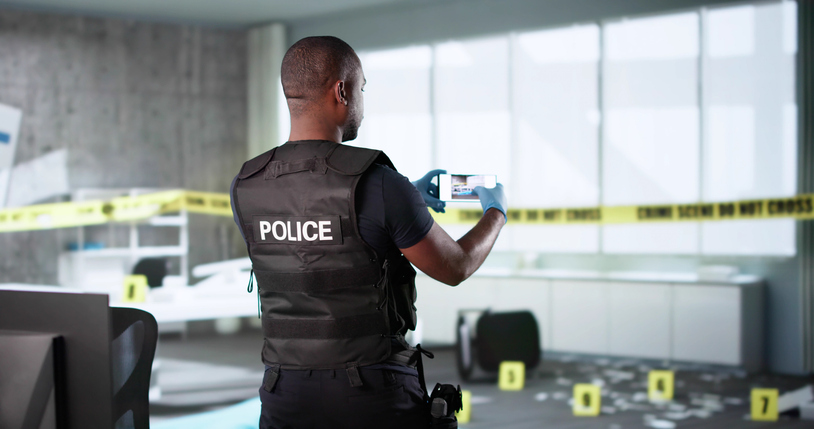
When officers dispute identity, the investigation becomes meticulous. Attorneys build a scene map. They examine:
- Duty rosters and assignment sheets
- Body camera activation logs
- Radio transmissions and dispatch timestamps
- Arrest paperwork and booking records
- Memo books and internal reports
Time synchronization becomes critical. If dispatch logs show which officers were assigned to the call and body cam timestamps show positioning, roles begin to emerge.
This structured reconstruction often resolves disputes that initially appear impossible.
When Video Exists but Is Unclear
Sometimes body camera footage exists but does not clearly show who applied force. Angles may be obstructed. Lighting may be poor. Cameras may capture only partial frames.
In those situations, video forensics can help. Specialists analyze frame sequences, enhance visibility, and compare uniform details. They may identify distinguishing features such as equipment placement, voice patterns, or positioning relative to other officers.
If multiple cameras recorded the event, synchronization can create a composite timeline. One camera may show what another missed.
Even imperfect video can yield valuable clues when examined carefully.
What Happens When Video Is Missing Entirely
In some cases, no video exists. Cameras were not activated. Surveillance systems overwrote footage. Preservation did not occur in time.
When video is missing, identity disputes rely more heavily on documents and testimony. Duty assignments, arrest paperwork, and booking records become central. If an officer signed specific forms or transported you to a facility, that involvement can narrow the field.
Courts may also consider whether video was destroyed after litigation was anticipated. If preservation obligations were ignored, legal consequences may follow.
Missing footage complicates identification, but it does not end the inquiry.
Medical Records as Corroboration
Medical documentation plays an important role in identity disputes. Emergency room records often describe the type and location of injuries. If injuries align with the physical position of a particular officer during the encounter, that alignment becomes relevant.
For example, if video shows one officer applying knee pressure and medical records document injuries consistent with that position, the link strengthens. If a specific officer escorted you after visible injuries occurred, timing matters.
Medical records establish when harm was observed and treated. They anchor the narrative in objective documentation.
In identity disputes, objective anchors are essential.
Deposition Testimony and Oath-Based Accountability
Depositions become a turning point in identity disputes. Officers are questioned under oath about their precise movements, roles, and observations.
Attorneys may compare deposition testimony with earlier written reports. If an officer claims limited involvement but body cam timestamps show continuous presence, inconsistencies surface.
Supervisors may also be questioned about deployment decisions and reporting procedures. In some cases, identity disputes reveal gaps in documentation or accountability systems.
Sworn testimony narrows uncertainty.
Expert Analysis and Reconstruction
Experts may assist in reconstructing who did what. Use-of-force experts analyze physical positioning. Forensic specialists review synchronized audio and video. Even voice identification analysis can become relevant when faces are not visible.
In complex cases, a reconstruction expert may create visual diagrams showing officer placement at specific moments.
These reports translate technical analysis into understandable explanations for judges and juries.
When identity is contested, expert clarity can break stalemates.
The Role of Federal Courts in Resolving Identity Issues
Civil rights lawsuits in the Bronx are often filed in the United States District Court for the Southern District of New York. Federal judges oversee discovery disputes, rule on motions, and determine whether sufficient evidence exists to proceed to trial.
If identity disputes become central to summary judgment motions, courts evaluate whether a reasonable jury could identify responsible officers based on the evidence presented.
Appeals in federal civil rights cases may proceed to the United States Court of Appeals for the Second Circuit, which shapes how identity and liability standards are applied.
Judicial oversight ensures disputes are evaluated under consistent legal principles.
Settlement vs Trial When Identity Is Disputed
Identity disputes can affect settlement dynamics. The defense may argue that uncertainty reduces risk. Plaintiffs may argue that documentation and expert analysis clarify responsibility.
If discovery resolves identification clearly, settlement leverage increases. If disputes remain sharp, trial risk may rise on both sides.
At trial, jurors evaluate witness demeanor, consistency, and the strength of reconstruction evidence. Identity disputes do not automatically favor the defense. They create a factual question.
Preparation determines how that question is answered.
Staying Grounded When Responsibility Is Denied
When officers deny involvement, it can feel personal. It may seem like accountability is slipping away.
Civil litigation, however, is structured to uncover facts methodically. Discovery tools exist to identify participants. Courts require transparency once litigation is underway.
Staying focused on evidence, not emotion, strengthens the case. Identity disputes are challenges, not dead ends.
Clarity comes through process.
Speak with Bronx Civil Rights Lawyers About Identity Disputes
When officers dispute identity in a Bronx civil rights case, investigation becomes precise and evidence-driven. Duty rosters, body cam logs, dispatch audio, medical records, and expert reconstruction can clarify who did what. The Bronx civil rights lawyers at Horn Wright, LLP, use structured discovery and forensic analysis to resolve identity conflicts and build accountable cases. If you are facing resistance because officers deny involvement, call 855-465-4622 to schedule a confidential consultation and discuss your options.

What Sets Us Apart From The Rest?
Horn Wright, LLP is here to help you get the results you need with a team you can trust.
-
Client-Focused ApproachWe’re a client-centered, results-oriented firm. When you work with us, you can have confidence we’ll put your best interests at the forefront of your case – it’s that simple.
-
Creative & Innovative Solutions
No two cases are the same, and neither are their solutions. Our attorneys provide creative points of view to yield exemplary results.
-
Experienced Attorneys
We have a team of trusted and respected attorneys to ensure your case is matched with the best attorney possible.
-
Driven By Justice
The core of our legal practice is our commitment to obtaining justice for those who have been wronged and need a powerful voice.