


Police Misconduct Involving Children: When Officers Go Too Far
When a Child Meets Law Enforcement the Wrong Way
Most parents try to teach their children that police officers are there to protect them. But when an officer goes too far, using force, intimidation, or verbal aggression against a child, the moment can shatter that belief instantly. Parents describe their kids coming home shaken, unusually quiet, or suddenly afraid of leaving the house. Others say their child tries to act as if nothing happened, but the change in their eyes tells the truth.
That is often when families turn to experienced civil rights attorneys. At Horn Wright, LLP, we hear the same painful refrain: “They treated my child like an adult.” When a child is shoved, handcuffed, yelled at, or threatened by an officer, the emotional impact stays long after the physical moment ends. Children are still learning how to trust authority. A frightening encounter can change how they see the world, and themselves.
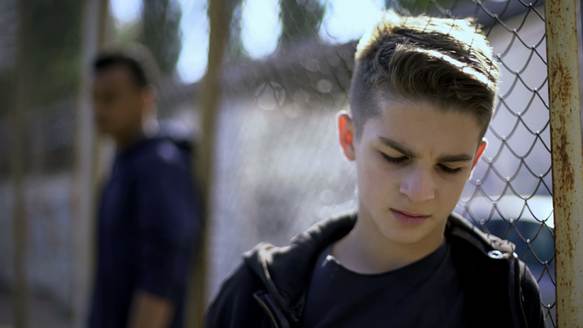
Why Misconduct Happens in the First Place
The U.S. Department of Justice has documented how encounters between police and children often escalate because officers are trained for adult threats, not adolescent behavior. Children move unpredictably. They speak impulsively. They panic easily. None of that makes them dangerous, but officers who lack training might misinterpret fear as defiance or confusion as aggression.
Parents often tell us the incident “made no sense.” A child who simply talked back was restrained. A teen who didn’t understand a command was thrown to the ground. A frightened kid who froze was treated as if they were resisting. Misconduct rarely happens in a vacuum, it happens when officers respond with force instead of understanding the developmental needs of a young person.
Children Don’t Always Know How to Explain What Happened
Kids rarely describe police misconduct with adult language. Instead, they give pieces of the story, fragments that only make sense when a parent listens closely. Many children feel embarrassed or scared to share the full truth.
Parents often notice:
- A child suddenly avoiding conversations about the incident, which can suggest they’re reliving the fear.
- Overreacting to loud voices or abrupt movements, showing how deeply the encounter shook them.
- A sudden drop in confidence, kids blaming themselves even though they did nothing wrong.
When a child begins to think “Maybe I deserved it,” the emotional damage has already taken hold.
Physical Force Against Children Is Never “Routine”
Parents sometimes hear excuses like “He wasn’t listening,” “She was resisting,” or “We had to control the situation.” But when a police officer uses physical force against a child, the imbalance of power is overwhelming. Even minimal force, grabbing, yanking, or throwing a child against a surface, can leave them in pain or terrified to ever trust authority again.
Warning signs can include:
- Unexplained bruises, red marks, or soreness that a child tries to dismiss or hide.
- Stiff posture or sudden flinching around adults in uniform.
- Difficulty sleeping or recurring nightmares after the incident.
Force used on a child is not a “teaching moment.” It is a misuse of authority that crosses both emotional and legal boundaries.
When Officers Use Intimidation Instead of Protection
Police misconduct involving children isn’t always physical. Verbal intimidation can be just as damaging, sometimes more so. Kids often remember the tone, the anger, or the threats long after the actual words fade.
Parents tell us their children recall:
- Officers yelling directly in their face, causing immediate panic.
- Threats of arrest or juvenile detention, even for minor issues.
- Sarcastic or demeaning comments that made them feel “small.”
The emotional harm can echo through school performance, friendships, and even long-term mental health.
Bias and Unequal Treatment
The New York State Office of the Attorney General has emphasized the seriousness of discriminatory policing, especially when it involves minors. Children from marginalized communities often face more scrutiny, harsher treatment, and quicker escalation during encounters with police.
Bias may appear when:
- One child is treated aggressively while others involved are spoken to calmly.
- Officers make assumptions based on race, gender, disability, or neighborhood.
- A child is repeatedly targeted by the same officers for no clear reason.
Unequal treatment is not just unfair, it can be a civil rights violation.
When the System Tries to Minimize the Incident
Parents frequently hear explanations designed to downplay the event: “Your child misunderstood,” “It was standard procedure,” or “We followed protocol.” These statements can feel dismissive, especially when a child is visibly shaken. Families often feel stuck, unsure how to challenge a system that appears to protect its own.
That is usually when documentation becomes essential. Parents start collecting statements, requesting reports, and writing down details of every interaction, not because they want a confrontation, but because the truth deserves space to be acknowledged.
What Parents Can Do When Officers Go Too Far
When police misconduct affects a child, the instinct to protect is immediate. But emotions alone don’t always move institutions. Families often benefit from taking clear, steady steps that begin building a factual record.
Parents may start by:
- Writing down the child’s account in their own words as soon as possible, capturing details before memories fade.
- Requesting official reports, body-camera footage (if available), and timeline documentation from the agency involved.
- Seeking medical or psychological evaluations when a child shows physical or emotional signs of trauma.
These steps help shift the situation from confusion to clarity.
Children Deserve Safety, Not Fear, in Every Encounter
When a police officer harms, intimidates, or mistreats a child, the consequences ripple outward: a child afraid to go outside, a family losing trust in institutions, a community shaken. Police misconduct is not a momentary lapse. It is an event that leaves a lasting imprint on a child’s sense of safety, identity, and belonging.
At Horn Wright, LLP, our experienced civil rights attorneys help families uncover the truth, hold officers accountable, and protect children whose rights were violated. If your child has been mistreated by law enforcement, contact us and we’ll walk with you, step by step toward answers, justice, and real protection for your family.

What Sets Us Apart From The Rest?
Horn Wright, LLP is here to help you get the results you need with a team you can trust.
-
Client-Focused ApproachWe’re a client-centered, results-oriented firm. When you work with us, you can have confidence we’ll put your best interests at the forefront of your case – it’s that simple.
-
Creative & Innovative Solutions
No two cases are the same, and neither are their solutions. Our attorneys provide creative points of view to yield exemplary results.
-
Experienced Attorneys
We have a team of trusted and respected attorneys to ensure your case is matched with the best attorney possible.
-
Driven By Justice
The core of our legal practice is our commitment to obtaining justice for those who have been wronged and need a powerful voice.