


When Police K-9 Searches Become Illegal: Protecting Your Rights
Understanding Your Legal Protections in K-9 Drug and Vehicle Searches Across New York
If you’ve been stopped by police in New York and watched a K-9 circle your vehicle or sniff your backpack, you likely felt your stomach drop.
Many people don’t know if they’re allowed to say something. Others assume that because it involves a police dog, there’s nothing they can do. But here’s the truth: police K-9 searches are still searches, and they must follow the Constitution. If an officer used a dog during your stop without legal cause or dragged out the encounter to wait for one, your rights may have been violated.
At Horn Wright, LLP, our civil rights attorneys help people across New York who have faced unlawful searches—on the sidewalk, in traffic, or even in their workplaces. If a dog sniff led to a search that felt wrong, we can help you get answers and pursue justice.
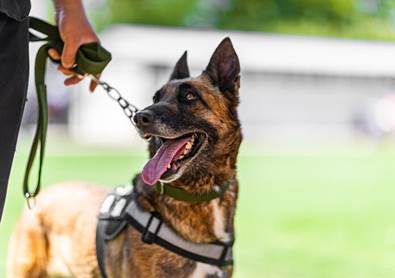
Understand the Legal Role of K-9 Units During Stops
Police dogs are trained to detect drugs, weapons, and sometimes explosives. K-9s are considered tools of law enforcement, but their use is not automatic or above the law. The moment a dog sniffs your property, that action can trigger Fourth Amendment protections.
Under U.S. Supreme Court rulings, a dog sniff is considered a search when it intrudes on a reasonable expectation of privacy or when it prolongs a legal stop without cause. Even in busy areas like Penn Station or at traffic checkpoints near Albany, police must follow these rules.
In New York, courts have emphasized that while K-9s can be helpful tools, their use must stay within constitutional limits. Just being in a high-traffic or high-crime zone does not give officers permission to search you with a dog.
Clarify When a K-9 Sniff Becomes a Search That Requires Justification
Officers often try to justify dog sniffs as harmless or routine. But they’re not always that simple. When a dog circles your car, sniffs a backpack, or checks personal belongings, it can be considered a Fourth Amendment search depending on where it happens and how long it takes.
A few key distinctions:
- A sniff around the outside of a car during a legal stop may be allowed, but not if it prolongs the stop without new justification
- A sniff of your person, bag, or private belongings often requires probable cause or a warrant
- If you are detained just to wait for a dog unit, the stop may be unconstitutional
For example, if you’re pulled over near the Bronx for a turn signal violation and the officer finishes the traffic stop but refuses to let you leave until a K-9 arrives, that delay might violate your rights.
Identify When Police Illegally Extend a Traffic Stop for a K-9 Unit
A routine traffic stop should not be a pretext to bring in a dog without legal cause. When officers delay a stop unnecessarily, they risk crossing a constitutional line.
Here’s what an illegal extension might look like:
- Your documents are returned, but the officer keeps asking unrelated questions
- The officer says, "Just hang tight, we're waiting for another unit"
- You’re told to stay put while backup with a K-9 arrives
Let’s say you’re stopped near Jamaica, Queens, and the officer doesn’t issue a ticket but keeps you waiting 25 minutes for a K-9. That delay may be illegal if it’s not backed by reasonable suspicion.
New York courts have suppressed evidence in cases where traffic stops were drawn out for no valid reason. The key issue is time. Officers cannot turn a 10-minute stop into a half-hour investigation unless new facts justify it.
Explain the Limits of Dog Alerts and Why They’re Not Always Reliable
Dog alerts are often treated as powerful evidence in court. But they’re not foolproof. In fact, many courts—including those in New York—recognize the flaws that can come with K-9 alerts.
Dog reliability can be affected by:
- Handler cues (intentional or unintentional)
- Poor or inconsistent training
- Overexcitement in chaotic environments
- Bias from previous stops or scent contamination
Not all alerts lead to actual discoveries. A dog might sit or paw, and officers use that behavior as a signal. But without video, clear logs, or consistent procedures, these alerts can be challenged.
A well-trained dog in a quiet environment may give a reliable signal. A stressed or improperly handled dog in Times Square might not.
Know Your Rights If a Dog Sniff Leads to a Search of Your Car or Belongings
If a dog alert leads to a full vehicle or personal search, you still have rights. The presence of a dog does not give police unlimited power.
Here’s what to do if it happens:
- Ask, “Am I being detained?” and “Am I free to go?”
- Say clearly, “I do not consent to any search”
- Stay calm and do not interfere physically
- Record the stop if you legally can (New York allows recording of public officials)
- Write down details right after: time, location, what was said, and what the dog did
Police are more likely to use K-9s near known drug zones or transit centers, like the Port Authority Bus Terminal. But those locations do not erase your rights.
Recognize When a K-9 Search of Your Home or Workplace Crosses the Line
When a dog enters private space, the rules change significantly. Police typically need a warrant to bring a K-9 into your home or workplace.
Situations that require a warrant or clear justification:
- Walking a K-9 through a hallway of an apartment building
- Entering a business to sniff private offices or locked rooms
- Bringing a dog into your backyard or enclosed porch without permission
Courts in New York have ruled that apartment buildings, especially common areas, may still offer a reasonable expectation of privacy. In Brooklyn and Harlem, where apartments share common spaces, warrantless K-9 searches have been successfully challenged.
If police brought a dog into your space without warning, especially if no emergency existed, their actions may be unconstitutional.
Document What Happened and Take Action Quickly
When something feels off about a K-9 search, take steps to protect yourself. Memory fades fast, and official records can be vague or incomplete.
Here’s what to do:
- Write down everything you remember from the stop or search
- Note the officer’s name, badge number, and the K-9 handler
- Save any video footage from your phone, dashcam, or nearby security cameras
- If others witnessed the search, get their names and contact info
- File a complaint with the Civilian Complaint Review Board (CCRB) if the incident happened in NYC
Fast action preserves your right to challenge the stop and improves your chances if you decide to take legal steps.
Explore Legal Options If a K-9 Search Violated Your Rights
You may have legal grounds to challenge an unlawful K-9 search. The consequences of that search can be serious, ranging from criminal charges to personal trauma.
Possible legal steps include:
- Filing a motion to suppress evidence in criminal court
- Bringing a lawsuit under 42 U.S.C. Section1983 for civil rights violations
- Reporting the officers to internal affairs or a civilian oversight board
- Requesting damages for property loss, unlawful detention, or emotional distress
- Seeking policy changes to limit improper K-9 use
Your case may also shed light on patterns of misconduct. Challenging one illegal search can protect others from experiencing the same thing.
Final Takeaway: K-9 Searches Are Serious, and the Law Still Applies
K-9 searches may look routine, but they’re not always legal. If an officer used a dog during a stop, on your property, or in your workspace, that action must follow strict rules.
Being in a busy place or acting nervous does not give police free access to search. In New York, the Constitution does not disappear just because a dog is involved.
At Horn Wright, LLP, we help people stand up to unlawful searches. If a K-9 unit crossed the line, we’ll help you push back and protect your rights.

What Sets Us Apart From The Rest?
Horn Wright, LLP is here to help you get the results you need with a team you can trust.
-
Client-Focused ApproachWe’re a client-centered, results-oriented firm. When you work with us, you can have confidence we’ll put your best interests at the forefront of your case – it’s that simple.
-
Creative & Innovative Solutions
No two cases are the same, and neither are their solutions. Our attorneys provide creative points of view to yield exemplary results.
-
Experienced Attorneys
We have a team of trusted and respected attorneys to ensure your case is matched with the best attorney possible.
-
Driven By Justice
The core of our legal practice is our commitment to obtaining justice for those who have been wronged and need a powerful voice.