


When School Discipline Violates Your Child’s Civil Rights
When Discipline Stops Feeling Fair
Most parents accept that schools need rules. They understand that structure helps children learn and gives classrooms a sense of order. But discipline becomes something else entirely when it feels harsh, unequal, or directed at the wrong child. Parents describe the moment they realize something is off: their child comes home unusually quiet, confused, or tearful; a punishment seems wildly out of proportion; or a school administrator’s explanation feels incomplete. Sometimes children don’t say much at all, they simply withdraw.
That is often when families reach out to experienced civil rights attorneys. At Horn Wright, LLP, parents tell us they sense something deeper beneath the discipline, something that doesn’t sit right. A child who once loved school suddenly fears walking through the door. A punishment that should teach accountability instead brings shame or humiliation. These emotional shifts matter. They often signal discipline that has crossed a legal or ethical line.
Why School Discipline Isn’t Always Neutral
The U.S. Department of Education has noted that disciplinary actions can sometimes reflect bias or inconsistent enforcement rather than genuine misbehavior. Suspensions, detentions, or removals from class may be applied unevenly, especially when staff misunderstand a child’s disability, emotional needs, or communication style. What one student receives a verbal warning for, another might be punished severely.
Parents often see clues long before the school acknowledges a problem. They notice their child is punished more often than peers or disciplined for unclear reasons. Sometimes the explanation seems to shift from one meeting to the next. Other times the discipline appears to escalate faster than the behavior warrants. Schools may justify these actions as “policy,” but policies used incorrectly can still violate a child’s civil rights.
Behavioral Changes That Signal Deeper Harm
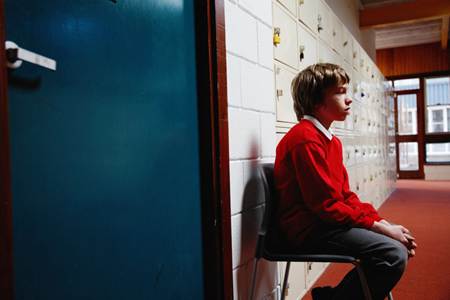
Children respond to unfair discipline in ways that don’t always involve words. Parents often notice emotional shifts they can’t fully decode at first, but the changes linger.
Red flags may include:
- A child becoming fearful at the mention of certain teachers or administrators, which can suggest intimidation rather than guidance.
- A sudden drop in confidence or participation at school, often showing the emotional toll of excessive or unjust punishment.
- Withdrawing from schoolwork at home because they associate academics with stress or embarrassment.
Parents sometimes say it feels like their child went from thriving to surviving. That emotional drop isn’t normal, it often represents deeper harm.
Zero-Tolerance Policies and Their Real-World Impact
Zero-tolerance rules are supposed to create consistency, yet they often do the opposite. They turn minor mistakes into major offenses, leaving no room for context, learning moments, or human judgment. A child joking with a classmate can suddenly face suspension. A student overwhelmed by sensory overload can be punished for “defiance.” A teen managing anxiety might leave class and face discipline instead of support.
Families frequently tell us these policies feel like a trap, one misstep becomes a chain reaction of punishments. When zero-tolerance rules are applied without flexibility, they can violate a child’s right to fair and equal treatment.
When Bias Shapes Disciplinary Action
The New York State Division of Human Rights recognizes discrimination in education as a serious issue. Yet bias often shows up quietly in schools, through tone, assumptions, or patterns that only become obvious over time. Students of color, children with disabilities, English learners, and neurodivergent students frequently face harsher discipline for the same behaviors that receive milder responses when other children exhibit them.
Parents may spot bias in:
- Repeated discipline toward one child while peers engaging in similar conduct are ignored.
- Comments from staff that focus on stereotypes or negative assumptions rather than actual conduct.
- Punishments that escalate quickly, often out of proportion to the child’s actions.
Bias is dangerous because it harms both a child’s confidence and their long-term educational trajectory.
The Emotional Weight of Being Labeled “The Problem”
Children punished unfairly often internalize the experience. They may start believing they are difficult, disruptive, or incapable of following rules, even when the discipline has nothing to do with their character. Parents tell us their children begin questioning themselves, asking whether they “deserve” the punishment or whether the school is “just tired of them.” These beliefs are heartbreaking, and they make it harder for the child to advocate for themselves.
Unjust discipline does not correct behavior. It creates fear, confusion, and shame. These emotional wounds can linger far longer than the punishment itself.
When Schools Dismiss Your Concerns
Many parents try to raise concerns early, only to feel brushed aside. They may hear phrases like “We’re following protocol,” “We can’t discuss other students,” or “This is standard discipline.” But when discipline is discriminatory, excessive, or based on misunderstanding a child’s needs, parents have every right to push back.
Schools sometimes rely on vague explanations to avoid admitting mistakes or improper conduct. Parents often begin documenting conversations, saving emails, and requesting written incident reports, not to escalate the situation, but to create clarity where the school refuses to provide it.
Steps Parents Can Take to Protect Their Child
When something feels wrong, there are practical steps families can use to protect a child’s rights and emotional well-being.
Parents may start by:
- Recording details of every incident, meeting, punishment, and conversation, which creates a timeline schools cannot easily dismiss.
- Requesting written explanations instead of verbal summaries, ensuring the school commits to clear statements about its actions.
- Seeking independent guidance when the school repeatedly deflects, contradicts itself, or escalates consequences without justification.
These steps can shift a family from feeling powerless to feeling prepared.
Your Child Has Rights, Even When Discipline Is Involved
Discipline should guide children, not harm them. When a school imposes punishment that is excessive, discriminatory, or rooted in misunderstanding, the consequences reach far beyond a single incident. They affect self-esteem, academic success, and a child’s trust in adults.
At Horn Wright, LLP, our experienced civil rights attorneys help families stand up for children who have been treated unfairly. If you believe your child’s discipline crossed a line, contact us and we’ll help you understand your options, your rights, and the steps you can take to protect your child.

What Sets Us Apart From The Rest?
Horn Wright, LLP is here to help you get the results you need with a team you can trust.
-
Client-Focused ApproachWe’re a client-centered, results-oriented firm. When you work with us, you can have confidence we’ll put your best interests at the forefront of your case – it’s that simple.
-
Creative & Innovative Solutions
No two cases are the same, and neither are their solutions. Our attorneys provide creative points of view to yield exemplary results.
-
Experienced Attorneys
We have a team of trusted and respected attorneys to ensure your case is matched with the best attorney possible.
-
Driven By Justice
The core of our legal practice is our commitment to obtaining justice for those who have been wronged and need a powerful voice.