


Manhattan Illegal U-Turn and Improper Turn Accidents
Legal Consequences of Unsafe Turn Maneuvers
Illegal U-turns and improper turns don’t just slow traffic, they cause real harm. In Manhattan, where space is tight and crosswalks stay crowded, one bad turn can create chaos.
These crashes often lead to head-on collisions, sideswipes, or direct impacts with pedestrians. You might be heading to work, crossing a familiar street, or driving through your usual neighborhood when a car suddenly cuts across your path. And just like that, you’re dealing with injuries, bills, and stress.
Our team at Horn Wright, LLP, helps people hurt by reckless turning drivers. We represent victims in civil claims to recover damages for medical costs, lost income, and pain. If you were hurt in a crash involving a dangerous turn, our Manhattan car accident attorneys can help you take legal action and protect your rights under New York law.
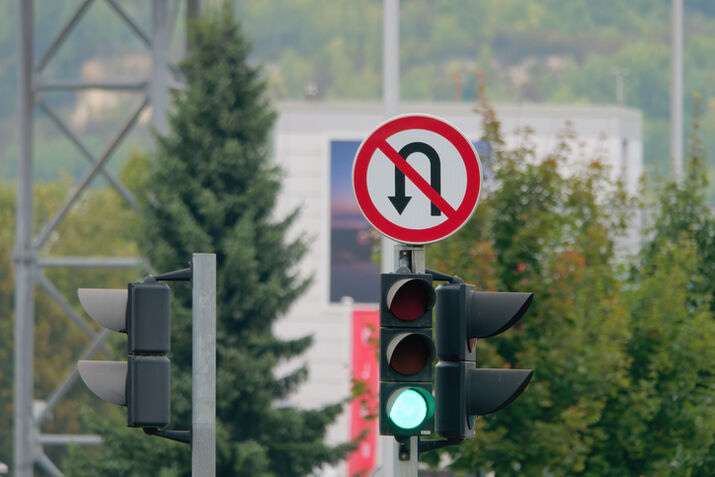
Why Illegal Turns Create Serious Risk in Manhattan
Turn-related crashes happen in a split second. A driver swings into a U-turn without checking for traffic, misjudges a left turn at a busy intersection, or cuts across lanes from the wrong position. On streets like Broadway or the avenues cutting through Midtown, one poor judgment can put multiple road users in harm’s way.
Unlike other types of crashes, turn-related accidents usually stem from someone trying to beat the flow. The turning driver wants to save time or change direction quickly, often ignoring posted signs, painted lanes, or right-of-way rules. That choice removes other drivers’ ability to react safely.
In tight neighborhoods like the Financial District or Harlem, turn-related decisions become even more dangerous. Narrow roads and high foot traffic leave very little margin for error. A vehicle may jump a curb, block a crosswalk, or sideswipe a stopped car after a misjudged turn.
When a turn interrupts the expected flow of movement, someone often pays the price. Unfortunately, it’s usually the person who wasn’t breaking any rules.
What Makes a Turn Illegal Under New York Law
New York Vehicle and Traffic Law (VTL) outlines specific turn restrictions designed to keep intersections and lanes safe. When drivers violate these laws, they do more than earn a ticket. They open the door to civil liability if someone gets hurt.
Illegal and improper turns can include:
- Making a U-turn where signs prohibit it, like near intersections or under overpasses. These restrictions are often based on limited sight distance or high traffic volume. Ignoring them increases risk for everyone nearby.
- Turning left across double yellow lines or at intersections with clear no-left-turn signals. This often results in side-impact crashes or hits with pedestrians using the crosswalk. The rules aim to reduce confusion at complex intersections.
- Changing direction from the wrong lane, like turning right from a center lane or swinging across multiple lanes to make a left. Lane discipline is vital in busy areas like Midtown. Violating lane usage disrupts flow and endangers others.
- Failing to use a turn signal before maneuvering. Turn signals provide critical notice to other drivers and pedestrians. Not using one reduces time for others to respond and increases crash risk.
The NYPD often documents these violations in crash reports. For example, if a driver attempts a U-turn on 14th Street near Union Square where U-turns are banned, that action could be used as direct evidence of fault. Likewise, if a car turns improperly from Madison Avenue into cross-traffic on 59th Street, it becomes difficult to defend their position later.
Even if the driver claims the turn “felt safe,” that doesn’t excuse a clear violation. Traffic rules exist to protect everyone, and ignoring them has consequences.
Right-of-Way Rules During Urban Turns
Turn maneuvers in Manhattan follow a basic rule: yielding matters. Drivers making a left or U-turn must yield to oncoming traffic and pedestrians. Failing to do so is both illegal and negligent.
Right-of-way situations that come up in Manhattan turn crashes include:
- Drivers turning left across oncoming lanes at intersections like Delancey and Bowery. These are high-volume zones with tight timing. Drivers must wait until it is clearly safe to turn.
- Vehicles attempting U-turns on one-way streets like those in the East Village. This move can surprise approaching drivers and violate clear signage. U-turns on one-way roads are often entirely banned.
- Cars crossing multiple lanes without yielding to those with priority. These abrupt lane changes increase the risk of broadside impacts. Sudden movements make defensive driving nearly impossible.
- Turning into bus lanes or bike paths without clearance. Many Manhattan streets now include protected bike or bus lanes. Drivers must confirm these paths are clear before turning across them.
In these situations, the turning driver typically bears the burden. Unless they can prove they had a clear path and sufficient time, they may be held fully liable.
Local camera footage and traffic signal patterns help determine who had the right-of-way. That’s especially true at high-surveillance intersections like those near Times Square, where turn-related incidents are caught on video frequently. We help clients obtain this kind of evidence to support their claims.
How Turn Violations Lead to Civil Negligence
Negligence happens when a driver fails to meet their legal duty to act with reasonable care. When someone breaks a traffic rule and causes injury, the law often treats that violation as proof of negligence.
A civil claim doesn’t require the police to press charges or issue a ticket. It only requires proof that the other driver acted carelessly and that carelessness caused harm. Making an illegal U-turn or turning across lanes without checking can meet that standard.
Many turn crashes in Manhattan involve:
- Drivers cutting across double lanes on Park Avenue without signaling. These wide avenues carry fast-moving traffic. Without a signal, others can’t anticipate the maneuver.
- Cars turning through crosswalks while pedestrians have the walk signal. This is especially dangerous during school hours or in busy shopping districts. Pedestrians expect to cross safely on their signal.
- Vehicles swinging wide on corners, clipping cyclists or stopped traffic. Bicyclists often travel in blind spots along the curb. Wide turns from distracted drivers lead to direct impacts.
These cases often include evidence such as dashcam footage, intersection cameras, and photos taken by witnesses. When combined with medical records and repair invoices, this builds a solid claim for damages. Our firm guides clients through every step of gathering and presenting this evidence clearly.
Evidence That Proves a Turn Caused the Crash
Proving who was at fault in a turning accident requires documentation and speed. In Manhattan, traffic footage often gets deleted within days unless someone requests it early. The strongest cases build quickly around tangible evidence.
Helpful evidence includes:
- Police crash reports: Officers may cite the driver for making an illegal turn. These citations are strong indicators of fault. Reports also record the driver’s statement and contact details.
- Video from nearby storefronts or DOT cameras: This can show the full turn and impact. Time-stamped footage clarifies timing and traffic flow. It also helps when other details are disputed.
- Damage patterns on the vehicles: The angle of contact often tells the story. Side damage suggests a failed yield. Front-end damage may show who struck whom.
- Witness statements from bystanders or passengers: Their view may confirm who turned suddenly or crossed lanes. Independent testimony adds credibility. It also helps if both drivers blame each other.
- Signage or pavement markings: Photos of no-turn signs or lane arrows reinforce the traffic rules in place. These signs show the legal expectations. Courts consider their presence when determining negligence.
Crash locations like 23rd and 7th Avenue or Grand Street near the Williamsburg Bridge are covered by public and private cameras. We act fast to request and preserve footage that supports your claim.
Shared Fault in Turn Crashes Under New York Law
Not every crash has a clear-cut villain. Sometimes both drivers made poor choices. The law accounts for this. New York’s pure comparative negligence system allows injured victims to recover damages even if they shared some blame.
Say a driver made an improper left turn, but the other driver was speeding. If the turning driver is found 70% at fault and the speeding driver 30%, the injured person can still collect 70% of the awarded damages.
Turn crash victims may still have valid claims even when the other driver wasn’t entirely reckless. What matters most is showing that the turn itself violated the rules or occurred in an unsafe way.
Our attorneys help clients push back when insurers try to assign too much blame to them. We build the full picture and focus on the root cause: the illegal or improper turn.
Using Expert Analysis in Disputed Turn Collisions
Some crashes require more than photos and eyewitnesses. That’s especially true when liability is disputed, or when both vehicles were moving. In those cases, we often work with professional crash reconstruction experts.
These experts evaluate:
- Scene measurements like skid marks and lane widths. This shows how each vehicle approached the intersection. It also reveals if the turn could have been completed safely.
- Time-distance calculations for each vehicle’s movement. This determines whether the turning driver had enough time. It also helps rebut claims of sudden lane changes.
- Impact angles and damage consistency with turn maneuvers. These technical findings support or refute claims of fault. Juries rely heavily on this analysis.
Expert testimony adds clarity in dense areas like Chinatown or Flatiron, where overlapping signals and multilane roads make visual evidence harder to interpret. These professionals help translate messy facts into a narrative that courts and juries can understand.
Steps to Take After an Illegal Turn Crash
In the hours after a turn-related crash, clear actions help protect both your safety and your legal options. What you do early on may determine how strong your case becomes.
To start:
- Call 911 and request an officer to document the crash. Responding officers can cite violations and create a crash report. This record is often a key part of proving liability.
- Note any traffic signs, turn signals, or painted arrows at the scene. These may be removed during street work. Quick photos help preserve them as evidence.
- Take photos from multiple angles, including street names and lane markings. Show both vehicles and their surroundings. Make sure timestamps are visible if possible.
- Ask nearby businesses if their cameras captured the crash. Some stores delete footage within days. Request copies or ask them to save it until your attorney can follow up.
- Get medical care immediately, even if symptoms are delayed. Injuries from crashes may worsen after the adrenaline fades. Documenting symptoms early supports your injury claim.
- Request the crash report and check for any citations or at-fault assessments. This document often includes the investigating officer’s conclusions.
Gathering evidence as soon as possible improves your chances of recovering compensation later.
Unsafe Turns Are a Legal and Public Safety Threat
Illegal and improper turns cause more harm than many realize. They create dangerous surprises on streets already filled with cars, buses, bikes, and people on foot. When a driver chooses convenience over caution and causes a crash, the injured party deserves a path forward.
Our trusted legal team at Horn Wright, LLP, is committed to helping victims of unsafe turn crashes across Manhattan. We work to uncover the evidence, explain your rights, and demand the compensation you need to move forward.

What Sets Us Apart From The Rest?
Horn Wright, LLP is here to help you get the results you need with a team you can trust.
-
Client-Focused ApproachWe’re a client-centered, results-oriented firm. When you work with us, you can have confidence we’ll put your best interests at the forefront of your case – it’s that simple.
-
Creative & Innovative Solutions
No two cases are the same, and neither are their solutions. Our attorneys provide creative points of view to yield exemplary results.
-
Experienced Attorneys
We have a team of trusted and respected attorneys to ensure your case is matched with the best attorney possible.
-
Driven By Justice
The core of our legal practice is our commitment to obtaining justice for those who have been wronged and need a powerful voice.