


Rear-End Accidents in Manhattan: Fault and Defenses
Understanding Fault in New York Rear-End Crashes
Rear-end crashes happen fast and leave everyone involved shaken. One second, you’re waiting at a light. The next, your car lurches forward from the impact behind you. In a place like Manhattan, where cars, cabs, buses, and delivery trucks compete for inches, these accidents are constant.
At Horn Wright, LLP, we know how frustrating it is to deal with a rear-end accident. Whether you’re driving along the West Side Highway or inching through Broadway traffic, the crash can change everything.
Our Manhattan car accident attorneys help you sort through fault, insurance, and legal defenses with clarity and care. We’re here when insurers won’t give straight answers or try to shift blame unfairly. If you’re injured in a rear-end accident in Manhattan, call our team to speak with experienced car accident attorneys who are ready to help.
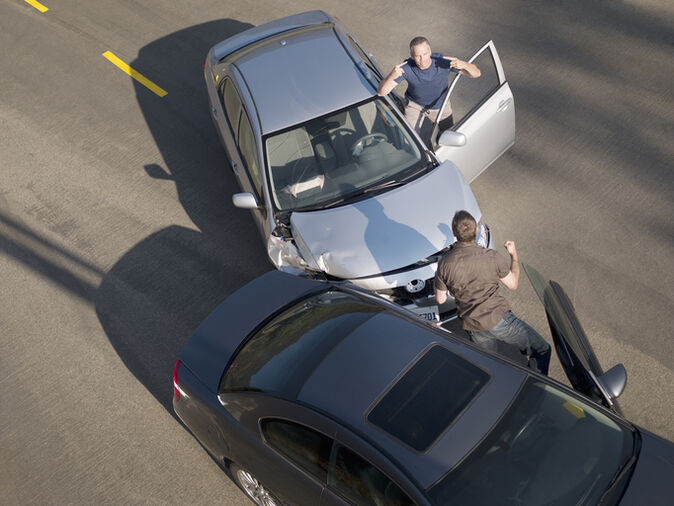
Understand How Rear-End Collisions Happen in Manhattan
Rear-end accidents in Manhattan often result from the city’s nonstop movement. Congestion plays a major role, especially near Midtown, SoHo, and the Financial District. Drivers accelerate suddenly, brake without warning, and react to whatever’s in front of them—other vehicles, pedestrians, cyclists, or construction barriers.
Most of these crashes result from one of a few key behaviors. Following too closely during stop-and-go traffic, braking hard to avoid a pedestrian or red light, or swerving around a double-parked car without space all contribute.
For instance, someone might rear-end another vehicle stalled in traffic near the Lincoln Tunnel entrance. Tailgating and distracted driving, especially phone use, are also significant factors.
Even a moment’s lapse in attention near 2nd Avenue or Houston Street can lead to a fender bender or worse. Manhattan’s traffic density leaves little margin for error.
Know the Legal Presumption of Fault in New York
Under New York law, the rear driver is generally presumed to be at fault in a rear-end accident. The law expects all drivers to keep a safe following distance. If they don’t stop in time, it is assumed they were too close or not paying attention.
This presumption puts pressure on the rear driver to explain why they hit the car in front. Without proof that something unusual happened, the default position stays in place. In Manhattan, that rule plays out hundreds of times a week.
Say a car stops at a red light near Columbus Circle. The car behind them doesn’t brake fast enough and causes a crash. Unless the second driver proves something unexpected happened, like a third vehicle cutting in suddenly, they will likely be held liable.
Still, it is not automatic. Facts matter. Photos, reports, and witness accounts often determine whether the presumption holds up.
Prove Liability with Clear and Relevant Evidence
Even with a presumption of fault, strong evidence makes or breaks a rear-end claim. Whether you’re the lead vehicle or the rear driver, you’ll need proof to show what really happened.
In Manhattan, where cars clear the street quickly and people are always on the move, fast action is critical. Valuable evidence includes surveillance footage, eyewitness accounts, and photos of the scene, including damage and road conditions. Police reports also help by establishing an official record. These details help reconstruct how and why the crash occurred.
They’re especially useful when either side disputes how much time the rear driver had to react or whether the front car’s brake lights were working. In Manhattan, you often only have minutes to gather this before the scene is cleared.
Explore Valid Defenses for Rear Drivers
Although the law leans heavily on the rear driver, there are legal defenses that can reduce or eliminate their liability. These apply when the lead driver’s actions caused or contributed to the accident.
For example, if the front vehicle stopped abruptly without warning or their brake lights weren’t working, the rear driver may have a valid defense. Lane changes without signaling or sudden stops after cutting in can also shift liability.
Picture a delivery van on Lexington Avenue making an unsignaled right turn. The vehicle ahead brakes hard and is hit from behind. If the rear driver was at a reasonable distance and speed, they may not be entirely at fault.
Every collision’s details matter, and documentation helps clarify those facts.
Understand Shared Fault and Comparative Negligence
New York follows a pure comparative negligence rule. That means both drivers can share responsibility for a crash and still recover damages.
If the court finds you 20% at fault, your damages will be reduced by that same percentage. If you're 80% at fault, you can still recover 20%. The law doesn’t bar recovery entirely, but it makes accurate evidence even more important.
Shared fault can apply when both drivers made errors. For example, the lead driver may have stopped short illegally, while the rear driver was following too closely. In Manhattan’s busy streets, these mixed-responsibility crashes happen frequently.
Address Rear-End Crashes Involving Cyclists and Pedestrians
Rear-end collisions in Manhattan don’t just involve cars. Cyclists and pedestrians are often involved, and the fault rules shift slightly in those cases.
If a driver rear-ends a cyclist in a bike lane, they are almost always at fault. New York City law requires vehicles to maintain safe distance and yield to cyclists in designated lanes like those along 1st Avenue or 8th Avenue. Blaming the cyclist rarely works unless there’s proof they swerved, changed lanes suddenly, or ran a red light.
Pedestrian-related rear-end crashes add complexity. If a driver brakes suddenly to avoid someone stepping into traffic, the rear driver may still be liable if they were following too closely. But if the pedestrian wasn’t in a crosswalk or entered the street abruptly, both drivers might have legal defenses.
These are common near Flatiron Plaza and the Union Square area, where foot traffic intersects with fast vehicle movement. Video and eyewitness reports can make a big difference.
Take the Right Steps Immediately After the Crash
Your actions right after a rear-end crash in Manhattan can determine how your claim unfolds. The city moves quickly. Emergency services respond fast, but traffic congestion returns just as fast. Don’t wait to gather evidence or assume someone else will.
Call 911 and request a police report. Take photos of the scene, including vehicle damage, traffic signs, and the surrounding road. Exchange insurance and contact details with the other driver. If anyone saw the crash, ask for their name and number.
Lastly, even if you feel okay, get medical attention. Injuries like whiplash or soft tissue damage may not show symptoms until hours later.
Handle Insurance Claims and Legal Pushback
Insurance companies often treat rear-end collisions as open and shut, but not always in your favor. If they believe you contributed to the crash or failed to report injuries right away, they might try to reduce or deny your claim.
They may argue you stopped too suddenly or that your injuries existed before the crash. Some may delay processing by blaming conflicting reports or incomplete documentation. A lack of visible damage can also lead to denied claims.
That’s when an experienced attorney can step in. At Horn Wright, LLP, we deal with these tactics daily. We help gather the right records, challenge bad-faith denials, and build cases around solid evidence. No one should have to fight their own insurer just to get a fair result.
Fault Isn’t Automatic, but Proof Makes the Case
In Manhattan, rear-end accidents might seem simple, but they aren’t always. Just because someone hits you doesn’t guarantee an easy claim.
And if you’re the rear driver, all is not lost. Fault depends on what the evidence shows—photos, witnesses, trip details, and real-time decisions.
At Horn Wright, LLP, we help you make sense of the confusion and take control of the situation.
If you’ve been in a rear-end crash and don’t know where to start, reach out to our team to arrange a free consultation. We’re ready to help you move forward with strength, strategy, and care.

What Sets Us Apart From The Rest?
Horn Wright, LLP is here to help you get the results you need with a team you can trust.
-
Client-Focused ApproachWe’re a client-centered, results-oriented firm. When you work with us, you can have confidence we’ll put your best interests at the forefront of your case – it’s that simple.
-
Creative & Innovative Solutions
No two cases are the same, and neither are their solutions. Our attorneys provide creative points of view to yield exemplary results.
-
Experienced Attorneys
We have a team of trusted and respected attorneys to ensure your case is matched with the best attorney possible.
-
Driven By Justice
The core of our legal practice is our commitment to obtaining justice for those who have been wronged and need a powerful voice.